
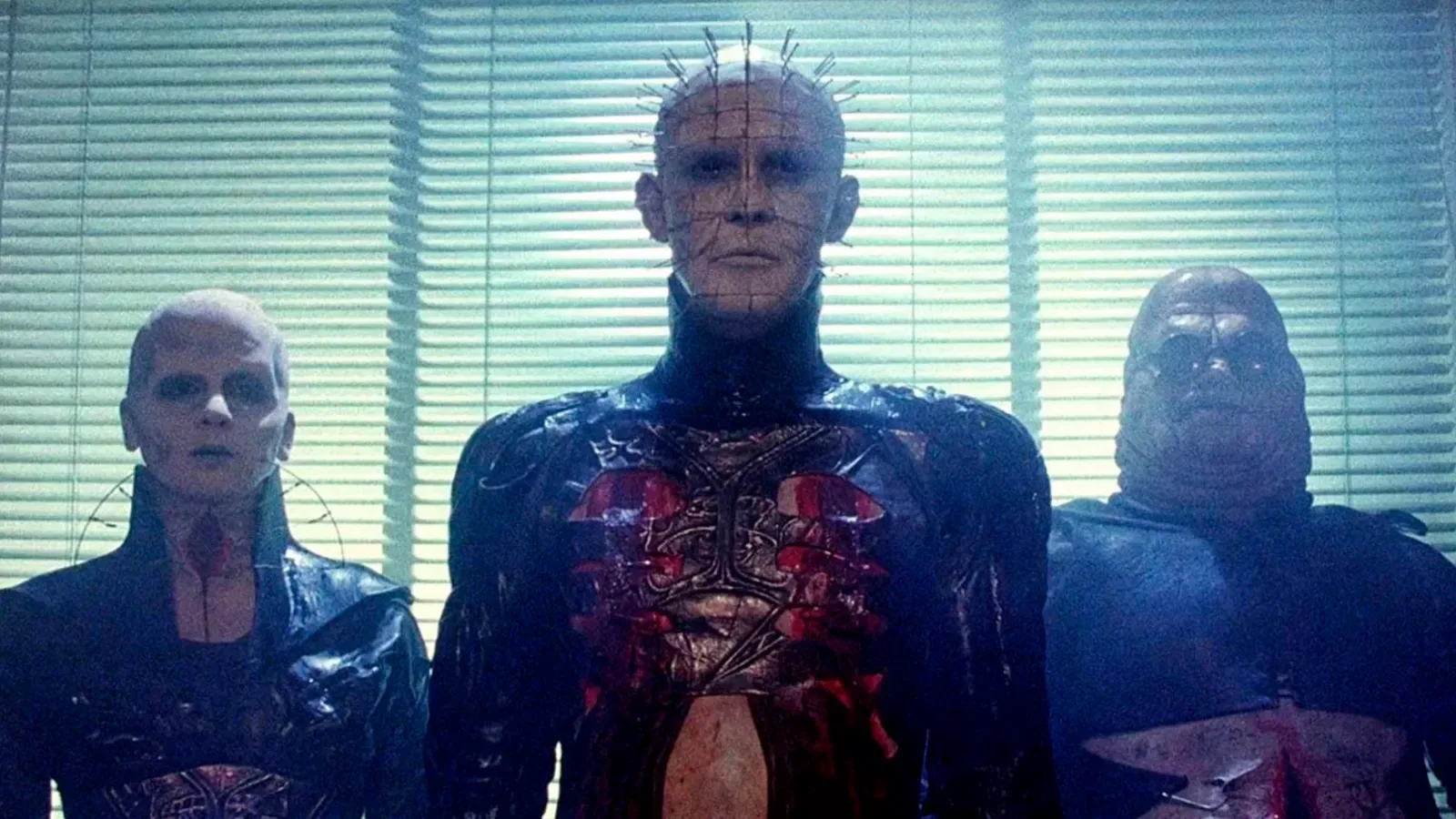
When most people think about the horror icons that emerged as a result of the ‘80s slasher wave, they think of three in particular: Michael Myers, Jason Voorhees, and Freddy Krueger. The enduring legacy of all of these characters are a reflection of how outsized their impacts were at the time — Michael just wrapped up a reboot trilogy back in 2022, Jason is getting a prequel TV series about his Mom in just a few weeks, and Freddy is finally coming back to screens courtesy of Paramount and the Wes Craven estate. But there’s another horror franchise that got started in the ‘80s, and while it doesn’t enjoy the same spotlight as the other three, it rivals them in terms of sheer output (for better and much worse).
Part of the reason why the Hellraiser franchise never became as big as A Nightmare on Elm Street might be because the first two films, and the novella they’re based on, are so much more complex and risqué than the horror movies packing theaters at the time — the central villains are the Cenobites, interdimensional beings from a hellish plane of existence where their pursuit of extreme sensation has rendered pain and pleasure indistinguishable. The first film presents them as brutal zealots proselytizing the pleasures of suffering, but as the series went on, they began treating Pinhead (referred to by series creator Clive Barker as the Hell Priest) and his companions as traditional slashers.