
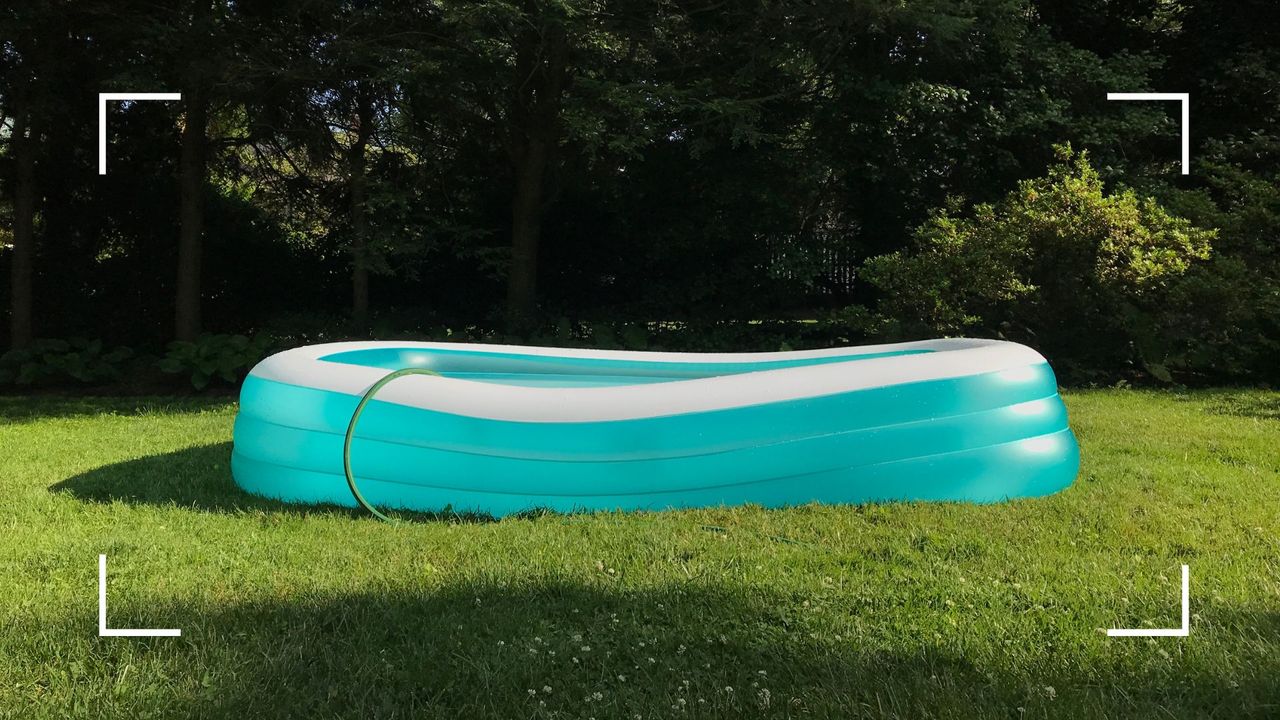
Paddling pools are an absolute saviour when the heatwaves hit in the UK; however, the one drawback they do have is the damage they tend to inflict on your precious lawn.
As one of the best ways to keep cool in the garden during summer, many of us quickly buy or drag out paddling pools for some much-needed relief on hot summer days. And whilst they are great for lowering temperatures for us and our pets, they do so at a cost to our beloved lawns, unless you're lucky enough to keep yours on a patio.
When the sun goes in and that paddling pool is once again banished to the shed, the dreaded damage caused by the crushing weight and inevitable waterlogging is soon revealed. So, what can you do to fix it?
How to repair grass after a paddling pool causes damage
When you've been avoiding making lawn care mistakes all year, having your paddling pool come and ruin all your hard work can be incredibly frustrating. Which is why we asked garden experts how you can reverse the damage.
"Gently rake the flattened grass that was underneath the paddling pool so that it is back in a standing position," instructs Richard Barker, horticulture expert and commercial director at LBS Horticulture.
"The grass underneath the pool may have turned yellow due to a lack of water and nutrients in the hot weather. You can aid recovery by watering the grass and applying fertiliser to replace any nutrients it may have lost. Even if the grass appears to be dead, continue to water it daily, and it should recover within a few days," he continues
Although it's usually recommended to plant your grass seed in spring, if you find that your pool has left a significant bare patch, reseeding is the next recommended step.
"If the grass has become patchy, it may need to be reseeded," suggests Richard. "Sprinkle grass seed over bare or thin patches, and rake it in lightly. Keep the seed moist until new shoots appear."
All you need to do then is make sure you're watering your lawn often enough through the summer for the seed to grow and thrive.


How long can you leave a paddling pool on grass?
If you want to avoid making a summer garden mistake by keeping your pool out, the amount of time it sits on the grass can make all the difference.
"Ideally, you should not leave a paddling pool on the same patch of grass for more than a few days. If you do need to leave the pool inflated for longer, try to move it around to a different spot each day to prevent the grass from becoming too damaged," explains Richard.
Will grass grow back after being covered?
Having a well-kept lawn is a great way to make your garden look expensive, so it's no surprise we panic about it growing back once it's damaged. Luckily, grass is usually pretty good at reviving itself with a little help.
"Grass will generally grow back after being covered, but the recovery will depend on how long it was covered. If it was only covered for a short period of time, it will bounce back fairly quickly, usually within a week or two with watering and sunlight exposure," starts Richard.
"If the grass is covered for longer than two weeks, the prolonged darkness combined with the heat that can be generated underneath the covering can kill off the grass. The grass will usually not recover, but dead patches may be reclaimed by healthy, surrounding grass spreading," he adds.
In this case, no matter what you do to make your grass greener, it won't grow back, and you'll need to replace the turf.
If you do need to reseed your lawn, make sure you know how often to water lawn seed, especially in the summer when the temperatures are at their highest.