
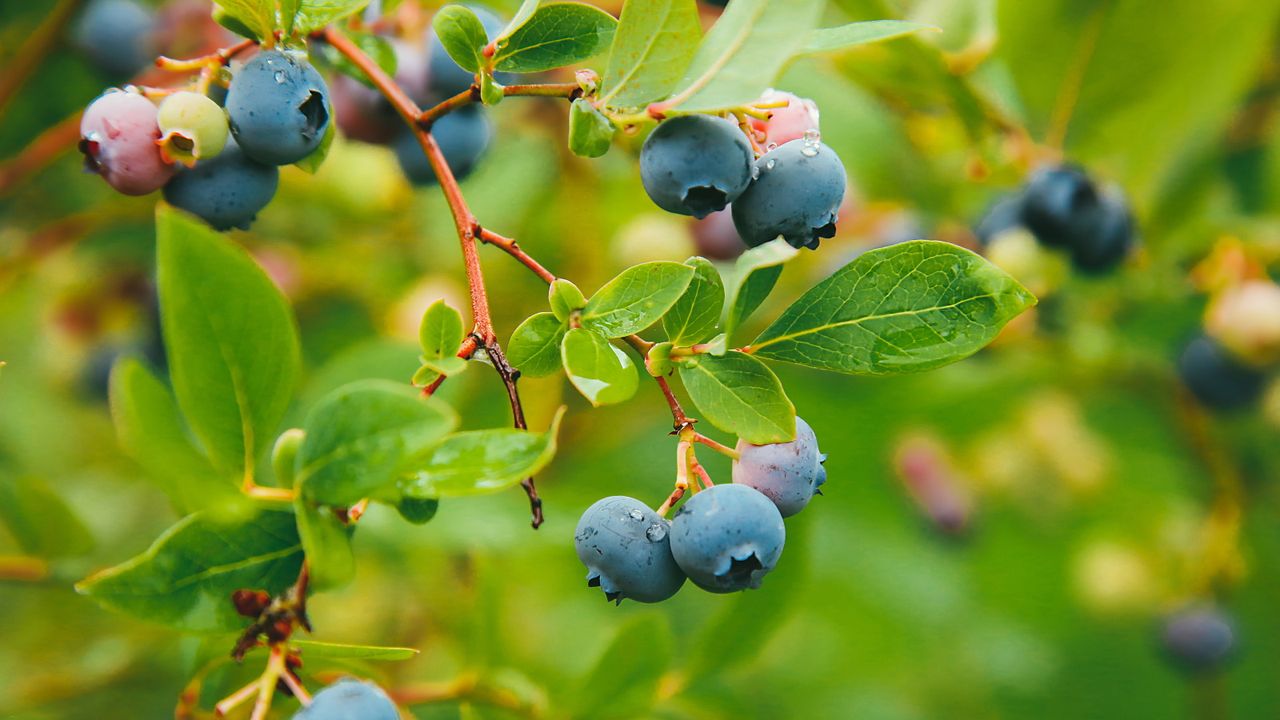
Growing your own fruit has to be one of the most rewarding things to do as a gardener. One way to get more out of your crops is by propagating them, i.e. multiplying them and growing double as much fruit.
If you grow blueberries, you can propagate them through cuttings. It might seem daunting compared to propagating ornamentals, but the truth is blueberry plants are straightforward to multiply, especially through softwood summer cuttings. It is also possible to propagate via hardwood cuttings in fall, though this takes much longer.

There are only a handful of steps to successfully propagate blueberries from cuttings, and you don't need loads of tools either (though, picking up this rooting hormone powder from Amazon will boost your chances of success). Here, with insights from a professional gardener, I talk through each step so you can harvest even more juicy berries from your backyard.
1. Take Healthy Cuttings
'Blueberries can be propagated from hardwood (old growth) or softwood (new growth),' says market gardener, Cody Deluisio.
'Softwood cuttings can be taken from early spring into mid-summer. Hardwood cuttings are taken after the leaves have fallen off in the fall,' he explains.
Softwood cuttings tend to provide faster results, as they take root much more easily. But, hardwood cuttings are thought to be more low-maintenance to manage, so there are benefits to both.
Whichever you choose, the first step is to identify and take healthy cuttings.
'Start by cleaning sharp gardening snips with rubbing alcohol. You want them to be very clean,' Cody says.
This will prevent the spread of pests and diseases, and ensure plant health is maintained. These Fiskars bypass pruning shears from Amazon will easily cut through both old and new growth.
For softwood, look for new growth that is flexible and green, and has several sets of leaves. 'Cut 4-6 inches of healthy stem right where it goes to hardwood at a 45° angle,' Cody describes. Take care to cut just below a leaf node, as this is where roots will emerge.
To take hardwood cuttings later in the year, rather focus on last year's growth. This will be the woodier stems, around a pencil's thickness, and 6-10 inches in length. You should cut half-an-inch above a bud, also at a 45° angle.
2. Prepare the Stems
The next step to propagate blueberries from cuttings is cleaning the stems, i.e. removing unnecessary foliage.
'Strip all leaves of but the top two,' Cody advises.
Leaving lower leaves can risk rotting when the cutting is in soil, and also drain's the plant's energy. You can use your fingers to pinch them off or these gardening micro snips from Lowe's to cut them off cleanly, redirecting the cutting's energy into rooting.
For hardwood cuttings, there won't be foliage to remove as the plant is dormant.
For both types of cutting, it's recommended to dip the end in rooting hormone. This is a powder (it also comes in gel form, like this rooting hormone gel from Amazon) that contains plant auxins responsible for rooting.
'Rooting hormone is optional but greatly improves success,' Cody notes.
3. Plant the Stems
With your cuttings prepped, the next step is to plant them in a well-draining, acidic soil to help them root.
'Put the cutting into an acidic mix, either a store-bought acidic potting mix (like this from Walmart) or 50/50 peat moss and perlite (which you can purchase from Amazon),' says Cody. 'Place the end of the cutting approximately two inches deep and firm the soil around it,' he describes.
Blueberries are acidic-loving plants, so if needed you can make your soil more acidic for both your existing shrubs and new plants.
'Soak the soil and let it drain for 15-30 minutes,' Cody says.
4. Find a Home For Your Cuttings
Where you keep your blueberry cuttings depends on whether they're hardwood or softwood.
'For softwood cuttings, place the container in a greenhouse or a bag to keep humidity up. Make sure it gets indirect sunlight,' Cody describes.
You should maintain consistent moisture and a temperature between 68-77°F. These humidity domes from Amazon can be useful to use if you aren't able to provide a greenhouse. Take care to place the cuttings somewhere with bright light.
Hardwood cuttings don't need so much humidity because they are dormant and leafless. Instead, keep them somewhere bright and cool, and maintain consistent moisture without becoming soggy in winter conditions.
A cold frame (you can find affordable portable cold frames at Walmart), unheated greenhouse, or a sheltered wall are the best options for hardwood cuttings.
5. Regularly Check Your Cuttings
One of the biggest propagation mistakes for any plant is neglecting your cuttings and expecting them to still take root. Instead, you should be regularly checking on cuttings.
Softwood blueberry cuttings usually root within six to 10 weeks, while hardwood cuttings take several months.
You should maintain high humidity and moisture for softwood cuttings, while watching out for overly wet soil and temperature fluctuations for hardwood cuttings.
This soil moisture meter from Amazon can help you get watering right by identifying the moisture level in soil for you.
Give your cutting a gentle pull to check whether it has rooted before planting up.
'Take care not to tug for at least six weeks, the roots will be very weak and can be easily broken,' Cody warns.
What to Shop

This blueberry fertilizer is a special blend to support blueberry growth. It's high in potassium to encourage flowering and fruiting.

These grow bags are ideal for growing a wide range of crops. They're breathable and lightweight, and can be used to house blueberry plants.

This potting soil is a special blend for acidic plants, including berries like blueberries. It has a low pH and advanced drainage to support optimal growth.

This blueberry plant is a native species. It reaches 1-2ft in height and spread, and is ideal for growing in pots.

These Felco F2 pruning shears are made for lifetime use, with replaceable parts. It has a bypass blade and aluminium handles.

These thorn-proof gardening gloves have long sleeves to protect your hands and arms when tending to spikey and thorny plants.
If you're struggling to get a harvest out of your blueberries, read up on our guide to getting a blueberry bush to fruit. One of the most important aspects to get blueberry bush pruning right, to keep your plant healthy and strong.
If you love inspiring garden ideas, outdoor advice, and the latest news, why not sign up for our newsletter and get the latest features delivered straight to your inbox?