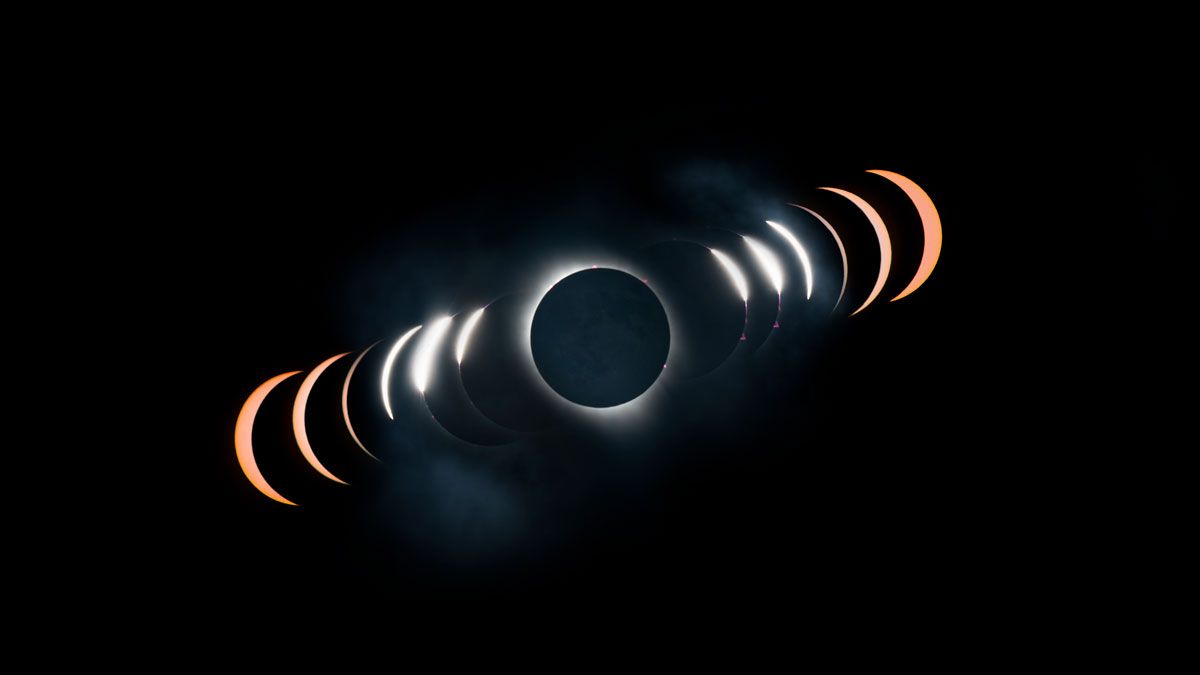
On Aug. 12, 2026, a total solar eclipse will be visible from parts of Europe, including Greenland, western Iceland and northern Spain. Other parts of Europe will get a strong partial eclipse and some parts of the US will be able to see some minor coverage. You can use a camera with a solar filter, a solar telescope and astrocam, a smart telescope or even use a smartphone.
According to NASA, there will be 224 solar eclipses visible on Earth in the 21st century, only 68 of which will be total solar eclipses. While they seem to occur quite frequently, a total solar eclipse is a rare event that you may only witness a few times in your lifetime due to your location and visibility conditions. So, planning and preparation are vital if you're hoping to capture some incredible shots. You'll need access to good equipment, along with an understanding of composition and how to make the most of your camera settings ahead of time since you'll only have a few minutes to take your pictures on the day. This guide will take you through all the steps you need to take to set yourself up for success.