
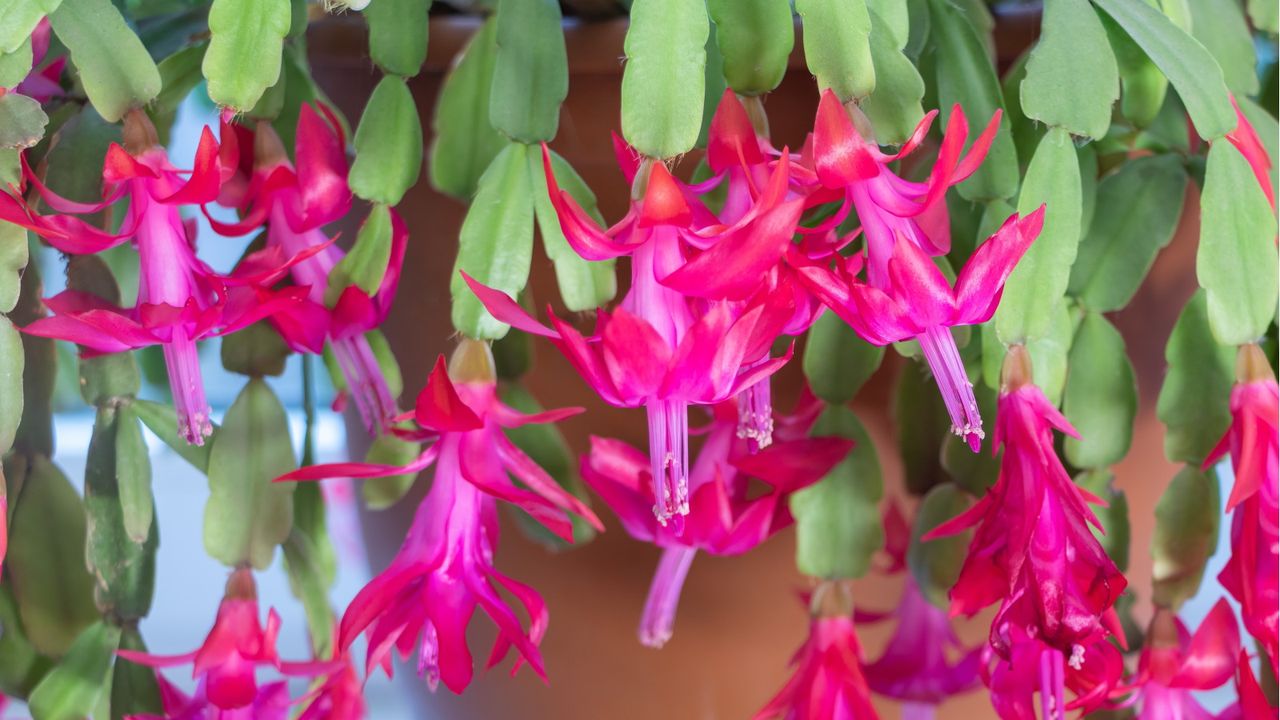
When you discover how easy it is to propagate a Christmas cactus, I guarantee you will not be able to stop. It is so simple to duplicate these holiday favorites and create new plants for your home for free.
If you already know how to grow a Christmas cactus, or Schlumbergera, it will come as no surprise that these unique plants are wonderful winter indoor plants, exploding into flower when there is a distinct lack of color outside. They also make lovely hostess or holiday gifts at this time of year.

Whether you are looking to expand your collection of a favorite plant, or create cuttings to give as gifts, this expert guide to Christmas cactus propagation takes you through the process step-by-step.

A few steps before you begin propagating a Christmas cactus
Much like propagating a snake plant, propagating a Christmas cactus involves taking a segment of the stem to develop new roots. While you can take a few cuttings from a plant at a time, make sure not to cut back too much growth.
Removing too many leaves at once could cause stress or weakness and cause the parent plant to ultimately die.
When taking plant cuttings, it is also important to make sure your parent plant is healthy and free from disease or decay, as this will delay or even prevent root development altogether.
As with propagating succulents generally, it is also a good idea to sterilize your pruning scissors first to ensure you do not damage the plant.
There are two ways to propagate Christmas cactus cuttings: in soil and in water. Here we go through each method in detail.
How to propagate a Christmas cactus in soil: step-by-step

- When you begin to propagate a Christmas cactus, start by taking a short, Y-shaped cutting from your adult plant. This segment should contain at least two or three joined segments to ensure it is large enough to sustain growing its own roots.
- Place your cuttings on a kitchen towel, and let the ends dry out for a day or two on a window ledge to allow them to callus.
- Prepare the right potting mix for your succulent cuttings. This Miracle-Gro succulent potting mix from Amazon is ideal. Or, you can mix houseplant compost with perlite and some bark to aid drainage and aeration.
- Insert the callused end of your cutting into the potting mix, and firm it in gently to prevent it from falling over.
- Keep your cuttings lightly watered, but never soggy. Knowing when to water a Christmas cactus is the most important thing in its care regime at this time of year. Water sparingly, and only increase as your cutting grows and develops.

- Place your cuttings in a well-lit, warm area, avoiding direct sunlight.
It can take anywhere between three and 12 weeks for a cutting to take root, so patience is needed. If you tug gently on your cutting and feel a little resistance, you can be sure it has developed a root system.
Once your plant displays signs of growth, such as small red buds on the end of stems, it may be time to repot a Christmas cactus and give it a bit more room to thrive.
How to propagate a Christmas cactus in water

It can sometimes be a bit trickier, but it is entirely possible to root a Christmas cactus in water with the right care and conditions.
Take the cutting the same way as you would to propagate in soil, but this time you do not need to wait for the stem to dry out before placing the cutting in water.
Place the cut end of the stem with the bottom nodes of the two Y-shaped segments just below the water line, and place the container in bright, indirect sunlight.
When propagating a Christmas cactus in water, leave the cutting until the roots have grown as long as the stem itself, usually around six to eight weeks. You may need to top the water up to make sure the two bottom nodes remain covered.
Once the roots are long enough, transfer the cutting to a drainable pot with succulent potting soil, watering more frequently and fertilizing as needed; you can even use coffee grounds as a fertilizer for a Christmas cactus.
The best time of year to propagate a Christmas cactus

If you want to make a Christmas cactus bloom, it is important to know when to propagate the cutting for the best growth.
The best time to propagate a Christmas cactus is when the parent plant has finished blooming, and the flowers have fallen away.
Late spring and early summer are the best times to take the cuttings, as this also allows plenty of time for fresh cuttings to take root before the holiday gift-giving period.
Taking cuttings and propagating a Christmas cactus at this time should make sure that the new plants are beginning to bloom by Christmas, making them look nicer when gifted.
Shop our cactus care edit
It's challenging, especially in winter, to know exactly how much we need to water our cuttings and indoor plants, which is why a Bluetooth soil moisture meter would come in very handy.
The right kit for taking indoor plant cuttings is crucial. These pruning snips are perfect for smaller indoor plants that require care and precision with propagating them.
If you have friends and family who love cacti as much as we do, this is the most fun holiday ornament to give as a token to someone special.
If you're going away for the holidays, plant watering globes are a genius way of making sure your indoor plants stay hydrated. We love these glass mushroom globes.
If you choose to propagate Christmas cactus cuttings in water, you can make a stylish feature out of them with a propagation station such as this one. The wooden base gives it a premium feel.
The right potting soil for Christmas cactus cuttings is essential. This Miracle-Gro mix is ideal for succulents and will give young plants everything they need to grow.
FAQs
Can I replant a broken Christmas cactus branch?
If a small section of a Christmas cactus breaks off, you may be able to grow it into a new plant. If planted correctly, a broken Christmas cactus stem will take root and develop new growth.
Because Christmas cacti root so readily, propagating them is an ideal beginner-friendly project that can build confidence when it comes to multiplying more of your houseplant collection. It's true that some indoor plants are easier to grow than others, but there are a lot of houseplant myths out there that you needn't pay attention to – as we reveal here.