
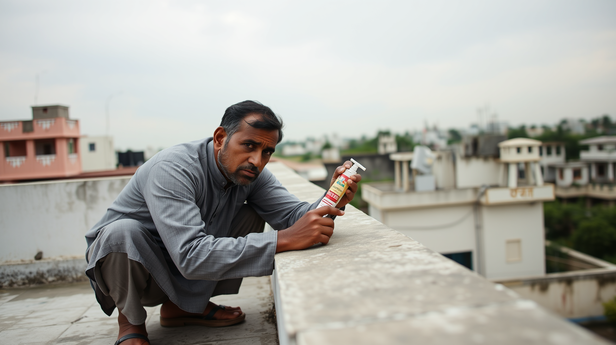
Start at the Roof, Every Leak Begins There
The terrace is the first place water finds a way in, and the last place most homeowners inspect. For flat RCC roofs common across Indian cities, the waterproofing coat, usually a bituminous membrane or a crystalline compound, has a functional life of three to five years. If yours hasn't been redone in that window, assume it has failed somewhere.Before the rains, clear the terrace completely. Look for hairline cracks along the parapet wall junction, this corner joint is where thermal expansion pulls the slab away from the wall. Fill cracks with polyurethane sealant, not cement paste. Cement paste is rigid; it will crack again with the first temperature shift. A flexible sealant moves with the structure.For sloped or tiled roofs in coastal homes, common in Kerala, Goa, and coastal Karnataka, check for cracked or displaced Mangalore tiles. A single broken tile can let water travel laterally under three or four adjacent tiles before it finds a ceiling to drip through. Replace individually rather than re-laying the full row unless the battens beneath are rotted.If your building has a terrace garden or potted plants, check that drainage holes in planters are clear. Standing water in a pot on an RCC slab accelerates surface erosion faster than rain alone.