A consistently good short game requires more than a 'one size fits all' approach.
A stock shot around the green is great to have, but being able to vary your flight with wedges is a great way to shoot lower scores and cut your handicap in 2026.

In this short game clinic, Top 50 Coach Alex Buckner shares a simple system for altering trajectory when pitching and chipping - which centres on simple setup changes that any golfer can make at address.
Alex coaches top tour players, like three-time DP World Tour winner Marco Penge, but he also helped countless amateurs to improve their short game - now, it's your turn!
A lot of club players don't understand why they launch their wedges a certain way. Often, it's inconsistency in their setup.
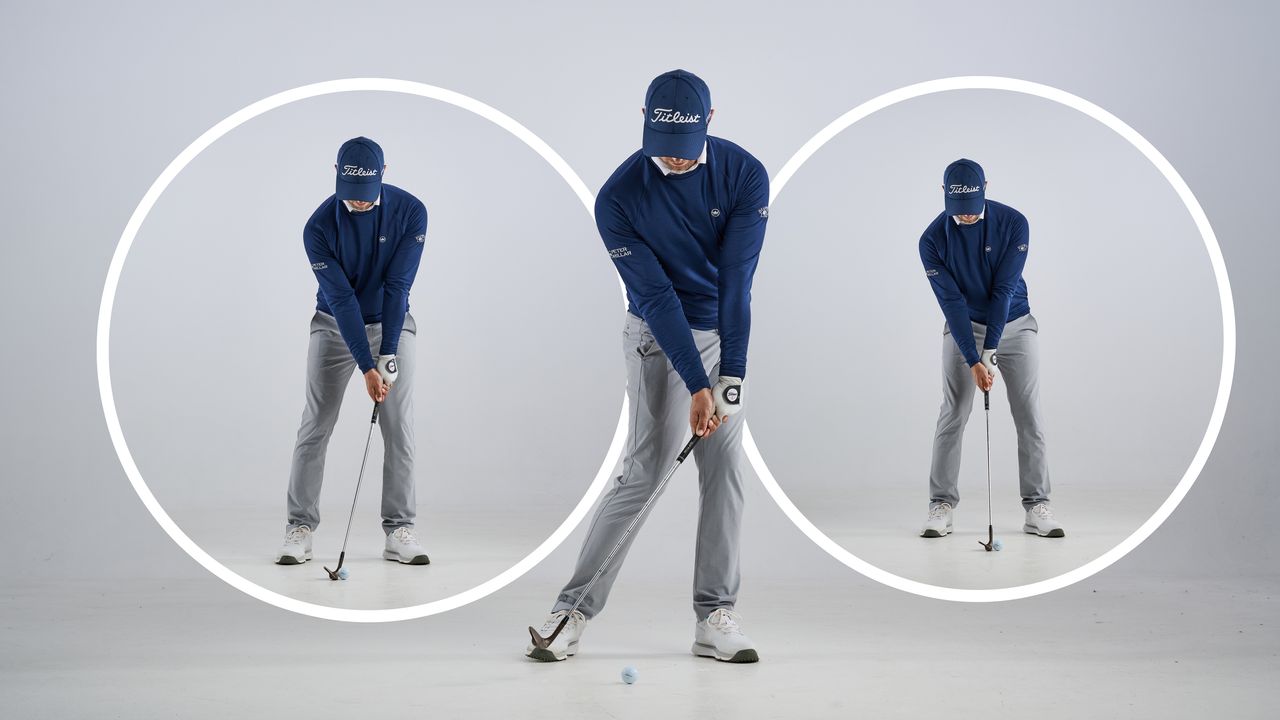
Here, you can see the ball is forward in my stance, my weight is stacked on my trail side and I'm tilted to my right. There is no shaft lean.
These are all elements that launch the ball high. If you launch it high and come up short, you may want to change a few things. In the wind, especially, it's not usually the right shot, as it's harder to control.
Most club players struggle to launch their wedges low, which is what I'm set up to do here. I've adopted a steeper position with my body, my weight is slightly forward, and I'm not tilted behind the ball.
In fact, my body has a slight tilt towards the target. The ball is back in my stance, and my hands are forward. Note the shaft lean here.
By making these few changes to the address position, I'm altering the attack angle and moving the low point forward so the ball launches low.
Depending on the scenario, you may want to launch it high or low. For example, picture a front flag, downwind on a hard green, versus playing into the wind to a back flag.
The former scenario best suits a higher trajectory, and the latter a lower one.
The best pitchers can hit their yardages in multiple ways. Practise hitting from 50-100 yards with two different flights to help you master your distance control and learn how to adapt your trajectory.