Get all your news in one place.
100's of premium titles.
One app.
Start reading
The Conversation
The Conversation
Leo S. Lo, Dean, University of Virginia

How to know if you can trust an AI’s answer to your question

An AI answer to a search query can fit one of several types. Matteo Della Torre/NurPhoto via Getty Images

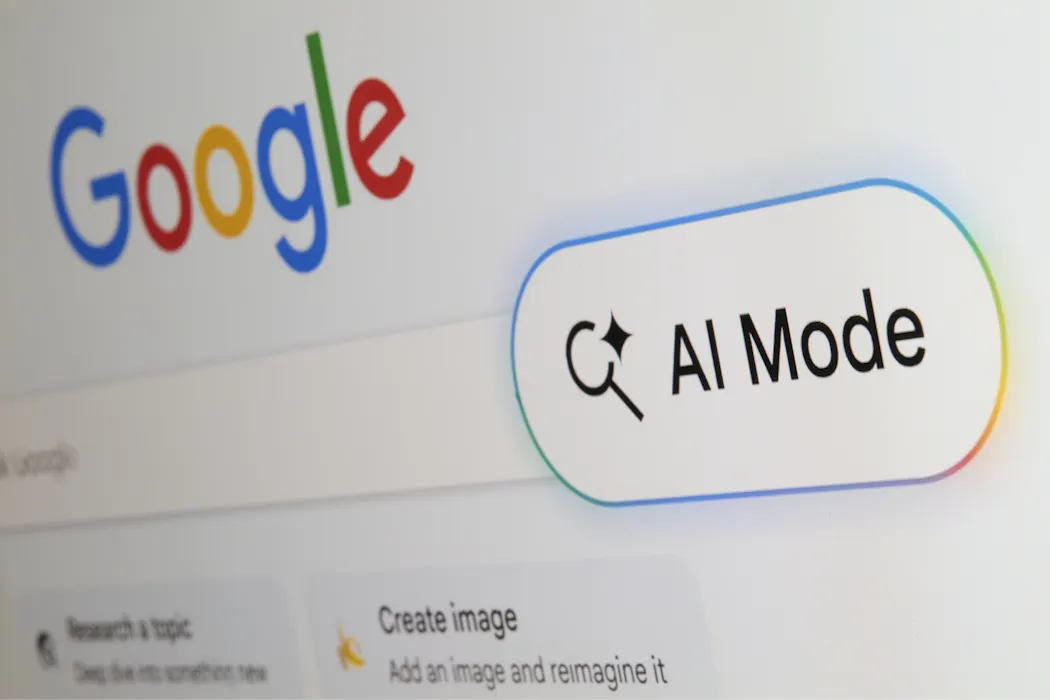
I recently typed a simple question into Google search: How much screen time is too much for teenagers? Instead of presenting links, as Google had been doing for many years, it gave me an AI-generated answer. The artificial intelligence agent cited a number, then complicated that reply, noting that quality and balance of time could matter more than the number of hours, and that “too much” time could depend on a teenager’s sleep, exercise, school demands and mood.

I tried another search: Should I take a daily aspirin? This time the AI answer presented me with medical information, warned about risks and offered more tailored guidance if I provided my age and medical history.

These were good replies. What interested me was that they were different kinds of replies.

Debate about AI answers has focused on accuracy: Did the system get the answer right? That matters, but accuracy is only one test. Each kind of answer requires a user to judge something different.

I find it useful to sort AI answers into an “answer typography” of four broad types: factual, interpretive, constructive and strategic. A factual claim can often be checked against a source. An interpretation can be accurate and still reflect choices about which evidence matters. A construction can be well reasoned and still be wrong for the person receiving it. A beautifully written strategic document may not be true. Yet AI presents all four types of answers in much the same fluent, authoritative form; the differences are easy to miss.

I’m university librarian and dean of libraries at the University of Virginia who leads national efforts to develop AI competencies for library professionals, and I consult widely on AI literacy. I first proposed the typography in the Journal of Academic Librarianship.

The four categories are not airtight boxes. A response from an AI agent can reflect several types. That said, I describe each type of answer below, and offer guidance for deciding whether a reply is ready to use or needs more investigation.

Which answer is Google giving you?

A factual answer makes a claim that can, in principle, be checked against evidence. When was the University of Virginia founded? What is the chemical symbol for gold?

To determine whether a factual answer is robust enough for you to use, verify the claim against an appropriate source. If the answer cites a source, follow that link instead of simply treating the answer itself as proof.

An interpretive reply is built on evidence, but there is not a single takeaway. How much screen time is too much for a teenager? Does remote work raise productivity? The answer depends on what evidence is included, what is left out and how disagreement is understood.

Google’s initial answer to my screen-time question indicated that two hours was a limit for teenagers. Then it noted that pediatric guidance puts more weight on the quality and context of screen use than on simple hours. The American Academy of Pediatrics says there is no exact recommended amount for teens and emphasizes the kind of screen use and what activities it might be displacing. A question that looked numerical turned out to require interpretation.

To assess interpretive answers, do more than check facts. Ask yourself what evidence the system emphasized, what it left out and whether another defensible interpretation exists. A useful follow-up question to present to the search engine is: “What is the strongest evidence for a different conclusion?”

Blocks of text on a smartphone screen
An interpretive answer like this response from a Google AI weighs evidence and considers disagreements. Jaap Arriens/NurPhoto via Getty Images

Constructive answers are made rather than discovered. Ask AI to draft a cover letter, write a eulogy, suggest a lesson plan or reorganize a paragraph – there is no single correct result.

You can judge the response by considering purpose, audience and voice. A eulogy can be grammatically perfect and still sound nothing like the person delivering it, or it may land flat on family members hearing it. It may not capture the deceased person well, either. Consider these kinds of effects as you read.

Strategic questions ask what to do. Should I take a daily aspirin? Should I buy the house? The answers combine information with judgment about goals, risks, trade-offs and personal circumstances.

My aspirin search shows why context matters. Google warned about risks, told me to consult a medical professional and offered more tailored information if I provided my age, cardiovascular history and risk of bleeding. That caution matches the U.S. Preventive Services Task Force guidance. It says the decision to start low-dose aspirin for prevention of heart attacks and strokes should be individualized and weigh cardiovascular benefit against bleeding risk.

For strategic answers, ask what the system would need to know before its advice could reasonably apply to you individually. Consider the stakes, the alternatives and whether a qualified person should be involved. For the aspirin question, a useful follow-up would be: “What details about my age, medical history or bleeding risk could change this advice? What should I discuss with my doctor before deciding?” The final judgment remains yours because you are the person who has to live with the outcome.

The first question after an answer

My questions began as ordinary Google searches. I did not open a chatbot. The AI-generated responses simply arrived, and links were appended.

The responses were useful. Google added context, acknowledged complications and offered tailored guidance if I supplied additional information. Within each response, though, the type of answer could change. Reporting what a medical guideline says is different from deciding how it applies to a particular person. A fluent response can move between those types of answers without a noticeable change in voice.

As a user, try to recognize what kind of intellectual work the AI agent did for a response you receive. Consider whether the interpretation is persuasive or the advice fits your circumstances.

Before asking whether an AI answer is right, ask a more basic question: What kind of answer is this? The type will tell you what to do next.

This article was originally published on The Conversation. Read the original article.

Sign up to read this article
Read news from 100's of titles, curated specifically for you.
Already a member? Sign in here
Related Stories
Top stories on inkl right now
One subscription that gives you access to news from hundreds of sites
Already a member? Sign in here
Our Picks
Fourteen days free
Download the app
One app. One membership.
100+ trusted global sources.