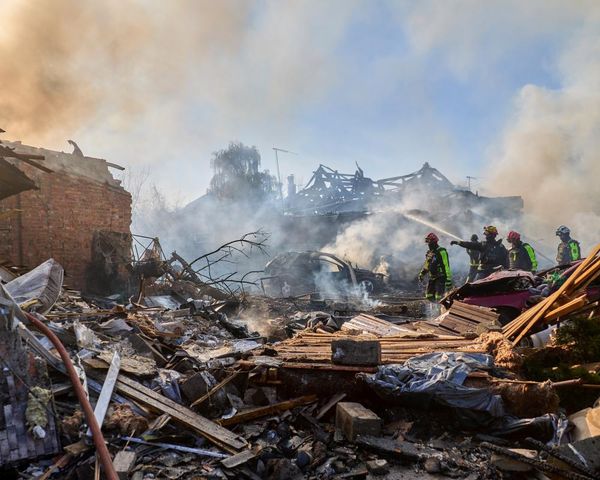
The Tigray region in Ethiopia’s north has endured one of the world’s deadliest armed conflicts of the 21st century. Between 2020 and 2022, as many as 800,000 people were killed (out of a regional population of about 7 million). This rivals estimates from recent major conflicts, including those in Ukraine, Yemen, Sudan and Syria.
The war was fought between Tigray’s security forces and the allied forces of Ethiopia and Eritrea, along with ethnic militias from different regions of Ethiopia.
This period was marked by organised massacres. There was also systematic sexual violence and mass displacement. Ethnic cleansing and prolonged siege conditions devastated civilians.
Despite its unparalleled scale, the Tigray crisis remained largely invisible to the world. Factors such as race and the peripherality of the region made the Tigray conflict a blind spot in global geopolitics. But these explanations are not sufficient.
I have studied Ethiopia’s politics, and closely followed developments in Tigray since the outbreak of the war. In a recent article, I examined the steps taken by the Ethiopian government and its allies to conceal atrocities from global scrutiny.
I analysed government statements, media coverage and reports from local and international human rights organisations shortly before and during the war. I found that the war and its associated human rights and humanitarian crises were not hidden by accident. They were actively rendered invisible.
The Ethiopian government and its allies employed four major tactics to create a “zone of invisibility” – a deliberate effort to obscure what was happening:
physical blockades that limited access to information and evidence
and narratives that reframed the Tigrayan population as legitimate targets of violence.
These measures allowed atrocities to unfold with limited external scrutiny.
The tactics could easily be replicated by Ethiopia – or by other authoritarian regimes elsewhere – which makes understanding the Tigray case crucial.
The Tigray war demonstrates how modern authoritarian states can combine military force, information control and narrative framing to obscure mass atrocities.
When mass violence is rendered invisible, it is rarely resolved. Instead, it is reproduced. And when accountability is deferred, the conditions that enabled atrocities remain intact.
Manufactured invisibility
The production of a “zone of invisibility” in Tigray was the result of deliberate political and military strategies. The Ethiopian government and its allies systematically limited what could be seen, documented and understood about the war.
1. Communication shutdowns: Immediately after the war began, the Ethiopian government imposed a near-total communications blackout. This lasted over two years. It happened alongside widespread disruptions of telecom, media and power infrastructure. These measures isolated Tigray and prevented information about violence from circulating.
2. Restrictions on journalists and humanitarian organisations: Access to the region was tightly controlled. Journalists and humanitarian organisations were denied entry or restricted in their movements. This removed independent witnesses who could document events and convey civilian suffering to global audiences.
3. Physical blockades: Road closures, territorial occupation and blocked aid routes physically isolated the region. Tigray became a space where violence was difficult to observe or escape, allowing atrocities to unfold largely beyond international scrutiny.
4. Narrative framing: The federal state promoted narratives that made the violence in Tigray appear legitimate and necessary. Official discourse and allied media portrayed Tigrayans as “rebels”, “weeds” and a “cancer in the body politic”. This language dehumanised the population and normalised collective punishment. Such framing dampened calls for intervention and accountability. Additionally, the Tigray war was presented as a “law enforcement operation”. It was often addressed as a domestic conflict. This is despite the full-scale involvement of the Eritrean army. Foreign states also supplied weapons, including the United Arab Emirates, Israel, Turkey and China.
Taken together, these patterns suggest that the violence was structured, targeted and sustained.
Large-scale fighting in Tigray formally ended with the Pretoria Cessation of Hostilities Agreement in November 2022. However, the aftermath has not brought justice or security.
Instead, violence has persisted in Tigray – and spread across Ethiopia.
Accountability mechanisms have been weakened or dismantled. Survivors of the 2020–2022 war continue to live under conditions of profound insecurity, humanitarian deprivation and ongoing human rights violations.
Evading justice and accountability
Following the ceasefire deal in 2022, the Ethiopian regime effectively undermined and ultimately dismantled international investigative mechanisms into crimes committed during the Tigray war.
In 2023, both the UN-mandated International Commission of Human Rights Experts on Ethiopia and an African Union commission of inquiry were terminated. This left no independent international body to pursue accountability.
The dismantling of these mechanisms partly resulted from a sustained campaign by the regime and its allies. However, international actors also allowed themselves to be persuaded by promises made by Ethiopian authorities to establish domestic transitional justice processes.
These commitments amounted to what the UN Commission of Human Rights Experts on Ethiopia has described as “quasi-compliance”: symbolic gestures rather than genuine efforts to ensure accountability.
This is evident in the absence of meaningful attempts to prosecute perpetrators, protect survivors or halt ongoing violence in the post-ceasefire period.
Instead, the Ethiopian state has used the ceasefire agreement to rehabilitate its international image. It has re-established diplomatic and trade relations with regional blocs such as the European Union. These ties had been strained by human rights violations in Tigray.
What happens when atrocities go unnoticed, unpunished, or even tacitly accepted? Impunity does not end violence; it perpetuates it.
After a relative pause over the past three years, active war has flared up again in Tigray in 2026.
This has raised the prospect of a renewed full-scale siege. This is evidenced by recent drone attacks and the suspension of flights to the region.
Further, since late 2025, the federal government has seemed to be moving toward a potential war with Eritrea. This would severely impact Tigray once again. Any confrontation is likely to be fought over Tigrayan territory.
Ethiopia is invoking Eritrea’s occupation of Tigrayan territories – as grounds for confrontation.
In an address to the federal parliament in February 2026, Prime Minister Abiy Ahmed further acknowledged that the Eritrean army killed civilians on a large scale in Tigray, and dismantled and looted civilian infrastructure.
With rhetoric hardening on both sides, war appears increasingly likely.
Diffusion of violence beyond Tigray
The enduring consequences of invisibility and impunity are evident across Ethiopia.
Since the signing of the ceasefire in 2022, the Ethiopian regime and its former allies have fractured and turned their weapons against one another.
In the Amhara region, south of Tigray, is the Fano. This is an ethnic militia accused of ethnic cleansing in western Tigray and other grave crimes alongside the federal army. It’s now been engaged in armed conflict with that same army for nearly three years.
Meanwhile, violence in the Oromia region, which began long before the Tigray war, has continued unabated.
Tactics that were tested and refined during the Tigray war are now being redeployed against civilians in both Amhara and Oromia.
Rather than marking a transition to peace, the post-ceasefire period in Tigray has led to the diffusion and normalisation of violence across Ethiopia’s political and geographic landscape.
Teklehaymanot G. Weldemichel does not work for, consult, own shares in or receive funding from any company or organisation that would benefit from this article, and has disclosed no relevant affiliations beyond their academic appointment.
This article was originally published on The Conversation. Read the original article.