Get all your news in one place.
100’s of premium titles.
One app.
Start reading
Tom’s Guide
Tom’s Guide
Technology
Kaycee Hill

How to fix muffled TV dialogue — 3 settings that make speech clearer on your Samsung TV

Best 65-inch TVs.

You're watching your favorite show on your Samsung TV, straining to catch what the characters are saying. Turn it up a bit, and suddenly you can follow along. Then an action scene starts and the volume is deafening. Back down it goes.

This constant volume battle is maddening, but your Samsung TV has features specifically built to fix it. They're just tucked away in menus many people might never explore. These three settings will make dialogue audible without sending you diving for the remote every few minutes.

1. Switch to Amplify sound mode

Your Samsung TV comes loaded with pre-set sound modes, and the one you want is called Amplify. It emphasizes the frequency range where human voices exist, pushing dialogue forward in the mix so it cuts through background music and sound effects.

Finding it depends on your TV's age. For newer models, hit Home on your remote, open Quick Settings, tap Sound Mode, then choose Amplify. Older models: press Home, go to Settings, then Sound, then Sound Mode, and select Amplify.

The other modes serve different purposes. Standard leaves everything flat and balanced. Optimized (sometimes called Adaptive Sound) pumps up explosions and special effects. But for anything dialogue-driven, Amplify is what you want.

2. Enable Auto Volume

Auto Volume addresses one of the most annoying aspects of watching TV: dialogue scenes force you to turn the volume up, then action sequences blast at uncomfortable levels. This feature keeps audio output steady across different types of content.

To enable Auto Volume, press Home on your remote, then go to Settings, Sound, Expert Settings, and toggle on Auto Volume. What this does is narrow the gap between the quietest and loudest moments.

Soft-spoken dialogue gets a slight boost, while explosions and gunfire get pulled back. The audio stays in a more consistent range, which means less time fiddling with your remote and more time actually watching

3. Turn on Adaptive Sound

Think of Adaptive Sound as your TV listening to two things at once: the audio coming through, and the room it's playing in. Hard surfaces reflect sound differently than soft ones. Large rooms behave differently than small ones. Adaptive Sound accounts for this and adjusts on the fly.

Where you'll find it varies by model. Some Samsung TVs hide it under Settings, General & Privacy, Intelligent Mode. Others put it under Settings, Sound, Sound Mode. Navigate to whichever path your TV offers and turn it on.

Certain models offer Adaptive Sound+ or Adaptive Sound Pro, which are more advanced versions with additional features. If you see those options, use them —they'll give you even cleaner dialogue.

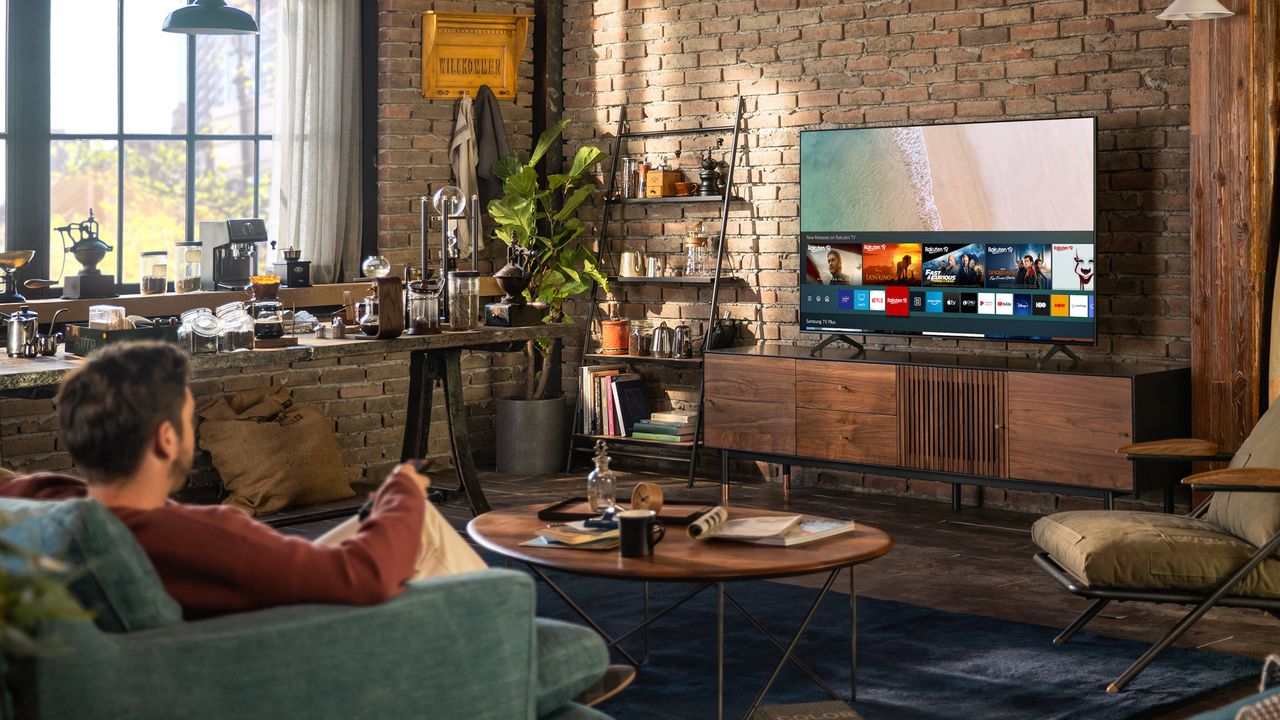
(Image credit: Future)

Follow Tom's Guide on Google News and add us as a preferred source to get our up-to-date news, analysis, and reviews in your feeds. Make sure to click the Follow button!

More from Tom's Guide

Sign up to read this article
Read news from 100’s of titles, curated specifically for you.
Already a member? Sign in here
Related Stories
Top stories on inkl right now
One subscription that gives you access to news from hundreds of sites
Already a member? Sign in here
Our Picks
Fourteen days free
Download the app
One app. One membership.
100+ trusted global sources.