Search is changing fast. Half of the people still type something into Google and click a link. The other half now asks ChatGPT a question and just reads the answer — no click needed. That second group keeps growing, and that's why finding the best AEO agency has turned into a real budget decision, not just a nice-to-have.
Answer Engine Optimization (AEO) means setting up your brand's content and online reputation, so AI tools—ChatGPT, Google AI Overviews, Perplexity, Gemini, and Copilot—actually mention, quote, or recommend you when someone asks a question in your space. It works alongside normal SEO, but the goal is different. SEO asks, "Will this page show up in search?" AEO asks, "Will this brand be the answer?"
This guide explains what AEO really involves, how to tell a skilled agency from one that just added "AI search" to an old SEO sales page, and how to judge your options without falling for promises no one in this field can actually keep.
What AEO Really Means
AEO is about making your brand easy for AI models to understand and trust. Normal SEO works to please search crawlers and ranking systems. AEO works to win at retrieval and citation, that's the process where an AI tool pulls a piece of text from the web, decides it answers the user's question, and either quotes it or repeats it in its own words while crediting the source.
Three things are driving this change:
- AI-generated answers are now everywhere. Google's AI Overviews show up in front of billions of searches, and a lot of those searches never lead to a click at all. The answer itself is the destination now, not a list of links.
- People use chat tools to do research. People ask ChatGPT and Perplexity to compare companies, sum up a whole market, or suggest a service — the same questions that used to live inside Google's "best of" articles.
- Citations keep paying off, clicks don't. One well-built page can be the source behind thousands of AI answers over time. That's a very different kind of growth than a page that needs constant new visitors to stay useful.
You'll also hear the term "Generative Engine Optimization" (GEO), which overlaps a lot with AEO. Most people in the field use the two terms almost the same way, though GEO usually focuses more on how an AI model actually phrases and weighs information, while AEO is the bigger-picture goal of simply getting noticed and recommended in the first place. A skilled agency should be comfortable explaining the difference in plain words, not buzzwords.
How AI Tools Actually Decide What to Quote
This is the part most "best agency" articles skip—and it's the part that decides whether an agency's work will actually help you.
When someone asks an AI tool a question, the model usually doesn't just rely on what it learned during training, especially for anything current or commercial. Instead, it runs a search step: it looks through the web or a pre-built database, pulls back a set of possible answers, and writes its response based on those. This process is often called retrieval-augmented generation (RAG), and it's how Perplexity adds citations, how Google's AI Overviews work, and how ChatGPT answers questions when browsing is turned on.
What makes a piece of content more likely to get picked and quoted:
- Clear, complete answers. A paragraph that fully answers one specific question — without making the reader scroll up for context — is much easier for an AI tool to lift cleanly.
- Clean structure. Headings written as questions, FAQ sections with schema markup, comparison tables, and numbered lists all make it easier for a model to pull out one clear fact or recommendation.
- A clear sense of who you are. The model needs to know exactly who or what it's talking about — your brand, your service, your founder, your location — with no confusion. This is where entity SEO and structured data (Schema.org markup, consistent business details, a clean presence in Google's Knowledge Graph) come in.
- Other sources back you up. AI tools pay attention to how many independent, trustworthy sources say the same thing about you. One glowing page on your own website carries far less weight than the same point being repeated on review sites, comparison articles, and forums—Reddit, especially, has shown up again and again as one of the most-quoted sources across ChatGPT, Perplexity, and AI Overviews in independent studies.
This is why AEO is really about trust and authority, not a clever formatting trick. An agency that only rewrites your existing pages, without working on how the rest of the internet talks about you, is only solving half the problem.
What a Skilled AEO Agency Should Actually Be Doing
Take away the sales language, and real AEO work comes down to four connected parts.
- Checking where you stand today. Before changing anything, a good agency checks where your brand already shows up in AI answers, which competitors are winning those same questions, and where the gaps are. This usually means running a set of test questions across several AI tools and tracking whether your brand gets quoted; just mentioned; or doesn't show up at all — three very different results that a sloppy agency will lump together as "visibility."
- Rewriting content and fixing the technical side. This means rewriting your key pages so they give a direct answer right away; adding FAQ and structured data markup; building comparison content written the way people actually talk to AI tools; and making sure your site is easy to crawl and cleanly built so nothing blocks the AI tools from reading it.
- Building trust and authority on your own site. This is the other half of the work: getting mentioned on the outside websites that AI tools already trust in your industry, joining real conversations in forums and communities, strengthening your presence in structured knowledge sources, and making sure your brand's facts stay consistent everywhere they appear online.
- Watching the results and adjusting. Since no one can force an AI model to say something specific, ongoing tracking matters a lot. The agency should show you real numbers on how often you're getting cited and how your visibility changes month to month — not just a one-time report at the start.
What AEO Can — and Cannot — Promise You
This is the single biggest way to tell a trustworthy agency from a risky one.
No agency can promise you a specific spot inside ChatGPT, a guaranteed appearance rate in AI Overviews, or an exact number of citations. AI answers are based on probability, change whenever the model updates, and shift depending on how a question is phrased. Any agency that promises a guaranteed #1 spot in an AI answer is promising something the technology simply can't deliver.
What a trustworthy agency can reasonably promise:
- A clear report on where you stand today compared to your competitors
- A real plan covering content, technical fixes, and outside authority
- Honest reporting on how often you're cited, your share of voice, and how you're talked about
- Realistic timelines small wins on easy, low-competition questions can show up within weeks, while real, lasting visibility in a competitive industry usually takes several months to build
If a sales pitch leans on phrases like "AI magic," "secret algorithm," or a guaranteed placement, treat that as a warning sign, not a selling point.
How to Compare AEO Agencies
A few simple questions can cut through the sales talk fast:
- Can they explain their process in plain language? If they can't walk you through, step by step, how they find gaps and fix them, they probably don't have a real, repeatable process.
- Do they separate being cited, mentioned, and ranked? These are three different results, and an agency that mixes them all is either new to this work or being vague on purpose.
- What's their plan for where your audience actually looks? A B2B software company needs visibility on comparison pages and review sites. A consumer brand needs press coverage, video, and forum discussion instead. A generic, one-size-fits-all answer here is a red flag.
- Do they show real, specific case studies? Real numbers—citation growth, traffic changes, and leads they can trace back to AI search—matter far more than a vague claim of "better AI visibility."
- Do they tell you who they're not right for? The most honest agencies will openly say who they don't work well with. One that claims to be a perfect fit for everyone usually isn't deeply specialized in anything.
Pricing depends a lot on scope. Light audits and basic fixes can start in the low thousands per month, while full programs that include content, technical work, and outside PR usually run from several thousand dollars up to well over ten thousand a month for competitive B2B industries. Be skeptical of anything priced far below that range or billed as "pay per citation" that neither matches how this work or the AI systems behind it actually function.
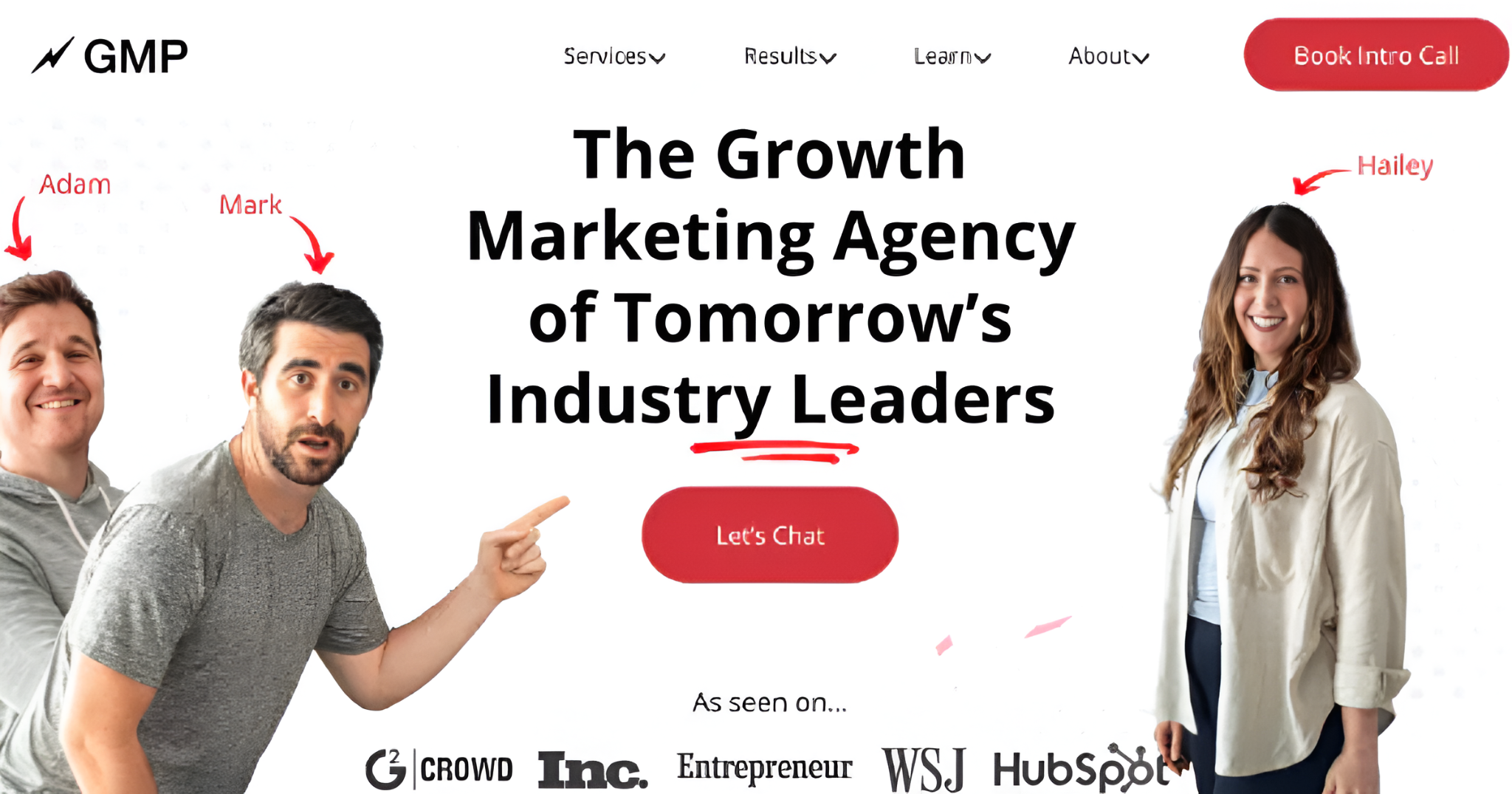
One example of how this looks in practice:Growth Marketing Pro runs its AI visibility work (what it calls "Search Everywhere Optimization") alongside SEO, Reddit marketing, and paid media under one roof, rather than treating AI visibility as a separate, bolted-on service. That kind of setup matters because the off-site authority work (Reddit, reviews, press mentions) and the on-site content work feed each other; splitting them across two unrelated vendors usually slows both down.
AEO, SEO, and GEO: How They Fit Together
It helps to be clear about how these three terms relate, since people often use them loosely.
|
Term |
What It Optimizes For |
What Success Looks Like |
|
SEO |
Search crawlers and ranking systems |
A page ranking on page one, earning a click |
|
AEO |
Being found and trusted by AI tools |
Your brand is getting quoted or recommended in an AI-generated answer |
|
GEO |
The AI's actual generated response |
How an AI model phrases and frames your brand when describing it |
None of these works alone. Strong basic SEO (a clean site, fast load times, proper indexing) is the foundation that AEO is built on — if search engines can't crawl your page easily, an AI tool won't be able to pull from it either. Entity SEO connects both: it's how search engines and AI models build a clear, confident picture of who you are, what you offer, and why you're worth trusting.
Conclusion
Picking the best AEO agency isn't about finding whoever scored themselves highest on their own comparison chart; plenty of agencies, including ones on nearly every "best of" list, rank themselves first. What actually matters is whether a partner can clearly explain how AI tools find and quote sources, whether their plan covers both your own content and your external reputation, and whether they report results honestly rather than promising things nobody can actually control.
One thing worth remembering: agencies that talk the most about "AI ranking algorithms" usually understand this the least. The ones doing solid work talk instead about entities, outside proof, and clear structure—because that's what actually gets you quoted.
The brands that win in AI search aren't the ones that found a shortcut. They're the ones that made themselves genuinely easy for an AI model to understand, trust, and recommend — through clear content, a consistent brand identity, and real proof from across the web. Run any shortlist through the checklist above before signing anything; it'll tell you more in ten minutes than a sales call will in an hour.
Frequently Asked Questions
What is the difference between AEO and SEO? SEO is about ranking your web pages in regular search results so people click through to your site. AEO is about getting your brand quoted or recommended directly inside AI-generated answers, where there may be no click at all. They share some of the same groundwork but aim for different outcomes.
How is AEO different from GEO? The two terms are closely related and often used to mean the same thing. AEO is usually the bigger-picture term for getting noticed and cited across AI search tools, while GEO specifically focuses on how generative models phrase and prioritize information about a brand. In practice, most agencies treat them as one combined service.
Can an AEO agency guarantee I'll show up in ChatGPT or Google AI Overviews? No honest agency can guarantee this. AI-generated answers depend on probability-based systems that no outside company can fully control. A trustworthy agency will talk about improving your odds and frequency of being cited, not promising a specific spot.
How long does it take to see results from AEO? Small, early wins — like showing up for one specific question — can happen within a few weeks if there's not much competition and the content is well-built. Bigger, more lasting visibility across a competitive industry usually takes several months of steady content and outside work to build up.
Do small businesses need AEO, or is it only for big brands? AEO matters at any size. Smaller businesses often see faster early results since their websites are simpler and they may have less competition in AI answers, while larger companies usually need more technical and brand-identity work because they have more existing content to fix.
What is entity SEO, and why does it matter for AEO? Entity SEO means making sure search engines and AI tools have a clear, consistent, unmistakable understanding of who you are — your name, location, services, leadership, and how you relate to other topics. It matters for AEO because AI models depend on this clarity to decide whether your brand is a trustworthy source worth quoting.
Does better AEO also help my regular SEO rankings? Generally, yes. Most of the work that improves AI citations — structured data, content that answers questions directly, stronger outside mentions — also helps normal ranking signals like relevance, authority, and crawlability. The two usually support each other more than they conflict.
What should I watch out for when choosing an AEO agency? Be careful of agencies that promise guaranteed rankings or a fixed number of citations, lean on vague buzzwords like "AI magic" instead of explaining their process, charge "per citation," or claim to be a perfect fit for every type of business with no stated exceptions.
Which AI platforms matter most for AEO right now? ChatGPT, Google AI Overviews, Perplexity, Gemini, and Microsoft Copilot are the platforms most commonly tracked, since together they handle the largest share of people's research and shopping-related questions. Which ones matter most for you depends on where your specific audience is already asking questions.