
Get all your news in one place.
100's of premium titles.
One app.
Start reading
Homes & Gardens
Homes & Gardens
Sarah Wilson

How to Design a Healing Garden This Spring – Stress-Reducing Plants and Layouts That Really Work to Reduce Cortisol

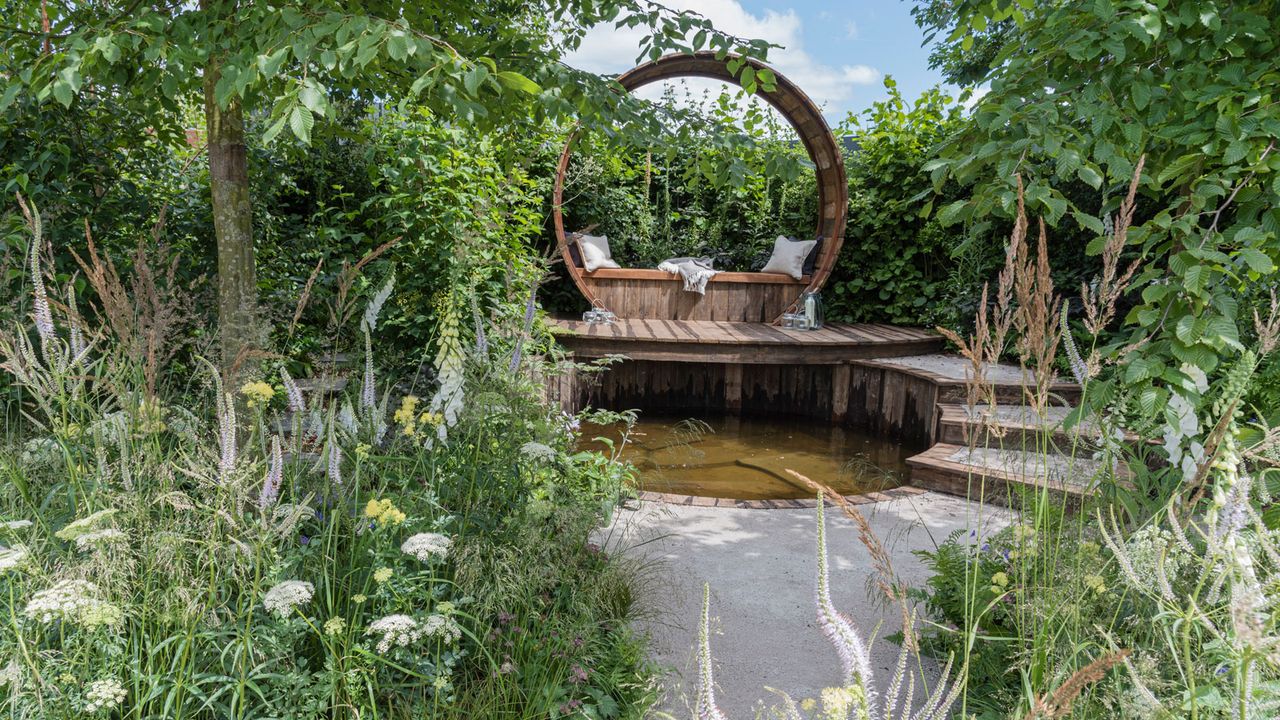
Garden retreat design with pond, deck and steps, plus immersive perennial planting and trees.

One of the defining ideas behind how to design a healing garden is that the space unfolds as you move through it, then feels like a cocoon when you decide to sit and pause a while. A healing garden designed with intention should reduce stress and anxiety, help you focus on feeling calmer, and improve the quality of your sleep. In addition to being a wonderful place to spend your downtime.

Therapeutic elements in any wellness garden generally include a contemplative seating area, a soothing water feature, and layered planting featuring feelgood aromatic scents and rustling, textured grasses to enrich the experience of time spent in the garden. Pollinating plants, bird baths and houses, and bee hotels to attract wildlife will give you an extra dimension to connect with beyond the purely visual.

A healing garden works best when it feels immersive, offers seclusion, and is a little hidden from the rest of the garden. It should invite you to pause and take a break from the world, and you should feel a deep connection with it. We spoke to leading wellbeing and plant experts to find out how to design and create your very own healing garden.

(Image credit: Future/Jacky Hobbs)

How To Design A Healing Garden: 5 Key Things To Know

'Green space reduces cortisol measurably, but the healing isn't in the plants themselves,' explains New York based psychologist Natalie Buchwald.

'It is in the sensory engagement: the texture of soil, the sound of moving water, the smell of earth after rain. The garden works because it pulls you into your body and out of your head, and that is a physiological event.'

Planning and designing a healing garden aims to produce intentional therapeutic benefits such as reduced anxiety, improved sleep, and calm focus. 'The garden is immediate, concrete, and sensory,' adds Natalie.

'You cannot be in the garden and also be fully in an anxious thought loop. The two states compete, and the sensory environment usually wins if the design invites engagement rather than observation.'

1. Create A Sense of Refuge Using Biophilic Design

This secluded seating space is perfect for stepping back from the busy routine of daily life (Image credit: Sarah Cuttle/RHS)

There is strong evidence connecting nature, views of nature, and access to nature with improved mental health, reduced stress, and better sleep patterns. We can strengthen this link by using biophilic garden design trends that seek to connect us more closely with nature.

'What we’ve learned in healthcare translates directly to healing gardens everywhere,' says Shane Pliska, a recognized expert in biophilia who designs and builds gardens, particularly healing environments for hospitals and medical facilities.

'Our in-house team has worked extensively with major hospitals, assisted living, and memory care communities. At their best, these spaces are not just landscapes, they influence how people feel and recover.'

According to Shane we all need a place of refuge where we can relax. 'That means designing spaces where you can sit without feeling exposed, tucked into a grove of trees, under a canopy, or in a quiet garden alcove. A healing garden should offer nooks, and areas of protection and privacy.'

We also need to layer our sensory experiences in the healing garden to engage our senses without overwhelming them. 'This means using soft grasses and foliage, and filtered light that creates visual softness,' says psychotherapist Rachel Melvald, founder of Psychitecture™ and author of bestselling book Neurodesign: The Art and Science of Harmonious Living, available from Amazon.

'Biophilia is how nature heals us. It's everything found in nature that our primitive brains are attracted to, especially leaves, patterns and shapes.'

2. Use Curvilinear Design To Reduce Stress And Anxiety

The gentle curves in this design are soothing and calming (Image credit: RHS/Sarah Cuttle)

'When we look at a garden from a Psychitecture perspective, we want it to be healing,' says Dr Rachel Melvald. 'We're going to look at the layout for regulation and flow. So we introduce curvature as it's easier on the brain, using curving paths promoting safety and exploration to define zones.'

'Winding pathways leading to meditation areas with benches or hammocks serve as a quiet escape for those looking to find inner peace,' Dr Lori Bohn, Medical Director at Voyager Recovery Center.

'Curved walking paths made of natural stone or soft, crushed gravel encourage slower more mindful walking that reduces stress and promotes a much calmer focus. Open areas can be designated for activities like yoga, tai chi, or other forms of mindful stretching.'

This idea also translates into designing quiet areas for seating incorporated into a curvilinear design. This works as these reflective spaces act like a protective cocoon around us, which allows us to make a connection with our calmer selves and feel the benefits of horticultural therapy.

3. Tap Into The Sensory Benefits of Using Aromatic Plants

Scented plants like lavender are a key feature in the healing garden (Image credit: Plantipp)

Plants with aromatic scents such as lavender, rosemary and thyme placed near seating can aid in reducing anxiety by promoting deep breathing.

You can find vibrant Hidcote lavender plants at Fast Growing Trees.

Aromatic plants work on our olfactory and memory systems, helping us relax and creating a more positive mood. They are also beneficial in promoting improved sleep.

'Flowers like echinacea (coneflower) and calendula will also provide brief moments of vibrant color to enhance your mood without becoming too stimulating,' says Dr Lori Bohn.

'In addition, I suggest including trees and shrubs that add natural shade and create an enclosed atmosphere. This provides a sense of safety and comfort in your garden space.'

These crimson coneflower from Fast Growing Trees are certain to boost your mood.

Incorporating various textures throughout your garden allows you to experience your surroundings through multiple sensory means at once. Plantscaping with ornamental grasses is the go-to for adding soothing texture and movement.

'Research has shown that using multi-sensory experiences simultaneously can have a positive effect on stress levels and sleep quality,' adds Lori.

4. Design A Soothing Contemplation Garden With Color and Water

A water feature offers a space for contemplation while pops of color are uplifting (Image credit: Sarah Cuttle/RHS)

Intent is everything when working out how to design a healing garden. Your first step should be to discern what exactly you're looking to feel in your garden.

'If you crave escape, comfort and contemplation you will want to be soothed by a plant palette that focuses more on native native trees, shrubs, shades of green and texture,' says regenerative landscape designer Trevor Smith.

'In a contemplation garden the path leads to a destination, and the sounds of a water feature are low, slow and rhythmic. A contemplation garden feels like a green hug.'

Natalie Buchwald advises minimizing visual complexity at the far edges of the space, where the eye tends to travel and the mind to wander. 'Prioritize sound (water features, wind in grasses) over visual spectacle.

'Include something to touch and something to tend. The tending is important. Caring for something living at a pace slower than your nervous system is its own form of regulation.'

Try this hanging solar bird bath fountain from Amazon to create a gently, soothing sound, powered by the sun.

The most successful healing gardens create a magical world. 'They allow the mind to step out of its current stress and into something calmer,' says Shane Pliska. 'Tell a story, incorporate art, sculpture or history to help you escape from the world and enter your designed world. If you lose track of time in a space, that’s when you know it’s working.'

5. Use Balance To Create A Sense of Order

This nook has the combined benefits of immersive planting and a pond (Image credit: Tim Sandall/RHS)

Creating a healing garden is very personal and is all about balance. 'With intentional planning, you can create a natural pollinator garden and refined landscape design that allows you to appreciate the blooms and get that healing benefit,' says landscaping expert Joe Raboine.

'Choosing native perennials and shrubs that support pollinators while incorporating tidy, structured elements such as paver pathways, raised beds or decorative panels creates a great balance that allows the garden to feel livable.'

These add a sense of order to the space, creating a beautiful intentional, lived-in feel without compromising the natural, blooming appeal. Adding features like ponds or birdhouses also brings your design balance and therapeutic elements.

'Overtime, you can monitor wildlife and adapt your garden based on what thrives,' add Joe. A few recommendations for specific natives would be region-specific natives like milkweed, coneflowers, switchgrass, elderberry, or clover to attract pollinators and support wildlife.

'Combine open lawn space with quiet secluded spaces where you can simply sit or do some light stretching,' says Dr Lori Bohn. 'Changes in elevation, even small ones, can add to a sense of discovery and participation within your space, yet never overwhelm you.'

One last tip on how to design a healing garden. A well-designed healing space blocks what you don’t want to hear, and replaces it with something you do want to hear. 'Physical barriers like sunken gardens, courtyard garden ideas, and berms create pockets of quiet, particularly in places of refuge,' says Shane Pliska.

'You can also layer in intentional sound, such as water feature ideas, a trickling stream, even curated natural audio, to create a consistent, calming backdrop. When you get the sound right, the whole space settles.'

If you love inspiring garden ideas, outdoor advice, and the latest news, why not sign up for our newsletter and get the latest features delivered straight to your inbox.

Sign up to read this article
Read news from 100's of titles, curated specifically for you.
Already a member? Sign in here
Related Stories
Top stories on inkl right now
One subscription that gives you access to news from hundreds of sites
Already a member? Sign in here
Our Picks
Fourteen days free
Download the app
One app. One membership.
100+ trusted global sources.