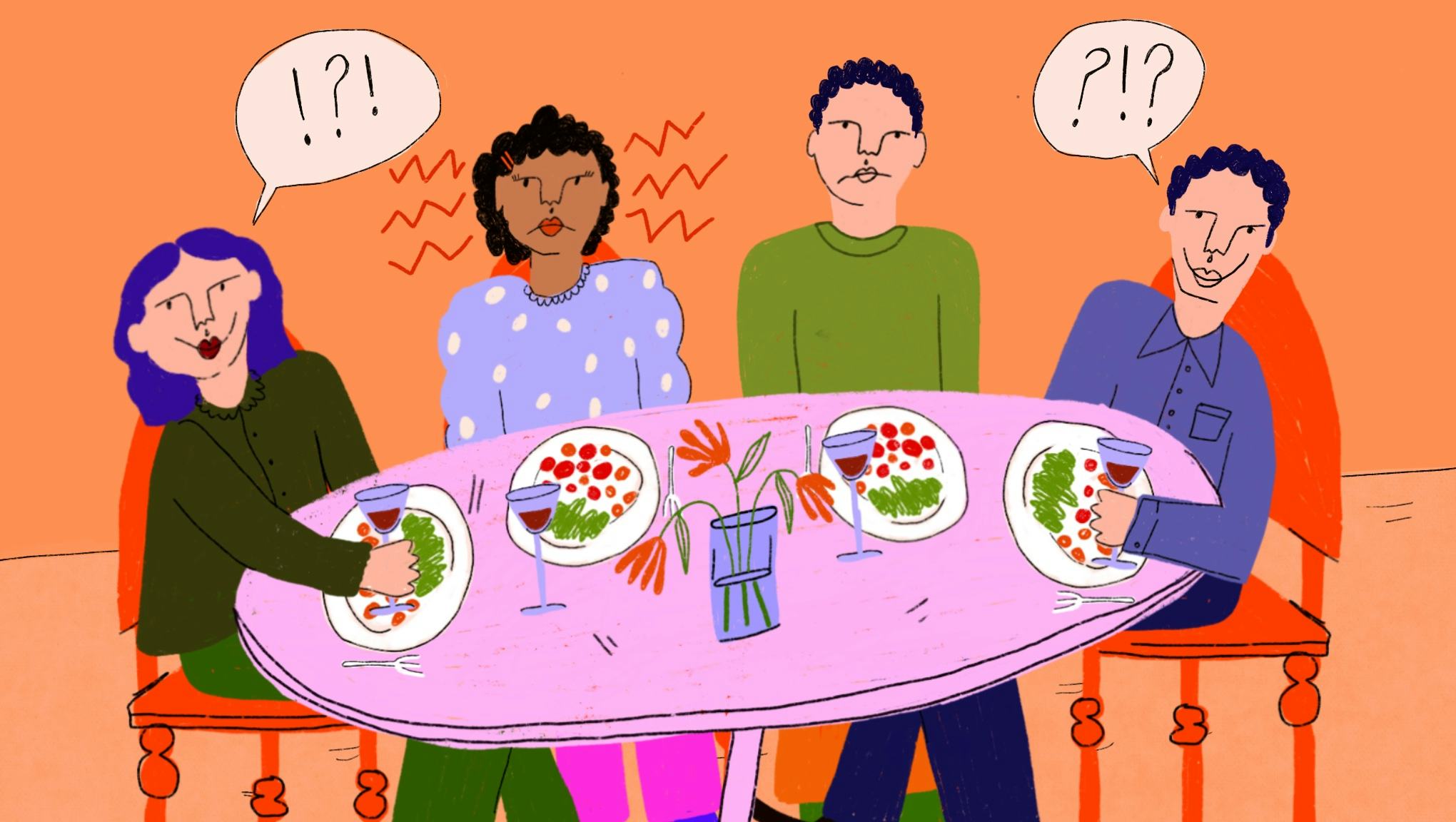
Leyla’s in-laws' attempts at connection, though well-intentioned, can be exasperating, to say the least. Once, her mother-in-law, who’s white, remarked that a neighbor’s multiracial South Asian daughters looked “just like” Leyla, who’s also South Asian. “But they didn’t look anything like me,” says Leyla, a 38-year-old wellness entrepreneur in the U.K. Another time, while watching a TV show featuring a family speaking Punjabi, her mother-in-law observed that they sounded “exactly like” Leyla does when she talks to her mom on the phone — except that Leyla doesn’t speak Punjabi.
“It makes me roll my eyes and think, ‘Oh God, here we go again,’” she says of her mother-in-law’s habit. (She requested that Mic publish only her first name to avoid friction with her husband and his family.) Pointing out that Leyla is “just like” basically any South Asian she sees implies that she perceives South Asians not as unique humans but as interchangeable members of a monolith. “We’re not all the same,” Leyla says.