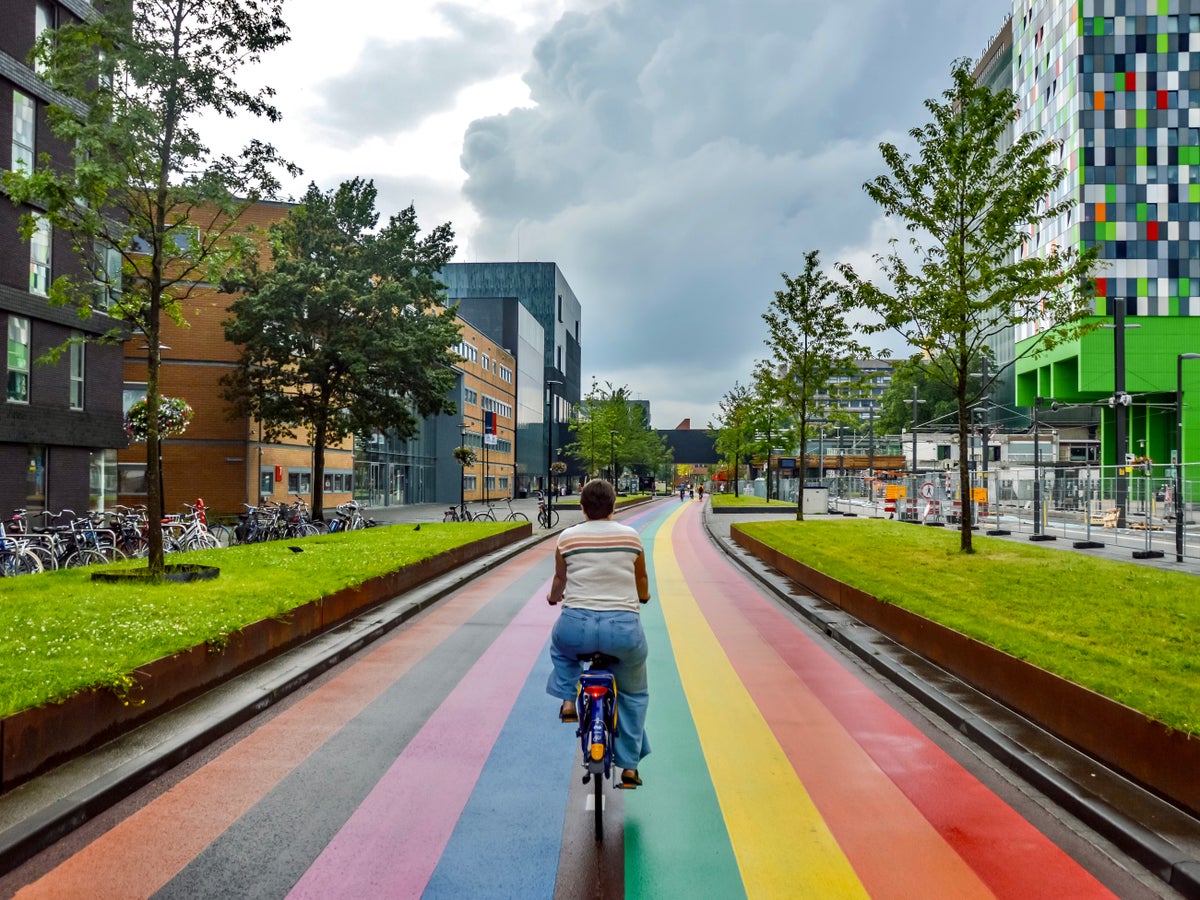
Take a photo in any Netherlandic city and whatever thing of beauty you’re aiming to capture will almost certainly be photobombed by another: the bicycle, in all likelihood the iconic Omafiets (”granny bike”), matriarch of all Dutch models. High-handlebarred, curve-framed, robust yet elegant, somewhere about her cargo there’s a clue to the nature of the journey – a loaf, a football, a satchel, a suit, a cat carrier – each implying a short, practical mission over a leisurely ride. With cycle lanes all over, connecting people to places they need to be, it’s a staggeringly impressive lesson in human geography.
“The greatest trick the car industry ever pulled was convincing the world they needed 1,500kg of machinery to move 15kg of stuff,” Chris Bruntlett, co-author of Building the Cycling City – the Dutch Blueprint for Urban Vitality, tells me. Also marketing and communications manager of the Dutch Cycling Embassy, Bruntlett explains that the organisation came into being a decade ago just to cope with the overwhelming number of enquiries from international governments curious as to how the Dutch model could translate to their own cities. He’s always quick, he says, to reassure them that, despite preconceptions, the Dutch aren’t old masters at cycling infrastructure (50 per cent of the Netherlands’ cycling infrastructure has been built since 1996), so there’s hope that the rest of the world’s planners can move quickly.