
Get all your news in one place.
100’s of premium titles.
One app.
Start reading
Livingetc
Livingetc
Natasha Brinsmead

How to Choose Kitchen Appliances That Will Make Life Easier, Look Good, and Won't Date — While Balancing Budget, Style, and Clever Features

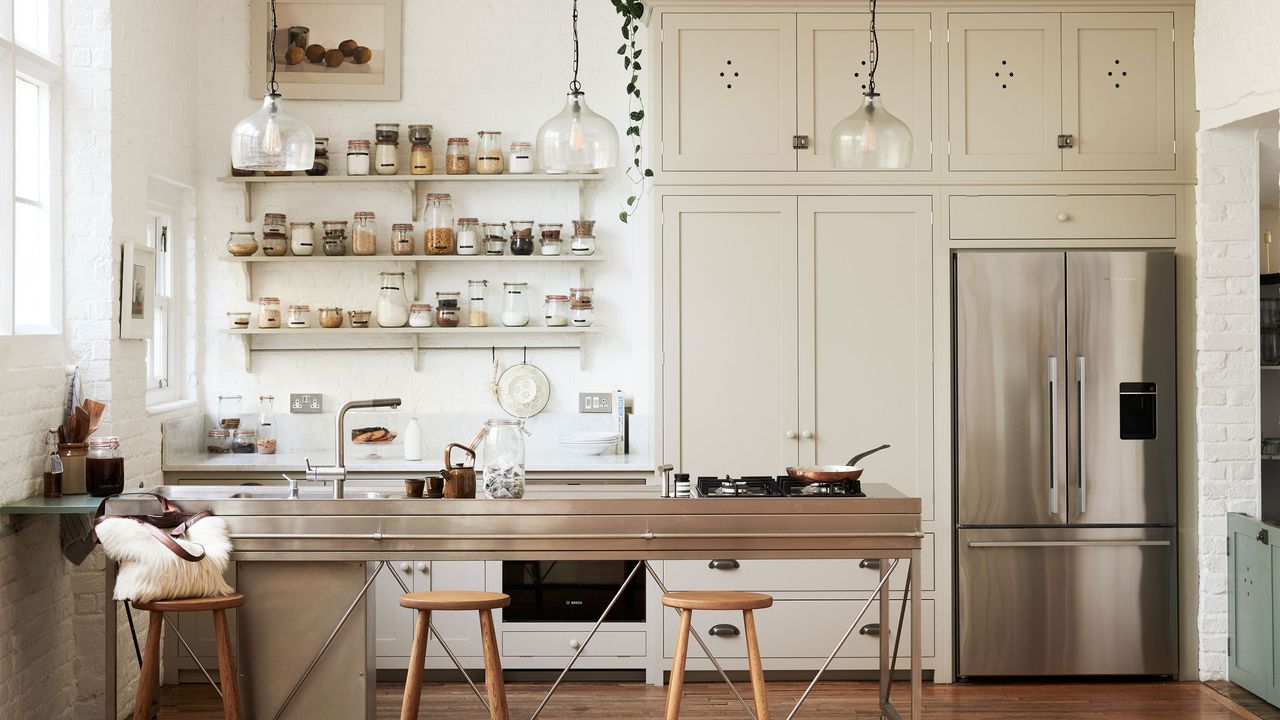
White kitchen with stainless steel breakfast bar and open kitchen shelving with American style fridge freezer.

The success of any kitchen is hinged not on the design of the cabinetry or the artful lighting scheme, but on how practical a space it is to carry out the basic tasks expected of it. This means not only that its layout should make it easy to navigate, but also that it is equipped in a way that makes it run as smoothly as possible when it comes to preparing and storing food.

Being aware of the best kitchen appliance brands is a great starting point, but so too is understanding which kitchen appliances will best suit your needs, how to narrow down the choices, where to spend, and where to save, as well as where to shop for all these shiny new kitchen helpers.

We asked the experts for the advice they would give to their own clients when it comes to selecting kitchen appliances in order to help you with what can be a rather overwhelming process.

 How to Choose Kitchen Appliances

A large kitchen island is the ideal spot for a sleek built-in hob, while eye-level ovens work better for those who finding bending down a chore — consider how you want your kitchen to work for you. (Image credit: Plain English)

While breadth of choice is almost always a good thing, it can also make it harder to feel confident that you are making the right decision, and, given that kitchen appliances can be one of the pricier elements of this space, you want to get it spot on.

Co-founder of Pluck, George Glasier has a great way to navigate the big, wide world of appliances, though: "The market is narrowed considerably once you have a budget in place," he says. "Generally speaking, we advise spending the most on your hob and oven, rather than your fridge-freezer, for example, but this is very much down to individual taste."

"Before designing a new kitchen and discussing appliances, we always find out if the homeowner loves cooking or prefers simple recipes, as this impacts their appliance choices," reveals Selena Quick, founder of PAD. "For example, if they’re a keen cook, we might prioritise a high-specification hob with a wok burner, compared to someone who prefers cooking quick and easy meals — it would likely suit them to have a more simplified induction hob or built-in air fryer oven.

"I would recommend prioritising your budget for functional appliances that you will use the most, and add in appliances such as built-in coffee machines and gadget-style appliances as wish list items if your budget stretches."

Where to Shop for Kitchen Appliances

While buying appliances online is a good way to get the best price, it is really useful to see what you are buying in person when making a large investment such as this. (Image credit: Pluck)

There are so many options when it comes to shopping for kitchen appliances, from well-known online retailers to department stores and appliance warehouses. In some cases, when specifying new appliances alongside an entirely new kitchen, your kitchen designer will source them for you, which can help if you want to ensure you are aware of all the latest kitchen trends to consider.

"A good kitchen designer will be able to source kitchen appliances from their appliance partners, but it’s worth shopping around for sustainable and smart appliances too," advises Selena Quick.

"There is simply no substitute for seeing an appliance in action, such as experiencing the precision of a Gaggenau steam oven or cooking on a Bora hob," says Natalie Fry, creative director and founder of Grid Thirteen Design Studio, where customers can try out appliances in person. "We actively encourage clients to interact with the appliances themselves. This hands-on approach helps you understand not only how each product performs, but also whether it meets your expectations and truly supports the way you want your kitchen to function. By engaging with the products in this way, clients gain the clarity and confidence needed to choose appliances that will elevate their daily cooking experience and complement their overall design."

Which Appliances Suit Small Kitchens?

In a small kitchen, getting the basics spot on is crucial — avoid cluttering the space with gadgets you'll never use. (Image credit: Pluck)

It is so important, when purchasing kitchen appliances, that you don't get seduced by the latest kitchen appliance trends alone. You need to be thinking both about how you plan on using your kitchen as well as the space you have available.

"For smaller kitchens, efficiency and versatility are essential," points out Natalie Fry. "We often recommend integrated appliances that maximise storage while maintaining clean, uninterrupted sightlines. We also love the practicality of steam ovens in compact spaces, as they help contain both moisture and cooking aromas within the appliance itself. This reduces how often you need to use the main hob, keeping steam and lingering smells to a minimum, which is an invaluable benefit when space is limited. Combination ovens that offer multiple functions in one unit, along with induction hobs featuring integrated extraction, further streamline the layout and enhance everyday usability."

"If it’s a small kitchen, I always recommend investing in a high-performance vented extraction appliance to effectively manage cooking smells and steam so the space feels aired," adds Selena Quick. "Air fryer ovens and full-size ovens with a microwave (try Siemens) are also good for small kitchens, as is a boiling water tap to save worktop space for a kettle."

Which 'Extra Kitchen Appliances' Are Worth Investing in?

If you have the space, think about what extras could add to your enjoyment of the room — wine coolers and built-in coffee machines, for example. (Image credit: Andy Haslam. Kitchen Design: Grid Thirteen Design Studio)

Along with the essentials — cooker, extractor hood, fridge freezer, and dishwasher — which other kitchen appliances did the experts we spoke to recommend investing in?

"In larger kitchens, along with the essential items, there is room for some ‘treats’ or exciting additions," says Merlin Wright, creative and design director at Plain English Design. "Perhaps a walk-in wine cooler or a central island with downdraft extraction, and specialised modules such as a teppanyaki plate or integrated vacuum drawer."

"Select appliances that genuinely support day-to-day living," adds Natalie Fry. "For those who love to entertain, a dedicated wine fridge can become an elegant and practical addition; for families prioritising wellbeing, a steam oven often becomes an invaluable tool."

How to Choose the Right Appliances for Your Kitchen

When choosing appliances for your kitchen, your main priority should always be to buy the best you can afford. (Image credit: deVOL)

Regardless of whether you need small kitchen ideas or have a little more space to play with, if you want to ensure you end up with an efficient, practical kitchen that serves you well, you need to know what to prioritise. All the experts we spoke to advised that this is one area worth splashing out on.

"Kitchens are one of the most expensive projects you will embark on during a house move or renovation, and appliances are often the first thing to be seen as a way to shave off some costs," picks up Helen Parker, creative director of deVOL Kitchens. "It's easy to think a cheap dishwasher doesn’t really matter, as it's not seen, same as with laundry appliances. But buying cheap can have huge repercussions in terms of energy bills, broken appliances, the need for replacements, and the stress of having to organize ordering new parts. A golden rule in all aspects of your home, especially with appliances, is to buy the best you can afford and check their efficiency and quality before you rush into buying them cheaply and quickly."

The experts were also keen to highlight that homeowners shouldn't get seduced by high-tech gadgetry and should instead focus on getting the basics right.

"A well-made fridge, cooker or stove, a roomy, robust kitchen sink and a good quality tap covers all main bases," says Merlin Wright. "These are the appliances that are worth investing money in.

"Kitchen appliance technology continues to evolve, especially with AI integration, but many of our clients eschew this hands-free, futuristic vision and prefer instead the traditional, intuitive types of appliances which are easy to use and repair," continues Merlin.

Shop Kitchen Appliances

FAQs

What Is the 50 50 Rule for Kitchen Appliances?

While researching kitchen appliances, you may well hear of the 50 50 rule — let us explain. This 'rule' basically relates to whether or not it is worth having an appliance repaired or whether replacement is a better option. It states that if repair costs come to more than 50% of the replacement costs, you should invest in a new one.

"Replacing old with new is not necessarily better at all, not only environmentally, but also in that you may not have a better experience with a newer model," advises George Glasier. "At Pluck, we only recommend a replacement if an appliance is faulty beyond repair or if your size requirements have changed drastically."

Choosing new appliances to kit out your kitchen is a big decision, particularly given the high cost of some models. For this reason, make sure you are fully aware of the main kitchen appliance mistakes people make time and time again to ensure your money is well spent.

Sign up to read this article
Read news from 100’s of titles, curated specifically for you.
Already a member? Sign in here
Related Stories
Top stories on inkl right now
One subscription that gives you access to news from hundreds of sites
Already a member? Sign in here
Our Picks
Fourteen days free
Download the app
One app. One membership.
100+ trusted global sources.