
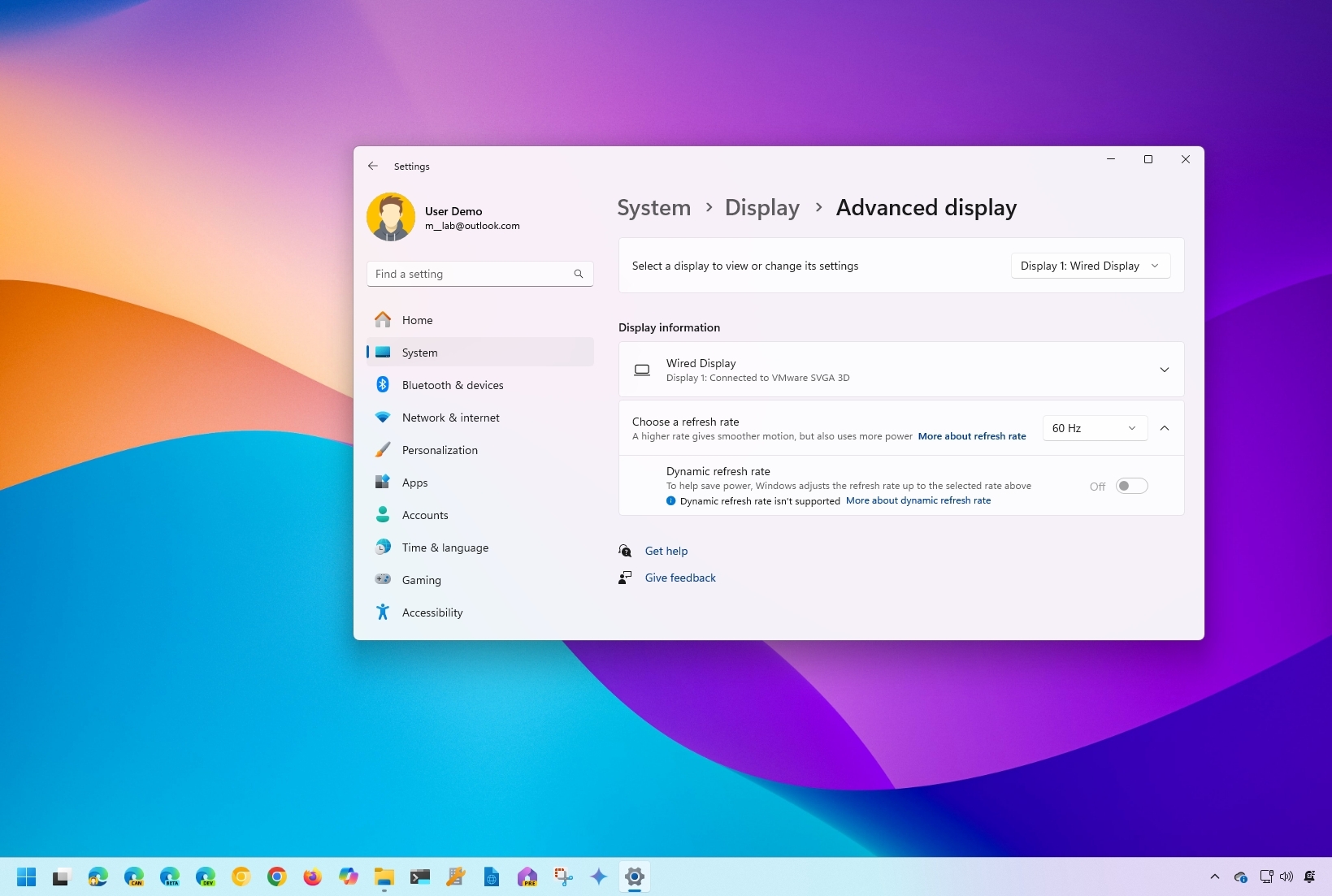
A monitor's refresh rate is measured in Hertz (Hz), and it defines the number of times an image appears on the screen per second. Generally speaking, the faster the image changes (or refreshes) on the display, the better and smoother the viewing experience. On the other hand, the slower the images refresh on the screen, the less smooth the experience will be, causing screen flickering, headaches, and eye strain.
Although Windows 11 can automatically configure the optimal refresh rate, you may sometimes need to change the settings manually. For example, if you have a monitor that supports a higher refresh rate of 144Hz or higher, typically found on gaming displays. Or you notice some flickering because the monitor may be using a lower refresh rate.