
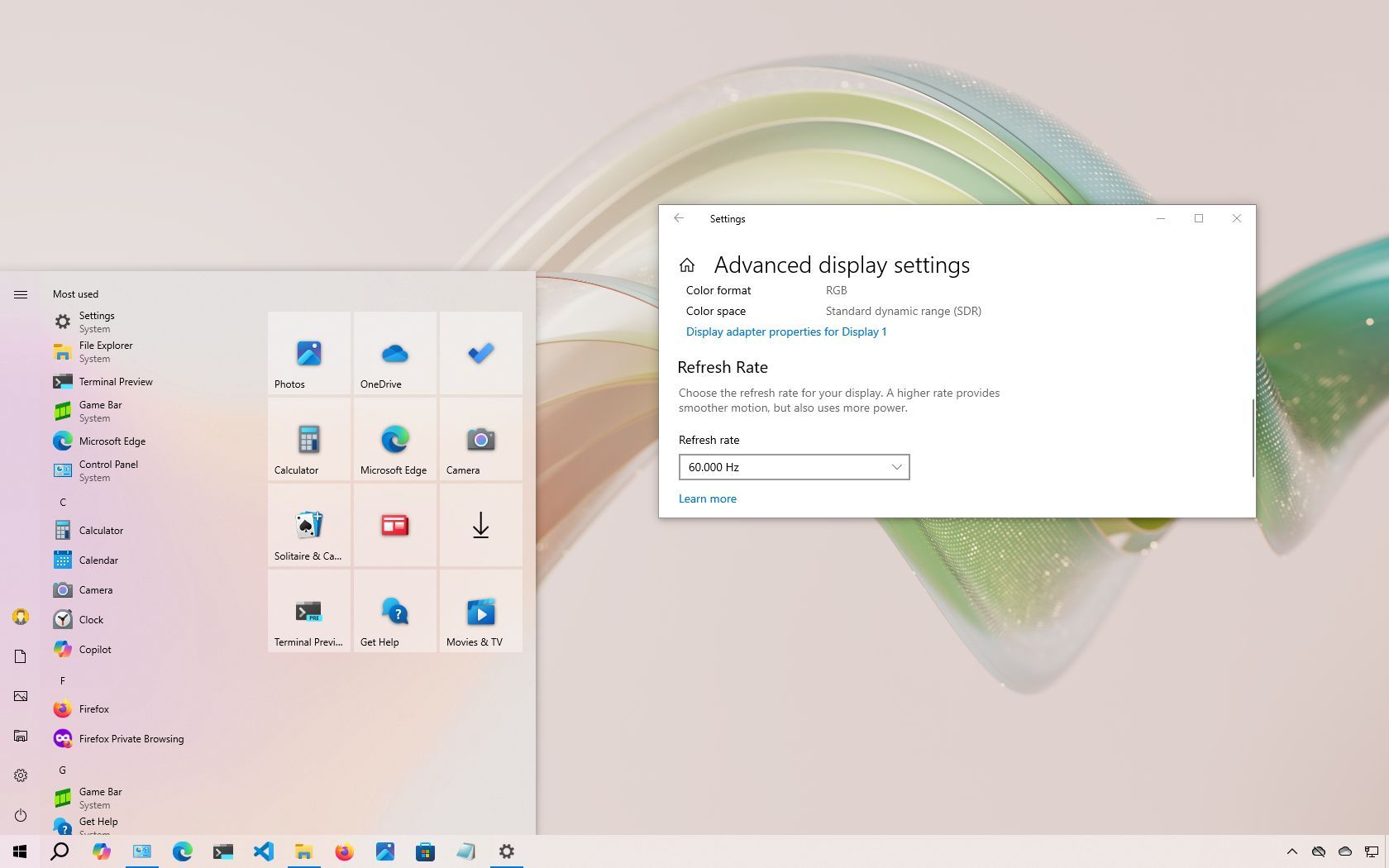
On Windows 10, you can change the refresh rate of the monitor, and in this guide, I'll explain how to make this configuration.
In computing, the refresh rate refers to how many times per second the screen updates an image, measured in Hertz (Hz). A higher refresh rate generally results in a smoother and more responsive viewing experience (as long as you don't overclock the display). In contrast, a lower refresh rate can lead to screen flickering, eye strain, and headaches, especially during prolonged use.