
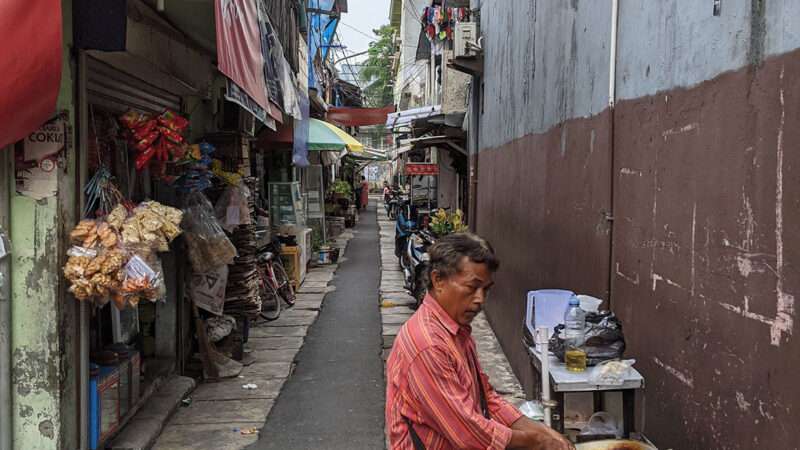
Jakarta, Indonesia—The central business district of Indonesia's 11 million-person capital has the social contrast found in many other developing world megacities. Modern skyscrapers accommodate Indonesia's elite, while shabby informal villages spread from the base of such buildings. I wanted to experience this latter, more common, style so one morning my translator Julya and I walked a few minutes from my upscale French hotel chain across a dirty canal and into a village.
The standardized First World planning aesthetic of square buildings and engineered roadways quickly yielded to clustered huts organized along a twisty network of alleys. This village style is common in the Third World, a bastion of organic, market-oriented development that often withstands the modernization plans of city officials, even in central areas. It bears a striking resemblance to a popular concept in the Western urban planning world: the "superblock."














