
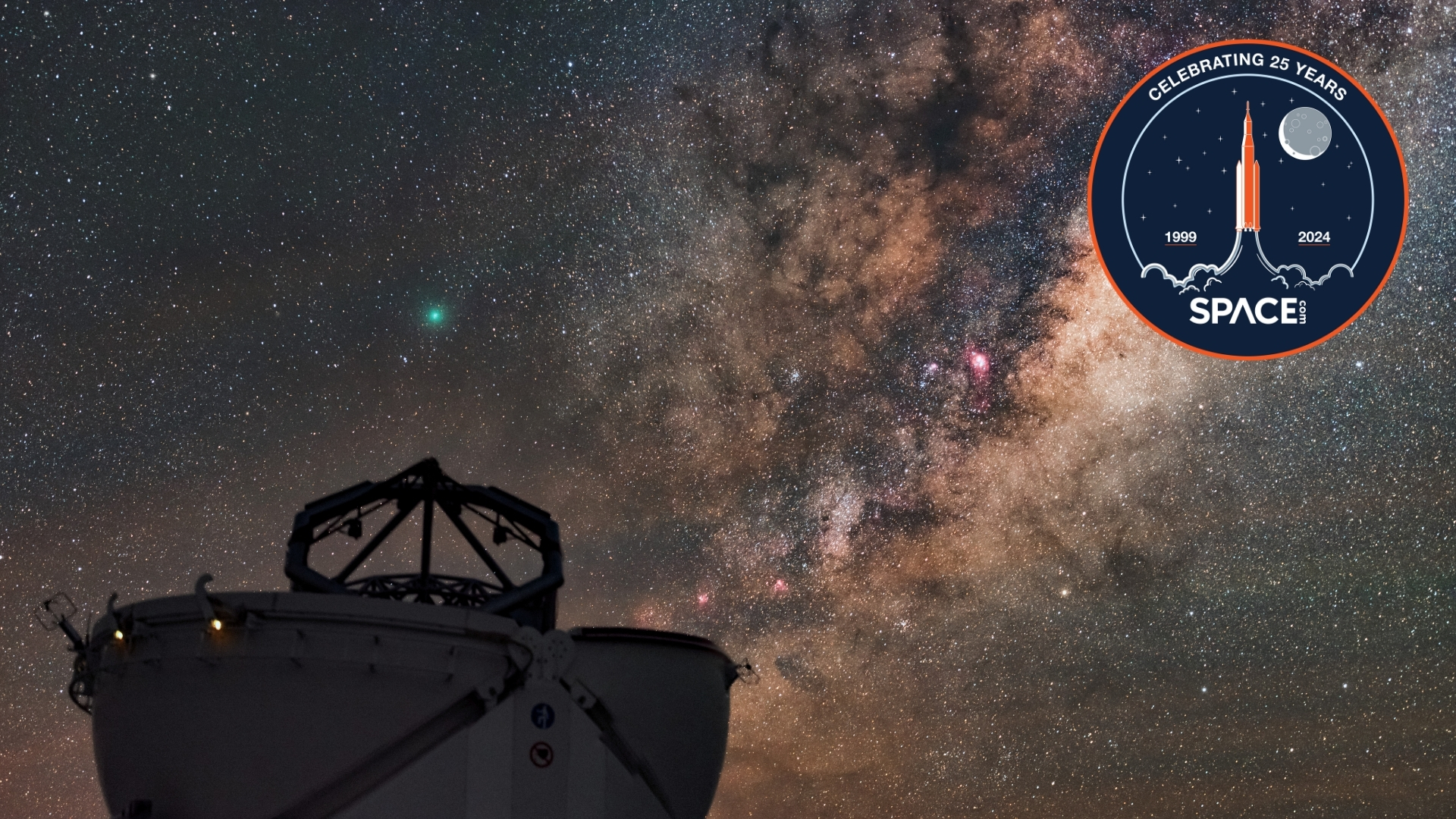
The past 25 years have, if anything, been the era of the mega-telescope, an era that began in the 1990s. Until then, the largest optical telescope in the Western Hemisphere had been the 200-inch (5.1-meter) Hale Telescope, built in 1949 on Mount Palomar in California and used by Edwin Hubble in the years before his death. A Soviet telescope called the BTA-6 beat it by one meter (39 inches) in 1975 — but, for the next 40 years, the largest ground-based telescopes were all built in the 4m to 5m (157 in to 197 in) class.
There were reasons for why telescopes hit a glass ceiling — pun intended — for over four decades. One of those reasons was that the glass mirrors of giant telescopes were typically incredibly heavy, built out of thick glass to render them impervious to gusts of wind, thermal expansion or the shake of an earthquake. Make the mirrors any larger, and they would sag under their own weight, deforming the shape of the mirror and making the telescope's vision blurry.