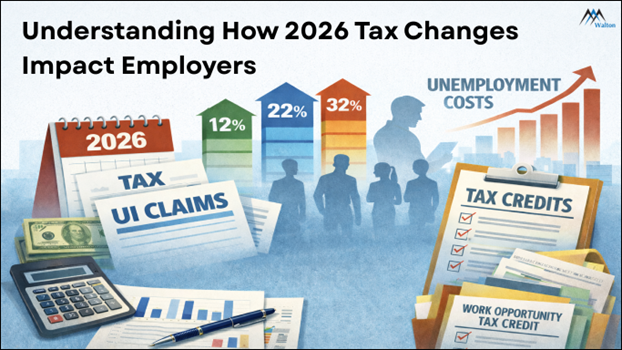
The 2026 tax changes are set to influence employer payroll and tax credit processes in practical ways. With updates to federal tax brackets and reporting rules, employers have an opportunity to align payroll systems, manage tax credit eligibility, and streamline compliance. By understanding these changes early, businesses can maintain accurate records, optimize employer tax credits, and ensure smoother unemployment insurance claim management while avoiding surprises.
These changes connect payroll operations more closely to tax credits and reporting accuracy. Updates related to new tax brackets 2026 and adjustments within the 2026 federal tax brackets influence how wages are tracked, how compensation is reported, and how employer tax credit eligibility is reviewed. When payroll data does not align cleanly with tax filings, issues may not appear immediately but can surface later through review requests, delayed credits, or compliance questions.
At the same time, the 2026 tax changes increase the importance of accurate reporting for unemployment insurance (UI) claims. Inconsistent wage records or incomplete employment histories can affect how claims are evaluated and how employer costs are calculated over time. Understanding these connections early allows employers to plan payroll and compliance processes with more clarity as the new tax environment takes shape.
How new tax brackets and rates shape employer planning
Changes in federal tax brackets for 2026 affect how wages are categorized, reported, and reconciled. Employers with variable pay structures, including bonuses or overtime, will benefit from reviewing payroll data early. Clear alignment between payroll and reporting systems helps reduce errors and support accurate tax credit eligibility.
The impact is not limited to calculations alone. Adjustments in the 2026 federal tax brackets influence how payroll systems reconcile year-end totals with filed tax data and how closely those records are reviewed when questions arise. As the new tax brackets for 2026 take effect, employers often find that compensation planning and payroll accuracy become more connected and proactive. Small inconsistencies can trigger follow-ups, making it essential for payroll and tax reporting to stay aligned as part of a single process rather than separate tasks.
Where payroll operations adjust first
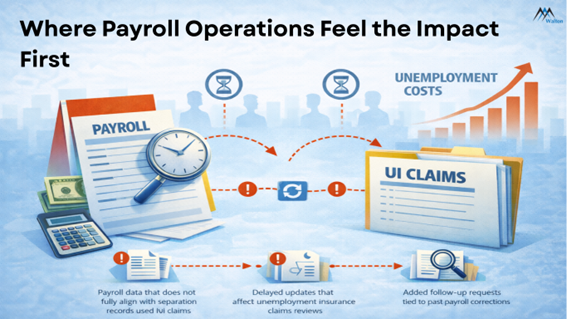
Payroll is usually the first function to absorb the operational weight of the 2026 tax changes. As reporting expectations tighten, payroll management shifts from routine processing to constant validation. Timelines matter more, and accuracy matters earlier in the process, not just at filing time. When payroll teams manage multiple pay types or large headcounts, even small changes in reporting rules can increase the risk of errors carrying forward.
That pressure becomes more visible when payroll data intersects with UI claims. Incomplete or late wage records can affect how unemployment insurance claims are reviewed and how employer tax rates are calculated later.
These issues often surface months after the original payroll period, a pattern frequently noted in workforce compliance analysis from firms such as Walton Management, which makes them harder to trace and correct once costs begin to rise.
Common pressure points employers experience include:
- Payroll data that does not fully align with separation records used in UI claims
- Delayed updates that affect unemployment insurance claims reviews
- Inconsistent wage reporting across reporting periods
- Added follow-up requests tied to past payroll corrections
As the 2026 tax changes continue to influence reporting standards, payroll accuracy becomes a direct factor in how employers manage unemployment-related costs, not just internal efficiency.
Tax credits depend on consistency more than intent
Employer tax credits such as the Work Opportunity Tax Credit rely on consistent payroll and employment documentation. Accurate and timely records ensure that credit approvals proceed efficiently. Small mismatches in data can delay approvals, but proactive verification and alignment help employers protect expected credit amounts.
Where problems usually start
Employer tax credits are often lost not because an employer fails to qualify, but because supporting information does not stay consistent across payroll, hiring, and reporting systems. The 2026 tax changes make these gaps more visible by tightening how eligibility and documentation are reviewed over time. As reporting standards increase, even small mismatches can slow credit approvals or trigger additional review.
How the 2026 tax changes raise the stakes
Under the 2026 tax changes, employer tax credit programs are reviewed with greater emphasis on timing and alignment. Payroll records, hiring documentation, and tax filings are expected to tell the same story. When updates are submitted late or corrected after initial filing, reviews often take longer, and outcomes become less predictable. This affects credits tied directly to payroll data, including the employer tax credit and the Work Opportunity Tax Credit, where employers often work with payroll and workforce advisory firms like Walton Management to support eligibility screening, documentation, and compliance alignment.
Keeping tax credit reviews on track
Programs such as the work opportunity tax credit depend on accurate wage reporting and clear employment records that match payroll timelines. When employers treat tax credit documentation as an ongoing part of payroll management rather than a separate year-end task, they are better positioned to protect expected credit amounts. As the 2026 tax changes continue to reshape compliance expectations, consistency across payroll and reporting systems becomes a practical requirement rather than a best practice.
Unemployment insurance costs tend to rise quietly.
Unemployment insurance claims are closely tied to payroll data. When wage and employment records are accurate, claims are processed smoothly, and employer costs remain predictable. The 2026 tax changes make early verification even more important, allowing employers to maintain stable UI experience ratings and avoid unnecessary follow-ups.
Why do unemployment costs often increase without warning
Unemployment insurance costs usually rise because problems are detected late rather than early. Employers may not notice issues at the time payroll is processed, but gaps in wage reporting or separation details can surface later during claim reviews. As the 2026 tax changes take effect, the connection between payroll data and UI claims becomes tighter, which increases the likelihood that small inconsistencies affect cost calculations.
How are UI claims connected to payroll reporting
UI claims rely heavily on accurate wage and employment history. When payroll records are incomplete or updated after initial reporting, unemployment insurance claims can take longer to resolve. This delay can influence how claims are charged back to the employer and how future tax rates are calculated. Under the 2026 tax changes, reporting timelines matter more, which means payroll accuracy plays a direct role in managing unemployment-related costs.
What makes these costs harder to control over time
Unemployment insurance costs often build gradually. A single reporting issue may seem minor, but repeated inconsistencies across multiple UI claims can influence employer experience ratings. Once those rates adjust, reversing the impact takes time. Employers who view unemployment insurance claims as part of an ongoing payroll and compliance process tend to identify issues earlier and maintain more stable cost patterns as reporting standards evolve.
Why verification steps matter more under the 2026 tax rules
Under the 2026 tax changes, verification of employment (VOE) moves from a supporting role to a central reference point. Payroll records, employer tax credit reviews, and unemployment insurance claims increasingly depend on the same underlying employment data.
When verification records are accurate and timely, they help confirm that wage history and employment status align across reporting systems, a consistency often emphasized in verification and documentation guidance referenced by organizations like Walton Management.
Problems tend to arise when verification lags behind payroll activity. Even if payroll processing is technically correct, gaps in verification of employment can surface later during reviews tied to UI claims or employer tax credit eligibility. Under the 2026 tax changes, those gaps often lead to follow-up requests rather than immediate errors, which increases administrative effort.
In practice, verification issues most often affect employers when
- Employment start or end dates do not match payroll records
- Verification updates are submitted after reporting periods close.
- Wage history used for UI claims does not align with verified employment status.
As documentation expectations continue to rise, treating Verification of employment as part of routine payroll management helps employers maintain consistency across tax filings, unemployment insurance claims, and employer tax credit reviews. This alignment supports steadier outcomes as compliance standards tighten.
Seeing the full picture across workforce data
Compliance issues often stem from disconnected data rather than individual errors. Employers who integrate payroll, tax credit, and UI claim information gain a clearer picture of workforce trends. This proactive approach supports better outcomes and demonstrates alignment with regulatory expectations.
When payroll data tied to the new tax brackets for 2026 is viewed alongside unemployment insurance claims and employer tax credit reviews, underlying issues become clearer. Workforce analytics helps bring these elements together so recurring reporting gaps can be identified earlier, before they lead to higher costs or extended reviews.
Greater visibility across workforce data does not remove compliance pressure, but it does help employers respond with more consistency as the 2026 tax changes continue to influence reporting expectations.
Preparing for 2026 without trying to predict everything
The challenge with the 2026 tax changes is less about knowing every detail in advance and more about recognizing how closely payroll, tax credits, and unemployment reporting are now connected. New tax brackets for 2026 and updates within the 2026 federal tax brackets will continue to shape how wages are reported and reviewed as guidance evolves. Employers that maintain clean payroll data and consistent documentation are generally better positioned to adapt as requirements change.
Rather than trying to anticipate every outcome, many employers focus on strengthening the fundamentals that support compliance. Accurate payroll processes, timely handling of UI claims, and clear documentation tied to employer tax credit programs, including the Work Opportunity Tax Credit, can help create stability as reporting expectations shift.
In this broader landscape, some employers choose to connect with payroll and workforce advisory firm like Walton Management as they work to keep payroll records, tax credit documentation, and unemployment reporting aligned amid evolving compliance standards.