
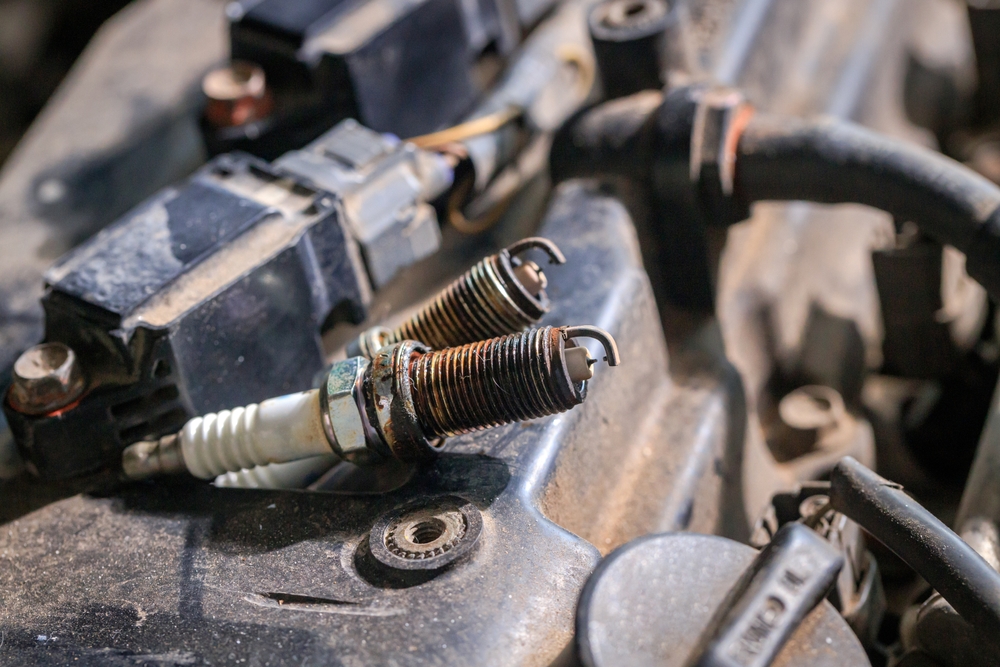
Spark plug wear hides in plain sight. It builds slowly, then suddenly the engine starts telling a different story. A code reader might flag a misfire or throw a generic warning, but spark plug wear exposes what those numbers can’t. It shows how the engine has been treated, how it’s aging, and where trouble is brewing. This matters because ignoring small clues leads to bigger repairs, and spark plug wear marks the difference between a simple tune-up and an expensive overhaul. Here’s what you need to know that scanners won’t tell you.
Wear Patterns Tell the Truth About Combustion
Spark plug wear shows exactly how the combustion chamber behaves under real conditions, not filtered through a sensor’s interpretation. A plug that runs hot shows blistered ceramic. A plug that runs too cool collects soot. These patterns form long before the onboard diagnostics raise a flag. That gap matters because the engine signals stress in the metal and ceramic before it signals anything electronically.
These clues help identify issues like detonation or a rich mixture. Even mild detonation leaves peppered marks on the insulator. A rich mixture leaves a velvet layer of carbon. None of that appears in a code reader until the imbalance becomes severe. Spark plug wear exposes the truth early, while repairs are still cheap.
Gaps Show Aging You Can’t See on a Scanner
The spark plug gap widens with heat, mileage, and vibration. Sensors report misfires, but they do not reveal how long the plug has been drifting out of spec. A larger gap forces the coil to work harder, and that extra load builds quietly. Spark plug wear shows how far the gap has moved and how much strain the coil has absorbed over time.
That matters because coil failure often gets misdiagnosed as wiring or fuel trouble. When the spark jumps a stretched gap, the coil overheats. That heat kills it. Spark plug wear tells whether the coil’s decline started months earlier, long before the first code appeared.
Electrode Damage Points to Deeper Mechanical Issues
Sensors can report a misfire but cannot explain it. Spark plug wear can. A chipped or melted electrode signals temperatures that sensors only catch after the damage escalates. Metal loss on the electrode often signals lean running conditions, valve sealing issues, or timing problems. No scanner interprets metal erosion with that level of clarity.
Sometimes the electrode bends or shows impact marks. That often means debris entered the combustion chamber. A code reader won’t show that. Spark plug wear does, and it does so directly and without ambiguity.
Oil Fouling Reveals Seals and Rings Failing Early
Oil on a spark plug tells a clear story about internal wear. A scanner cannot differentiate between a misfire caused by ignition issues and one caused by oil entering the chamber. Oil fouling builds slowly, but spark plug wear shows it immediately. The plug turns wet and dark, and the deposits bake into a shiny glaze.
This appears long before compression drops or exhaust smoke becomes visible. Spark plug wear gives a preview of ring or valve seal trouble while repairs remain manageable. Catching early oil intrusion saves time, money, and guesswork.
Fuel Additives and Poor Gas Quality Leave Visible Traces
Cheap fuel leaves red, yellow, or gritty deposits on the plug. A code reader will not tell you anything about fuel quality. Spark plug wear does. These deposits form when additives burn unevenly or when the fuel contains contaminants that never burn completely.
Some drivers think these problems appear only in older cars, but engines running modern direct-injection systems show the effects quickly. Spark plug wear captures this evidence in real time. Code readers cannot match that level of insight.
Cylinder-Specific Clues Highlight Imbalances
A diagnostic scanner reports misfires by cylinder, but spark plug wear shows how each cylinder aged. One plug might show heavy carbon. Another might come out nearly white. That contrast exposes airflow problems, injector issues, and compression variations. These differences do not always trip a code.
A healthy engine runs evenly across all cylinders. When one cylinder tells a different story, spark plug wear gives a physical record of what changed and when.
Heat Range Mismatch Shows Up Instantly
Installing the wrong heat range plug causes subtle performance problems that may never produce a code. A plug that runs too hot burns electrodes prematurely. A plug that runs too cold fouls constantly. Spark plug wear reveals this mismatch with unmistakable signs—glazing, melting, or persistent soot.
Code readers cannot recognize a heat range error. Only spark plug wear shows the mismatch clearly enough to correct it before further damage spreads.
What the Engine Tells You That a Scanner Cannot
Spark plug wear provides physical evidence of combustion, heat, debris, and mechanical stress. A code reader gives numbers, but numbers miss nuance. The plug shows the residue, the metal loss, and the color shifts that form long before a warning appears on the dashboard.
Relying solely on sensors creates blind spots. Spark plug wear fills those gaps with clear, firsthand details of what happens inside the engine every time it fires.
What patterns have you seen when checking your own plugs, and did they reveal something your scanner didn’t?
What to Read Next…
- 9 Things You Never Knew Were Bad For Your Car Until Its Too Late
- 10 Things Your Mechanic Can Legally Do Without Telling You
- 7 Car Models That Mechanics Avoid Even When Theyre Discounted
- 10 Car Maintenance Habits That Will Save You Thousands
- 8 Secret Car Maintenance Tips Every Mechanic Knows
The post How Spark Plug Wear Reveals More Than A Code Reader appeared first on Clever Dude Personal Finance & Money.