At a glance
• Bus speeds in London have fallen below 9mph, the slowest in recent history, with operators blaming long-duration roadworks, 20mph limits, cycle lanes, road narrowing and low-traffic neighbourhoods
• Bus passenger numbers have continued to fall (22.8% below the 2014/15 peak), drivers report severe fatigue and frequent overtime, and unions say delays are fuelling abuse toward drivers
• TfL faces rising costs and is planning service cuts, including reducing buses in central/inner London, amid concerns about the impact of the part-pedestrianisation of Oxford Street on the bus network
Average bus speeds in London have fallen below 9mph for the first time in recent history - with roadworks, 20mph speed limits and cycle lanes all being blamed.
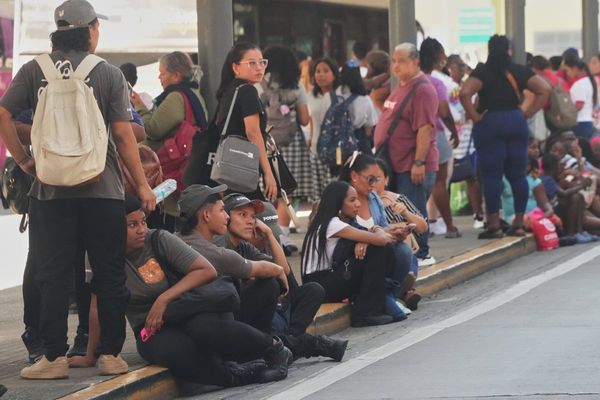
Figures obtained by the London Assembly show that the mean speed across all 700 bus routes within Greater London was 8.99mph in October.
This was down from 9.03mph in the same four-week period a year earlier but well below the 9.5mph recorded in October 2013 – the highest recent comparable figures on record, excluding the pandemic.
Bus speeds varied from a low of 6.25mph in the City of London to a high of 11.73mph in Bexley and 11.68mph in neighbouring Bromley.
But the figures highlight growing concern from London bus operators that a combination of roadworks, road narrowing and speed restrictions is causing passengers to desert the network – meaning it becomes more expensive for Transport for London to operate.
TfL’s draft budget for 2026/27 includes plans to axe an unspecified number of buses from central and inner London, in part to improve services in the suburbs.
Paul Lynch, London managing director of Stagecoach Bus, told an assembly investigation into bus speeds that delays on the bus network were the worst in 40 years.
Mr Lynch, who is also president of the Confederation of Passenger Transport, said long-duration roadworks were the main problem.
But he said cycle lanes and wider pavements – which took road space from vehicles – as well as 20mph speed limits and low-traffic neighbourhoods also contributed to the problem. “The capacity of the network is less than it was,” he said.
Mr Lynch told the assembly’s transport committee: “It’s making [buses] less attractive and less reliable. It’s putting people off from using them.
“We are used to difficult traffic conditions in London. It’s our bread and butter. However, conditions have worsened over the last few years, to a point where somebody who works for me, who has been around for 40 years, says it’s the worst he has ever seen.”
Transport experts believe that for every 10 per cent reduction in journey speeds there is a six per cent reduction in demand.
A total of 1,842 million bus journeys were made in London in 2024/25, a 1.5 per cent decrease from 2023/24, and continuing the recent declining trend.
Bus journeys in 2024/25 were estimated to be 22.8 per cent lower than the high point in 2014/15, according to TfL’s annual Travel in London report.
Mr Lynch added: “There are 20mph limits on pretty much the whole network, but chance would be a fine thing to get to 20mph on a lot of the routes.”
He said drivers were getting stuck in the same roadworks eight or 10 times a day. On routes operated by Stagecoach, there are currently 86 sets of roadworks that are due to remain in place for more than four weeks.
Kevin Stagg, chair of Unite’s London & Eastern Passenger Committee, said the delays were having an impact on bus drivers’ welfare and fatigue, and putting them at risk of abuse and physical assault from passengers furious at being stuck on delayed buses.
He said drivers were routinely having to work 30 to 60 minutes beyond their shift just to complete their journey.
Mr Stagg said: “I have known people who have been in this industry for 20 to 30 years and they’re leaving because they can’t take it no more. Sometimes it is like a car park in London.”
He accused TfL of “own goals” by narrowing roads to create more space for pedestrians and cyclists.
He said drivers often found themselves unable to overtake slow-moving cyclists, adding to delays, and predicted the part-pedestrianisaton of Oxford Street could result in gridlock across the West End.
“Let’s imagine Oxford Street, if that actually happens – where does all that traffic go? Park Lane? Park Lane is never going to move,” he said.
Transport minister Lord Hendy, a former TfL commissioner, has admitted that cycle lanes have slowed some London buses.
Nadine Edwards, Unite’s regional officer, told the assembly that cuts to bus routes were having a big impact on services.
She said the number of buses on route 70 had been cut from 18 to 17, meaning the gap between buses had increased from eight to 12 minutes.
Similarly, the 48 and 94 routes had seen gaps between buses increase from five to 15 minutes.
She said Unite had surveyed more than 2,000 members last month about fatigue. More than half said that on “multiple times a week” they were forced to work overtime to complete their route, while 48 per cent of drivers revealed they had had a “close call” in the last 12 months due to fatigue, up from 36 per cent in 2019.
The committee was told that TfL attributes bus delays to “congestion, emergency incidents, demonstrations and mechanical performance” of the bus fleet.
Elly Baker, Labour's spokesperson for transport on the London Assembly, said: "TfL need to give greater attention to buses - it’s the mode of transport most used in London and the one used by more low income, disabled, older and younger Londoners.
"TfL have set out lots of positive measures to speed up buses, but the evidence we heard at the transport committee cast doubt they will all combine to deliver the impact passengers need.
"TfL need to be able to convince London’s bus passengers that they are serious about improving the services they rely on.”
TfL has been approached for comment.