Get all your news in one place.
100's of premium titles.
One app.
Start reading
Space
Space
Science
Robert Lea

How scientists are using exoplanets to map out 'polka dots' on stars

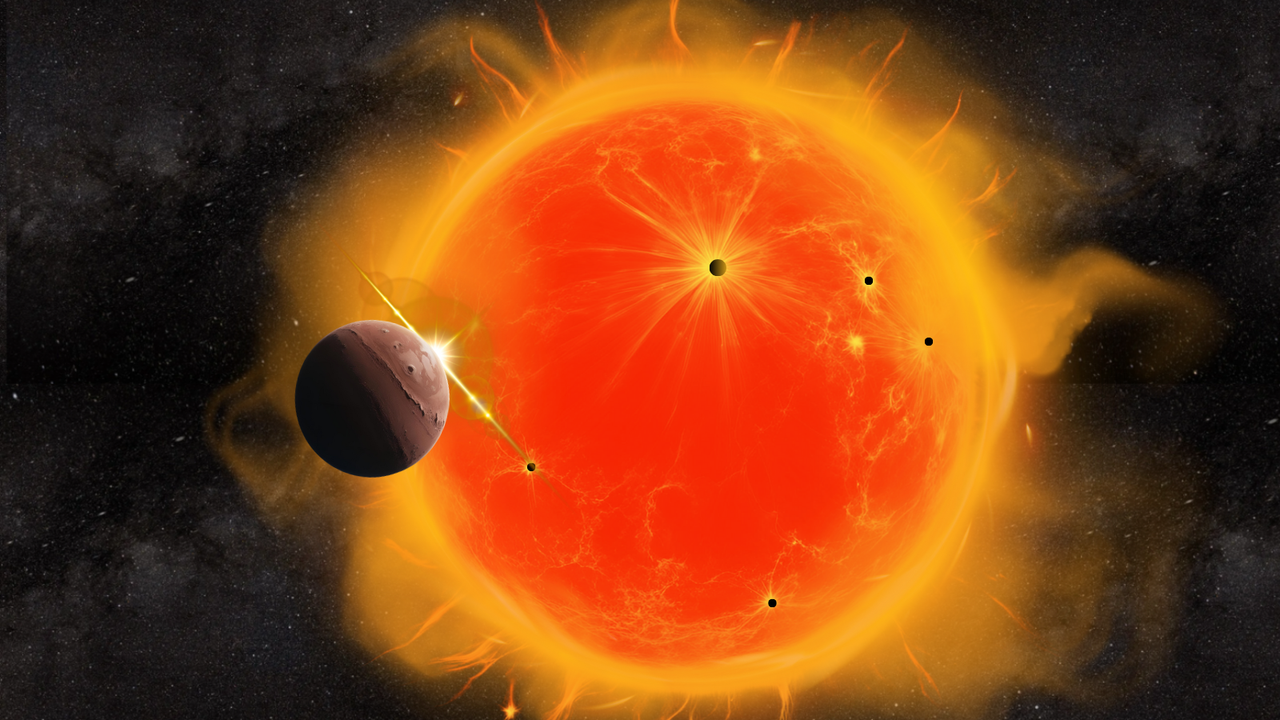
An illustration shows a exoplanet about to transit or cross the face of its parent star which is punctuated with "polka dot" stellar spots.

NASA scientists have devised a new way to use planets that cross, or "transit," the face of their parent stars to investigate stellar "spottiness." The new technique, called the "StarryStarryProcess," could also be used to discover more about the atmospheres of planets.

The StarryStarryProcess builds upon the transit method that has been employed by NASA's TESS (Transiting Exoplanet Survey Satellite) and now-retired Kepler space telescope missions to detect exoplanets. It could be employed by astronomers to assess data from these missions and from NASA's forthcoming Pandora exoplanet-observing satellite.

Sign up to read this article
Read news from 100's of titles, curated specifically for you.
Already a member? Sign in here
Related Stories
Top stories on inkl right now
One subscription that gives you access to news from hundreds of sites
Already a member? Sign in here
Our Picks
Fourteen days free
Download the app
One app. One membership.
100+ trusted global sources.