
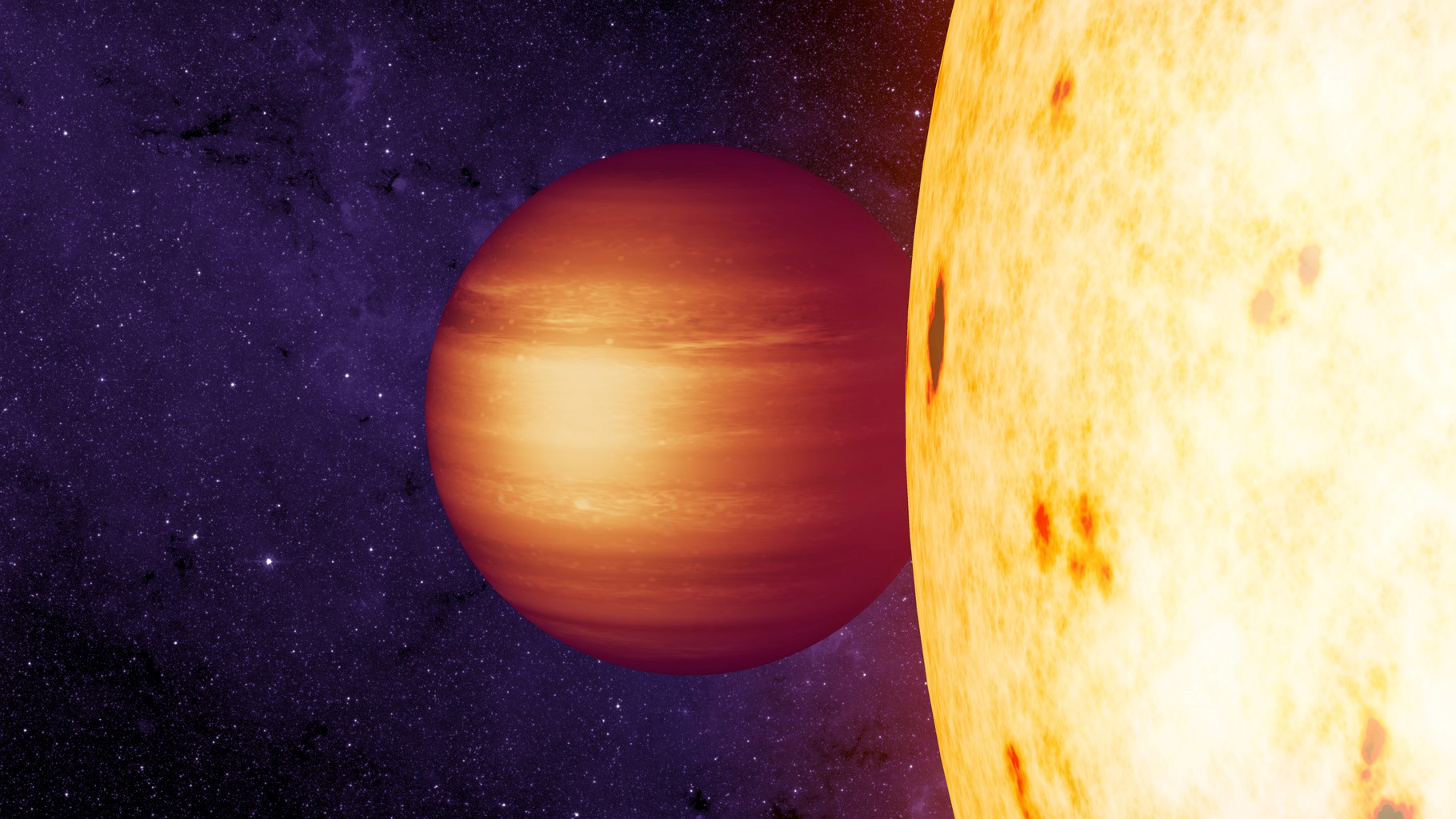
When a planet is born from swirling pockets of molecular gas and dust that surround a young star, it forms under conditions of intense gravity and pressure. The process is violent, the first stages of a planet's life are chaotic, and newborn worlds are often scorching hot.
Scientists have long assumed that, under these extreme conditions, the raw materials involved in the formation of worlds — gas, ice, rock and a mix of metals — don't really interact much with one another. However, it may be time to revisit this idea. A team of researchers from the University of California, Los Angeles and Princeton University have questioned that assumption, wondering instead if a forming planet beyond our solar system — an exoplanet — could serve as a natural laboratory in which molecules interact in surprising ways within the seething heat of its atmosphere and core.