Many of the more than 6,000 hospitals nationwide face a capacity crisis because emergency departments are routinely flooded with chronic disease flare-ups that could have been managed at home. Remote patient monitoring solves this issue by creating a direct, continuous stream of biometric data from a patient's living room straight to clinical teams, preventing minor physiological changes from escalating into expensive inpatient stays.
When a patient with congestive heart failure spikes a sudden two-pound weight gain or a diabetic patient experiences erratic overnight glucose drops, traditional healthcare models rely on the individual recognizing the danger and driving to an emergency room. By the time they arrive, the clinical situation has deteriorated to the point where admission is mandatory. Shifting to proactive tracking changes this dynamic entirely, allowing clinicians to adjust medications or intervene hours before a medical emergency materializes.
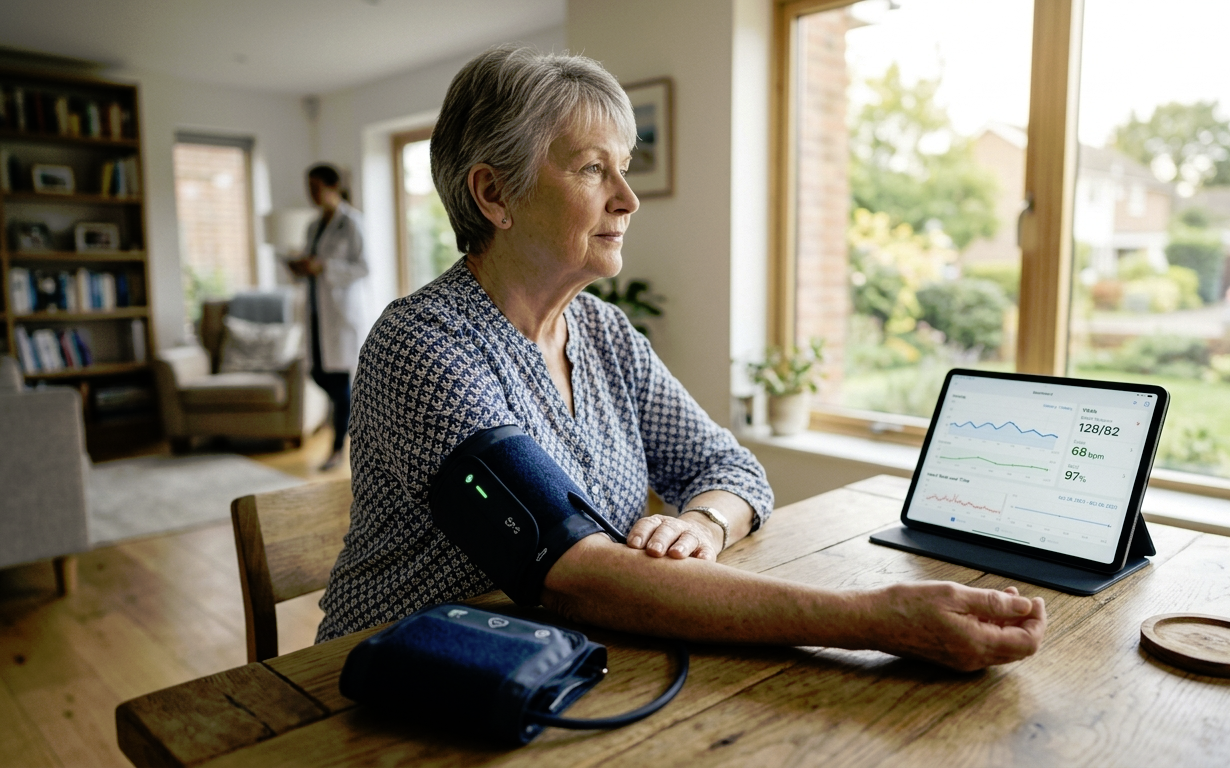
Image Source: Google Gemini
Decompressing The Emergency Department
The math behind hospital overcrowding is straightforward, yet devastating to operational efficiency. There are millions of avoidable ER visits every day across the global healthcare ecosystem, driven largely by patients who lack continuous oversight between traditional physician office visits.
When a clinical team utilizes remote patient monitoring for healthcare practices they effectively extend the walls of their clinic directly into the home environment. This continuous oversight relies on a synchronized ecosystem of hardware, software, and human intervention.
Medical teams deploy FDA-cleared monitoring technologies like cellular-connected blood pressure cuffs, blood glucose meters, and digital weight scales that automatically transmit readings without requiring complex smartphone pairing or technical troubleshooting. For patients who struggle with technology or speak English as a second language, multilingual accessibility features ensure they can navigate their daily testing routine without friction.
The incoming data feeds directly into structured care workflows that filter out insignificant baseline fluctuations while immediately elevating critical abnormalities. Medical staff do not need to manually parse thousands of daily readings; instead, automated EMR integration flags the exact patient who needs an immediate phone call or a proactive prescription adjustment. This methodology optimizes clinical staff time, allowing nurses and care managers to focus exclusively on patients currently trending toward danger.
Reducing Chronic Disease Readmissions
The traditional cycle of discharge, relapse, and readmission is incredibly punishing for hospital resources and patient well-being alike. Data from the American Medical Association demonstrates that structured home monitoring protocols significantly reduce 30-day hospital readmissions among high-risk cardiac and hypertensive cohorts. Hospital beds remain open for acute traumas and surgical recoveries because chronic patients are successfully stabilized within their own communities.
Managing complex conditions like chronic obstructive pulmonary disease or severe hypertension requires consistent, longitudinal data rather than sporadic clinic snapshots. A single normal blood pressure reading in a waiting room tells a physician very little about a patient's overnight cardiovascular stress. Home devices paint a complete, realistic portrait of daily disease progression.
Continuous visibility changes patient behavior, transforming passive recipients of care into active participants in their own health journeys. When an individual sees how specific meals affect their glucose levels or how medication adherence directly stabilizes their oxygen saturation, compliance rates skyrocket.
Stabilizing these high-risk populations provides significant relief to regional medical centers. Clinical trials highlighted in recent research confirm that continuous data streaming successfully diverts fragile patients away from emergency departments. This structural relief is visible across several key performance indicators.
Medical institutions transitioning away from reactive care models observe rapid operational shifts, including:
- Measurable reductions in avoidable 30-day hospital readmission rates
- Significant drops in emergency department utilization for ambulatory care-sensitive conditions
- Improved long-term stabilization of high-risk diabetic and hypertensive patient populations
These metrics are not abstract goals; they represent real hospital beds that stay empty and available for true emergencies.
Maximizing Existing Hospital Resources
Deploying home-based monitoring technology ultimately acts as a force multiplier for thin clinical staff who are already battling widespread burnout. Rather than expanding physical wards or hiring unsustainable numbers of overnight personnel, health systems can scale their capacity digitally.
A centralized nursing team can easily monitor hundreds of stable patients at home, triaging care based on objective, real-time data. When abnormal vital signs occur, early intervention keeps the patient out of the intensive care unit entirely. The modern hospital can no longer afford to operate as a reactive safety net for unmonitored chronic disease.
To explore more stories and discussions that impact the modern world, across a range of sectors, stick around on our site.