
Get all your news in one place.
100's of premium titles.
One app.
Start reading
Times Life
Times Life
Aishwarya Kapoor

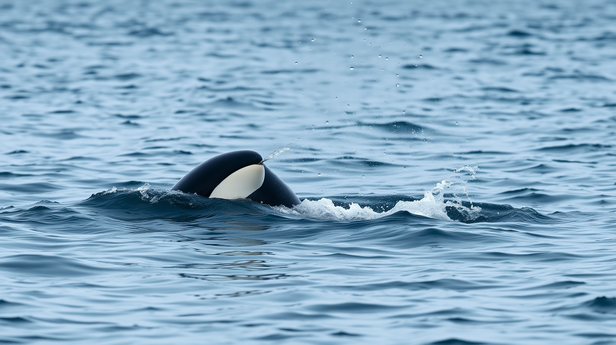
How Orca Pods Pass Down Hunting Techniques Across Generations as Cultural Tradition

Every Pod Has Its Own Playbook

Off the coast of Patagonia, a group of orcas deliberately beach themselves on gravel shores to snatch sea lions, a technique so dangerous that calves spend years watching before attempting it, and one no other orca population performs the same way. In the waters off Norway, separate pods have developed a carousel feeding method: they herd herring into tight balls using coordinated tail slaps, then stun and consume them in sequence. Off New Zealand, some pods hunt stingrays by flipping them upside down to induce tonic immobility. These are not variations on a shared instinct. They are distinct, locally held skills.

Orcas, Orcinus orca, are the most widely distributed marine mammal on earth after humans. Yet despite living in the same oceans, pods separated by geography hunt in ways so different that researchers can identify a group by technique alone. The biological baseline is identical across populations, the same brain, the same body, the same sensory apparatus. The difference is entirely in what each group has learned and kept.

How the Teaching Actually Happens

Cetacean researcher Hal Whitehead at Dalhousie University, along with Luke Rendell, documented in their work on whale culture that orca calves acquire hunting skills primarily through observation and guided practice, not through genetic inheritance. A mother will slow a hunt to let a calf attempt a technique, then correct the approach, the functional equivalent of demonstration. This process takes years. The Patagonian beaching technique, studied extensively by researchers including those working with the Whale Conservation Institute, requires calves to develop precise body control to avoid being stranded. Mothers have been observed nudging calves back into the water after failed attempts.

What makes this transmission cultural rather than merely social is its fidelity across generations and its group-specificity. John Ford at Fisheries and Oceans Canada has documented that orca pods maintain distinct vocal dialects, specific call sequences that are pod-exclusive and passed down the same way hunting techniques are. A calf born into one pod will never naturally acquire the dialect of another, even if both pods share the same waters seasonally. The dialect is learned, not inherited. This is the same mechanism that separates a Gujarati speaker from a Tamil speaker, not biology, but transmission.

Vocal Dialects as Cultural Fingerprints

Ford's research established that orca calls are not species-wide signals but pod-specific repertoires. Related pods share some calls; unrelated pods share none. Over generations, dialects drift, new calls emerge, old ones drop, in a pattern that mirrors how human languages evolve through use and isolation. Researchers have used dialect analysis to reconstruct the genealogical history of orca communities in the Pacific Northwest, tracing which pods split from a common ancestor and when, based purely on which calls they share.

This is not metaphor. Bioacousticians apply the same analytical tools to orca dialect drift that linguists apply to language family trees. The parallel holds because the underlying mechanism is the same: a group of individuals sharing learned signals, modifying them through use, and transmitting the modified version to the next generation.

What Cetacean Culture Actually Means

The word culture applied to animals makes some researchers cautious, because it carries implications about consciousness and intentionality that are difficult to test. The more defensible framing, used by Whitehead and Rendell in their book Cultures of Whales and Dolphins, is behavioral: culture is any behavior that spreads through a population by social learning rather than genetics or environment alone. By that definition, orca pods are unambiguously cultural. They hold knowledge that is group-specific, transmitted across generations, and lost when the individuals who carry it die without passing it on.

The last point matters. When orca populations decline, they do not just lose individuals, they lose accumulated techniques. A pod reduced below a functional size cannot sustain the coordinated hunting methods that require multiple participants. The knowledge dies with the group. This is why cetacean biologists argue that orca conservation is not just about protecting a species but about protecting specific communities of practice, each carrying a body of learned behavior that took generations to develop and cannot be reconstructed from scratch.

The distinction between an orca that hunts and an orca pod that teaches hunting is the same distinction between a person who can cook and a cuisine that survives for centuries. The individual skill and the transmitted tradition are not the same thing, and only one of them outlasts the individual who holds it.

Sign up to read this article
Read news from 100's of titles, curated specifically for you.
Already a member? Sign in here
Related Stories
Top stories on inkl right now
One subscription that gives you access to news from hundreds of sites
Already a member? Sign in here
Our Picks
Fourteen days free
Download the app
One app. One membership.
100+ trusted global sources.


