
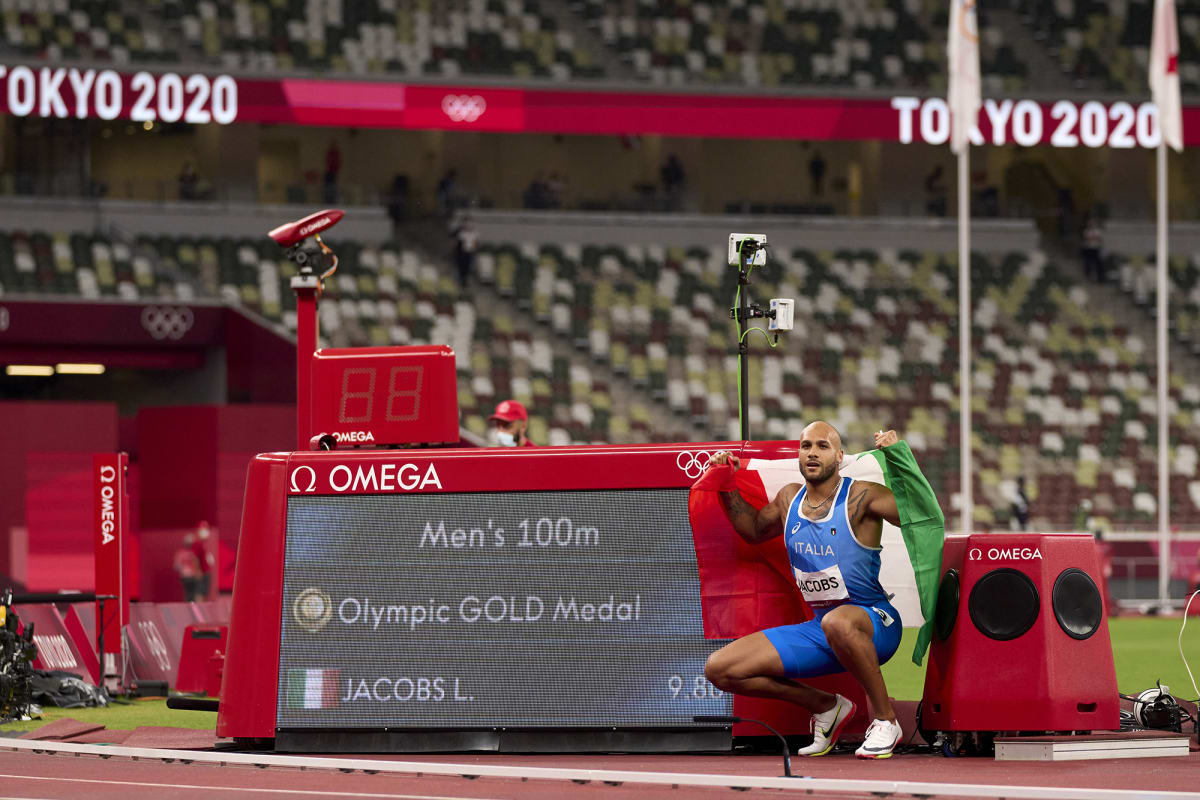
For the 1932 Summer Olympics in Los Angeles, Omega sent one watchmaker from Switzerland with a suitcase filled with 30 chronographs—handheld stopwatches that were accurate to one-tenth of a second—to handle every event that required timing. In the more than 90 years since (Omega is still the official timekeeper of the Games) the undertaking has become something that requires hundreds of tons of technology, not to mention around 550 timekeepers, to measure results to the millionth of a second (with a deviation of 23 nanoseconds per 24 hours).
The first big innovation in automatic timing systems came ahead of the 1968 Olympics in Mexico City, with the advent of technology that was relatively simple in retrospect: touchpads, which stop the clock when tapped by each competitor, giving them a precise finishing time rather than relying on humans armed with stopwatches. (Touchpads obviously aren’t an option in track. Competitors’ times in those events are determined by high-speed photos taken at the finish line.)
Erick W. Rasco/Sports Illustrated