Get all your news in one place.
100's of premium titles.
One app.
Start reading
The Conversation
The Conversation
Samantha Lambier, PhD Candidate in Astronomy, Western University

How NASA’s Nancy Grace Roman Space Telescope will open a window into the Milky Way

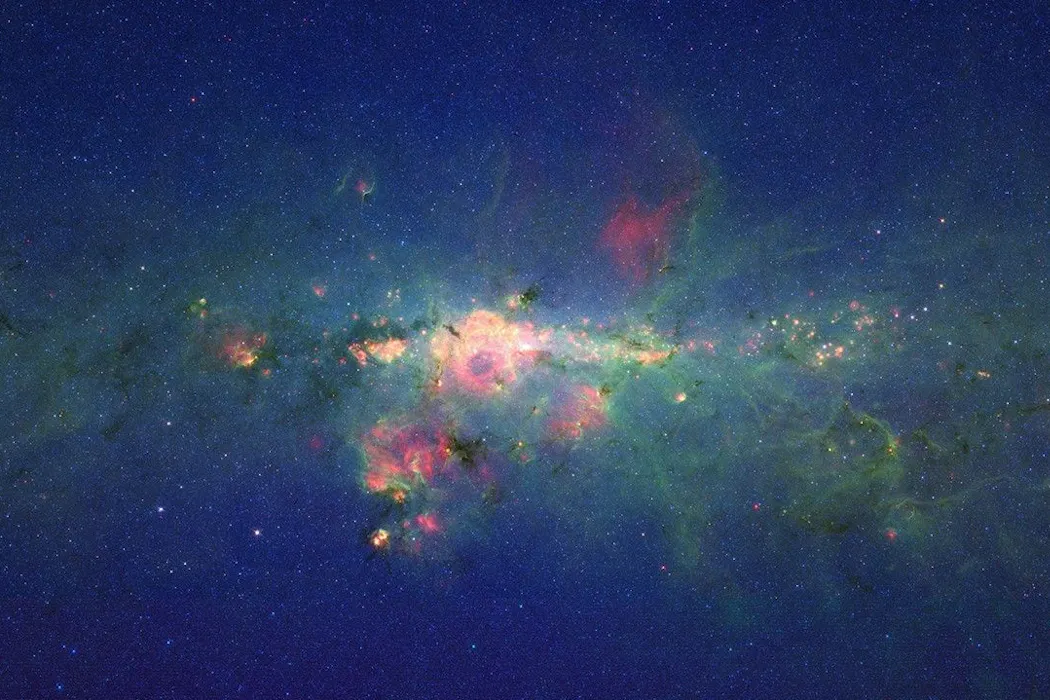
The region around the centre of our Milky Way galaxy glows colourfully in this version of an image taken by NASA's Spitzer Space Telescope. (NASA/JPL-Caltech)

Look up at the night sky with your naked eye and it may seem like it rarely changes. Yet the universe is in constant flux. Stars drift through space, orbiting the centre of the Milky Way as planets orbit them. They rotate, showing off spots on their surfaces and sometimes producing violent outbursts that affect planetary atmospheres much like solar storms produce auroras on the Earth.

As stars age, they can die dramatically as supernovae, releasing material that will form the next generation of stars and planets.

Sign up to read this article
Read news from 100's of titles, curated specifically for you.
Already a member? Sign in here
Related Stories
Top stories on inkl right now
One subscription that gives you access to news from hundreds of sites
Already a member? Sign in here
Our Picks
Fourteen days free
Download the app
One app. One membership.
100+ trusted global sources.