Get all your news in one place.
100’s of premium titles.
One app.
Start reading
Space
Space
Science
Robert Z. Pearlman

How long will the ISS operate with a skeleton crew? SpaceX’s Crew-12 astronaut mission delayed to Feb. 12

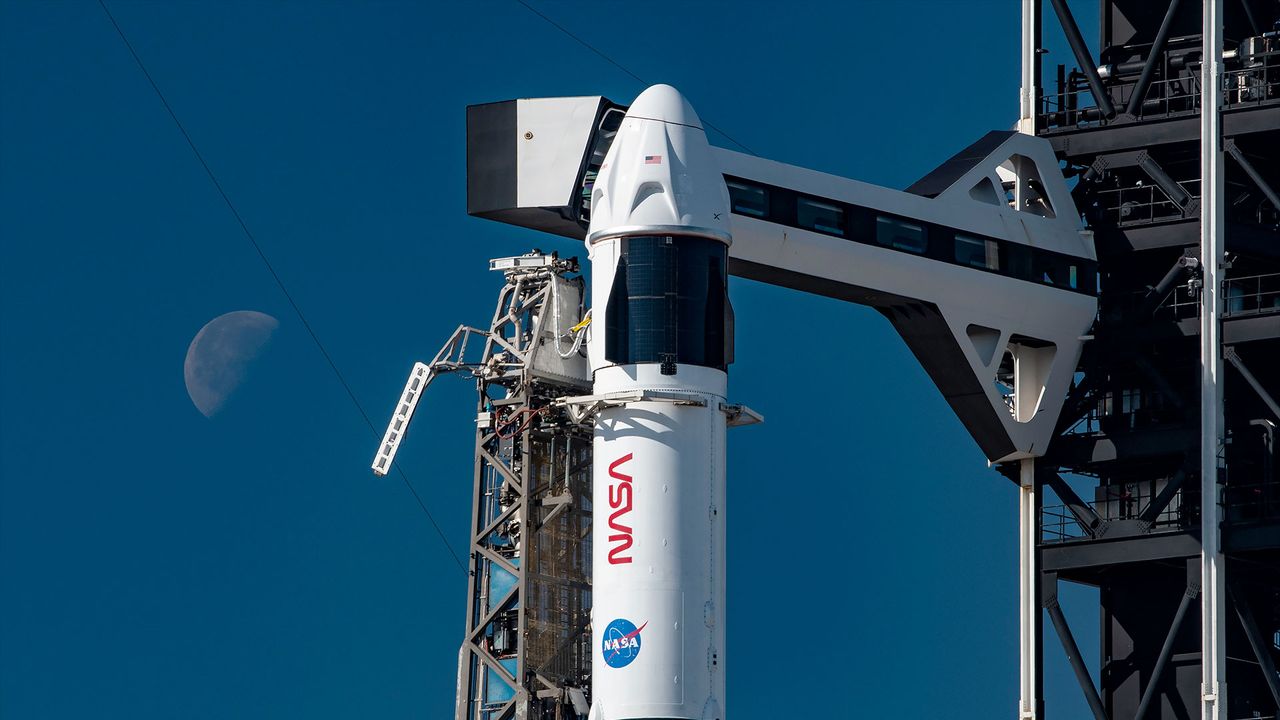
A white and black rocket with NASA markings on it stands poised on a launch pad awaiting its day to launch.

NASA and SpaceX are ready to send a new crew to the International Space Station (ISS) as soon as this week, pending the weather.

On Monday (Feb. 9), mission managers adjusted their target date for the Crew-12 launch by at least a day due to a forecast of poor weather conditions on Wednesday (Feb. 11). A launch on Thursday (Feb. 12), if cleared, would be at 5:38 a.m. EDT (1038 GMT) from Space Launch Complex-40 at Cape Canaveral Space Force Station.

Mission managers considered the forecast for both the Space Coast and the Eastern seaboard, where if a problem occurred during the launch, NASA astronauts Jessica Meir and Jack Hathaway, ESA (European Space Agency) astronaut Sophie Adenot and cosmonaut Andrey Fedyaev of the Russian federal space corporation Roscosmos could splash down safely.

A SpaceX Falcon 9 rocket topped with the Crew Dragon capsule "Freedom" stands poised on Space Launch Complex-40 at the Cape Canaveral Space Force Station in Florida. (Image credit: SpaceX)

"When we did that, we could see high winds along a lot of that track, up to 24 to 28 knots [27.6 to 32.2 mph], especially in what we would consider our higher-risk areas, the staging area," Steve Stich, NASA's Commercial Crew Program manager, said Monday during a press briefing at the agency's Kennedy Space Center (KSC), which is next door to the Space Force station. "There's a low-pressure system that's moving in and setting over that staging area, and it's driving those winds up."

The forecast for Thursday, while slightly better, will be reassessed on Tuesday (Feb. 10), so the launch date could change again, said Stich.

The teams are working only one technical issue, a problem communicating between the Crew Dragon capsule "Freedom" and launch support team members.

"Otherwise, I would say the vehicles are ready, the crew's ready, the ground systems are ready, and we just have to watch the weather," Stich said. "We'll go ahead and launch when we're ready."

Crew-12 will bring the ISS back up to its normal complement of seven astronauts. The orbiting lab has been operating with a skeleton crew of three since mid-January, when the Crew-11 mission departed a month early in the first-ever medical evacuation from the ISS.

A busy range

Possibly further complicating matters are the other launches and tests pending at the Cape.

On Kennedy's launch pad 39B, NASA engineers are continuing to troubleshoot the hydrogen leak and other issues seen during a "wet dress rehearsal" (WDR) for the Space Launch System rocket and Artemis 2 moon mission. The program is working towards conducting another WDR before setting a new Artemis 2 launch date in early March.

"We don't see conflicts this week, but we continue to talk to them all the time," said Stich. "They've made progress at changing out a few seals, and they're doing some testing on those seals."

More pressing is United Launch Alliance's next launch of its Vulcan rocket on a mission for the Space Force. That launch, from Space Launch Complex-41 (SLC-41) at Cape Canaveral Space Force Station, is slated for Thursday at 3:20 a.m. EDT (0820 GMT).

"If the [abort] weather is not looking very favorable [for Dragon], we would potentially give up the 12th to allow them to go fly," Stich said.

A crew access arm, like the one seen here supporting Crew-12's Dragon spacecraft "Freedom" at Space Launch Complex-40 at Cape Canaveral Space Force Station, is being removed from he historic Launch Pad 39A at NASA's Kennedy Space Center in Florida. (Image credit: SpaceX)

Bearing down

Meanwhile, at Kennedy's launch pad 39A, SpaceX is proceeding with removing and lowering to the ground the access arm that enabled the site to support crewed Falcon 9 missions. Crew-12 is only the second human spaceflight to launch from SLC-41.

"We're going to do some maintenance on some bearings that support the crew arm," said Bill Gerstenmaier, SpaceX's vice president for build and flight reliability, in response to a question from Space.com. "The arm physically has to come down to get to the bearings. These are the bearings that actually hold the arm to the tower."

"They are unique to 39A; they're very different than they are for the arm that's on SLC-40 and to physically get access to those, the arm needs to be removed. Those bearings have to come out, and they have to be reinstalled," said Gerstenmaier.

After the work is complete, the arm will remain on the ground, but can be reinstalled if NASA has a need for a crewed launch from 39A. Otherwise, SpaceX plans to launch Falcon 9 rockets from the Cape, while reserving the Kennedy pad for Falcon Heavy and future Starship flights.

"We don't need to put the arm back up, because if we get called up for a mission, we will have plenty of time. That's the easy piece, putting it up," Gerstenmaier said.

Sign up to read this article
Read news from 100’s of titles, curated specifically for you.
Already a member? Sign in here
Related Stories
Top stories on inkl right now
One subscription that gives you access to news from hundreds of sites
Already a member? Sign in here
Our Picks
Fourteen days free
Download the app
One app. One membership.
100+ trusted global sources.