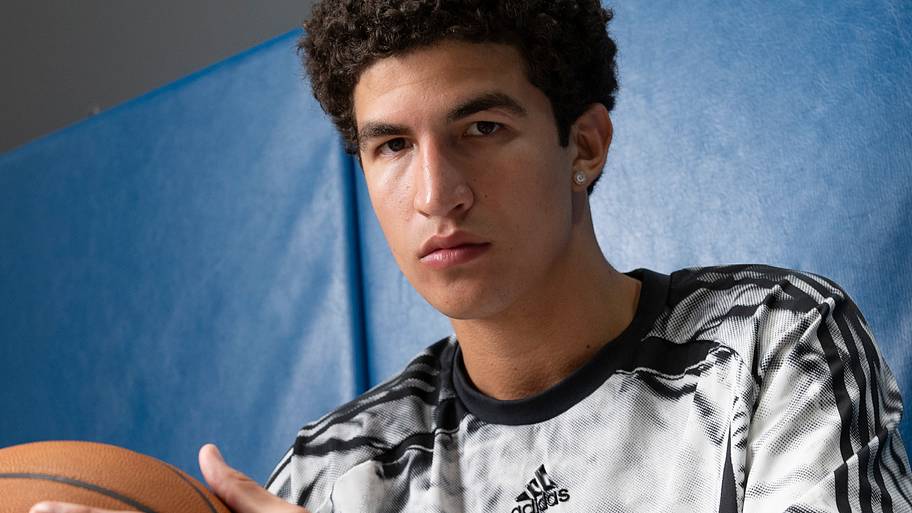
Hermosillo is a bustling city in the northwestern Mexican state of Sonora, a desert metropolis 175-ish miles from the Arizona border. To locals it’s considered something of a foodie nirvana, with street vendors dishing out buttery flour tortillas and bacon-wrapped hot dogs, serving a population that hovers around one million in a region where temperatures routinely reach triple digits. “That’s part of what builds our character,” says Karim López. “You’ve got to tough it out.” As a kid, López spent countless sun-scorched afternoons in his driveway battling his uncles in games of one-on-one, playing until exhaustion. During the pandemic in 2020, López, then 13, was a fixture at a nearby public park, running sprints on the burnt, brown grass of a soccer field before spending hours in drills and pickup games on a blistering blacktop. “He knew what he wanted,” says López’s father, Hiram. “He had a dream and he was willing to work for it.”
Hiram is familiar with the dream. Decades earlier, he had a similar one. Growing up in Hermosillo, Hiram can still remember the day his mother took him to his first indoor gym. The sounds of the ball hitting the wood, the squeaking sneakers, the crisp snap of shots going through the net. It began a journey that took him to a pair of U.S. colleges, the Mexican national team and 13 years playing pro ball in Mexico, as a burly, 6'9" forward with a little bit of a mean streak. In 2012, he ruptured his right Achilles tendon. He had surgery, rehabbed for 10 months and resumed his career. In 2018, he popped his other Achilles. Again: Surgery, rehab, back on the floor. He smiles as he recalls it, seemingly realizing in real time how crazy it sounds. “I don’t know,” says Hiram. “I just had a real love for the game.”