Former US Middle East coordinator Brett McGurk recounts how Biden’s administration coordinated with Israel and regional allies to intercept Iran’s unprecedented missile attack in April 2024, while attempting to prevent the crisis from escalating into a regional war.
Get breaking news anytime, anywhere. Download the TOI app now!
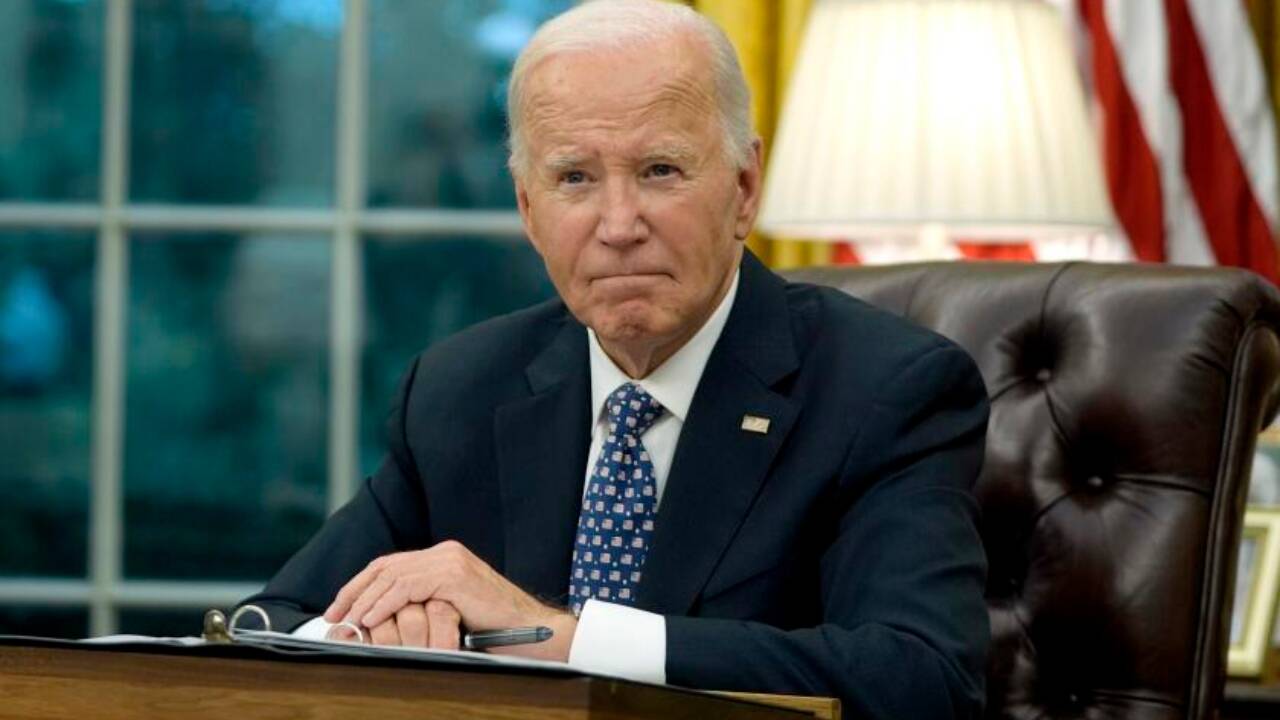
The United States helped avert a wider Middle East conflict in April 2024 by coordinating an unprecedented multinational military effort to defend Israel against Iran’s missile and drone attack, according to former US Middle East coordinator Brett McGurk.
In an account adapted from his forthcoming book Brink: Inside the Race to Free the October 7th Hostages, published by The Atlantic, McGurk detailed how President Joe Biden navigated deteriorating relations with Israeli Prime Minister Benjamin Netanyahu, stalled hostage negotiations, Iranian-backed militia attacks and the threat of direct confrontation between Tehran and Tel Aviv.
McGurk, who was closely involved in hostage negotiations alongside CIA Director William Burns, described how the US administration eventually used its military capabilities and diplomatic leverage to contain the Iranian attack and discourage Israel from launching an immediate counterstrike.
Here is how Biden administration worked to prevent the crisis from escalating into a wider war.
1. Gaza hostage negotiations stalled as regional tensions escalated
According to McGurk’s account in The Atlantic, Biden had asked him shortly after Hamas’s October 7, 2023, attack on Israel to help negotiate a cease-fire and hostage-release agreement.
The first breakthrough came in November 2023, when a seven-day truce resulted in the release of more than 100 Israeli hostages, including women and children, in exchange for hundreds of Palestinian prisoners held by Israel. Humanitarian assistance also entered Gaza during the pause in fighting, McGurk wrote.
However, negotiations collapsed on December 1 after Hamas refused to release younger women hostages as agreed and instead proposed moving directly to discussions over older male captives.
Israel rejected the proposal, and fighting resumed.
McGurk said Hamas subsequently demanded a return to the pre-October 7 status quo, including retaining control over Gaza. Israel, under Netanyahu, rejected the possibility of Hamas continuing to govern the territory.
By February 2024, the war had entered its fifth month, with nearly 30,000 Palestinians reported killed, including militants, according to the figures cited by McGurk. More than 230 Israeli soldiers had also died, while Hamas continued to hold over 100 hostages.
2. Iranian-backed attacks on US forces pushed Washington towards confrontation
While Washington attempted to revive hostage negotiations, attacks by Iranian-backed militias against American forces in Iraq and Syria intensified.
McGurk wrote that attacks against US troops had increased sevenfold since October 7 compared with the previous year, with several strikes aimed at killing American personnel.
On Christmas Day 2023, three US personnel were wounded in an attack in northern Iraq, one of them seriously.
Days later, Yemen's Iran-backed Houthi group began targeting commercial shipping and military vessels in the Red Sea.
According to McGurk, Biden subsequently asked him to meet Iranian representatives in Oman through an existing diplomatic back channel. The meeting was intended to communicate Washington's concerns and prevent further escalation.
However, the diplomatic effort failed to produce an agreement.
On January 28, 2024, an Iranian-supplied drone struck the living quarters of American troops in Jordan, killing three US soldiers and injuring dozens.
Biden responded by ordering what McGurk described as the largest wave of American air strikes across Iraq and Syria in more than a decade.
The strikes targeted militia infrastructure, including the leader held responsible for the Jordan attack and an Iranian adviser in Baghdad who was supporting the militias.
McGurk said the militias subsequently stopped attacking American forces.
3. Biden attempted to bridge differences between Israel and Hamas
In February 2024, McGurk returned to Cairo to revive the hostage negotiations with Egypt's intelligence chief Abbas Kamel and Israeli negotiators led by Shin Bet chief Ronen Bar.
According to McGurk's account, the discussions initially appeared to have little chance of success because Israel and Hamas maintained fundamentally different positions.
Hamas, through its leadership in Gaza, demanded a complete Israeli withdrawal, a permanent cease-fire and the release of all Palestinian prisoners in Israeli jails.
Israel rejected these conditions.
McGurk and CIA Director William Burns subsequently developed a compromise proposal focused on releasing a humanitarian category of hostages, including women, elderly people and the sick or wounded, in exchange for Palestinian prisoners.
The proposal covered more than 30 hostages, including three Americans.
In return, Hamas would receive a cease-fire lasting at least six weeks, with the possibility of extending it while negotiations continued over the remaining captives.
Israeli negotiator Ronen Bar indicated that Israel could accept the broad framework, McGurk wrote.
However, Egyptian intelligence chief Kamel warned that Hamas leader Yahya Sinwar was unlikely to agree.
The negotiations eventually stalled again, with Hamas rejecting the proposed compromise and maintaining its original demands.
4. Netanyahu's Rafah offensive threatened to deepen the crisis
McGurk's account describes how Israel's preparations for a major offensive in Rafah, southern Gaza, became another obstacle to negotiations.
During the February Cairo meeting, Bar informed the mediators that Israel was preparing its largest military operation of the war in Rafah.
According to McGurk, Israeli intelligence believed Hamas remained militarily organised in the area, with brigades, battalions and an extensive tunnel network.
Rafah was also sheltering large numbers of Palestinians displaced by Israeli military operations elsewhere in Gaza.
Bar argued that the only way to stop the planned offensive was for Hamas to begin releasing hostages.
During a subsequent meeting in Jerusalem, Netanyahu told McGurk that Hamas's continued presence near Israel's borders posed an existential security concern.
The Israeli prime minister also indicated that if a Gaza agreement could not be reached, Israel might consider military action against Hezbollah in Lebanon to secure its northern border.
McGurk wrote that Netanyahu was primarily focused on eliminating Hamas's military capabilities and believed that continued military pressure would eventually force Sinwar to release the hostages.
The US negotiator, however, remained concerned that military escalation could further complicate the hostage negotiations.
5. US-Israel tensions intensified over the Gaza war
By March 2024, Biden was facing growing domestic political pressure over Israel's military operations and the humanitarian situation in Gaza.
According to McGurk, the president was under criticism from sections of his own Democratic Party for continuing military support to Israel.
Earlier that month, Biden described Israel's planned Rafah operation as a “red line” in an interview, saying Israel “must pay more attention to the innocent lives being lost.”
Vice President Kamala Harris also described the proposed Rafah operation as a “huge mistake” and did not rule out consequences if Israel proceeded.
However, McGurk wrote that Biden later clarified that his comments concerned how Israel conducted the operation, rather than whether it should take place.
The growing differences between Washington and Jerusalem coincided with the collapse of hostage negotiations.
On March 18, Biden called Netanyahu and urged him to offer more Palestinian prisoners as part of the proposed agreement. Netanyahu reluctantly agreed, but Hamas did not change its position, according to McGurk.
The United States subsequently abstained from a United Nations Security Council vote on a resolution calling for an unconditional cease-fire in Gaza during Ramadan, allowing it to pass.
McGurk said Hamas viewed the resolution as a diplomatic opportunity and used Israel's growing international isolation to reinforce its negotiating position.
Israeli negotiators eventually withdrew from the talks.
6. Israel's Damascus strike brought Iran and Israel closer to direct confrontation
The crisis took a new turn on April 1, 2024, when Israel launched an air strike in Damascus, killing senior Iranian military commander Mohammad Reza Zahedi and several associates.
According to McGurk, Zahedi was a senior Iranian officer responsible for proxy operations across Syria and Lebanon, including support for Hezbollah.
Before the attack, Israeli military officials had informed McGurk that the operation was imminent.
One Israeli official also warned that Iran might describe the targeted building as a consulate, although Israel maintained that it had no evidence that the facility was a diplomatic mission.
After the strike, Iran declared that it considered the attack an assault on Iranian territory and vowed retaliation against Israel.
McGurk wrote that American intelligence subsequently began receiving reports of Iranian preparations for a large-scale missile and drone attack against Israeli cities.
The potential scale of the retaliation alarmed Washington.
Iran had traditionally relied on regional proxy groups to confront Israel and the United States, allowing Tehran to maintain some distance from direct military confrontation.
However, the planned attack appeared to represent a departure from that approach.
According to McGurk, US officials assessed that Iran was preparing to launch hundreds of ballistic missiles, cruise missiles and drones towards Israel.
7. Biden approved US military deployment despite deteriorating ties with Netanyahu
As Iran's preparations became clearer, Israel formally requested American military assistance to defend its territory.
McGurk described the request as extraordinary because it departed from Israel's traditional military doctrine: We defend ourselves, by ourselves.
Israel sought American assistance involving air wings, destroyers and missile-defence systems.
At the same time, Biden's relationship with Netanyahu was deteriorating.
McGurk wrote that the two leaders had spoken only a handful of times during the first quarter of 2024, compared with nearly 20 conversations during the final quarter of 2023.
The relationship further deteriorated after Senate Majority Leader Chuck Schumer called for elections in Israel and Netanyahu's replacement.
Against this backdrop, Biden held a meeting with senior advisers, including Secretary of State Antony Blinken, CIA Director William Burns and national security adviser Jake Sullivan, on April 4.
According to McGurk, Biden approved the emergency deployment of additional American military forces to the region on the recommendation of Defence Secretary Lloyd Austin.
The president also discussed whether the United States should threaten to suspend military assistance to Israel to pressure Netanyahu into ending the Gaza war.
However, Biden questioned the consequences of such a move while Israel faced attacks from multiple directions and hostages remained in Hamas captivity.
“We’re on the side of Iran?” he asked rhetorically, according to McGurk.
8. Biden confronted Netanyahu and linked Iran's defence to ending the Gaza war
During the April 4 telephone conversation with Netanyahu, Biden expressed frustration over Israel's handling of the humanitarian crisis and the continuing military campaign in Gaza.
According to McGurk, the president opened the call by asking: “Bibi, man, what the fuck are you doing?”
Biden warned that the United States could withdraw military assistance, while Netanyahu responded that Israel would defend itself even without American support.
The discussion also covered the killing of seven World Central Kitchen aid workers in an Israeli drone strike in northern Gaza on April 1.
Biden demanded concrete steps to improve humanitarian access, including opening additional crossings into northern Gaza.
When Netanyahu attempted to explain Israel's preliminary assessment of the incident, Biden interrupted him.
“I don’t want to hear it, Bibi.”
According to McGurk, Biden then made clear that the United States would help defend Israel against Iran but expected immediate efforts to end the Gaza war and secure the release of hostages.
“That’s the deal, pal.”
Following the call, the White House issued a statement warning that US policy would be determined by its assessment of Israel's immediate actions regarding civilian harm, humanitarian suffering and the safety of aid workers.
At the same time, the statement reaffirmed American support for Israel against Iranian threats.
McGurk described this as the central dilemma confronting the Biden administration: Washington wanted to pressure Israel over Gaza without weakening its defence against Iran.
9. US-led multinational military operation intercepted Iran's unprecedented attack
On April 13, 2024, Iran launched its first direct large-scale attack against Israel from its own territory.
According to McGurk's account, the attack began at approximately 3:30 pm with around 200 drones, followed roughly 90 minutes later by 30 cruise missiles.
Iran subsequently launched more than 100 ballistic missiles in multiple waves.
The attack was designed to overwhelm Israeli air defences by ensuring that drones, cruise missiles and ballistic missiles arrived around the same time, McGurk wrote.
The United States had spent the preceding 96 hours strengthening Israel's defences, deploying additional military assets and coordinating with Arab and European countries.
During the attack, American fighter aircraft intercepted Iranian drones over Syria, Iraq and Saudi Arabia, while US Navy destroyers and regional air-defence systems helped counter incoming threats.
McGurk described how US and Israeli defence systems worked together to intercept the incoming projectiles.
Israel's Arrow systems engaged ballistic missiles at high altitudes, while American destroyers fired SM-3 interceptors to destroy incoming threats above the atmosphere.
US Army Patriot batteries across the Middle East were also placed on alert.
According to McGurk, American pilots Lieutenant Colonel Kevin Murphy and Major George Welton, along with their squadron, shot down around two dozen Iranian drones.
The operation involved American military forces working alongside Israeli forces and a coalition of European and Arab countries.
As the attack unfolded, General Erik Kurilla, who was overseeing US military operations, informed Biden that the number of ballistic missiles launched had increased through successive waves.
McGurk recalled that the Situation Room tracked more than 100 Iranian ballistic missiles heading towards Israel.
Despite the scale of the attack, the combined air-defence effort appeared to have prevented major damage.
US military officials initially reported no confirmed impacts, while Israeli authorities subsequently reported no significant impacts.
McGurk noted that one young girl in southern Israel was wounded by falling shrapnel.
The successful interception prevented the immediate military consequences that could have triggered an Israeli retaliatory strike against Iran.
10. Biden urged Netanyahu to avoid retaliation and contain the conflict
Following the interception operation, the immediate challenge for Washington was preventing Israel from launching a major retaliatory attack against Iran.
According to McGurk, Biden wanted Netanyahu to recognise the success of the defensive operation and avoid turning it into a broader military confrontation.
The president asked for Netanyahu to be brought onto a telephone call.
When Netanyahu initially requested 30 minutes before speaking, Biden expressed frustration, asking whether the Israeli prime minister understood that the United States had just helped save Israel.
National Security Adviser Jake Sullivan and his deputy Jon Finer subsequently prepared talking points recommending that Israel respond in a way that inflicted few casualties and prevented further escalation.
During the conversation, Biden acknowledged Israel's right to respond but urged Netanyahu to coordinate with Washington and ensure that any action was designed to deter Iran rather than escalate the conflict.
“Take the win,” Biden said.
Netanyahu remained noncommittal, arguing that Iran needed to be taught a lesson.
However, both leaders agreed that their military teams would discuss possible responses.
McGurk wrote that the Biden administration subsequently received another warning from Tehran against supporting Israel in a retaliatory operation.
Iran's UN mission also issued a public message stating: “US MUST STAY AWAY!!”
The immediate confrontation eventually subsided, although tensions between Israel and Iran continued.
The following morning, Biden spoke with the American pilots and military commanders involved in defending Israel, including Murphy and Welton's squadron.
Recalling the operation, Biden told the pilots:
“The only reason we’re not in a major war right now is because of what you did. I mean it, guys. Thank you, thank you, thank you. You saved the world; I mean it. God bless you.”
According to McGurk, the episode demonstrated how American military coordination, regional cooperation and direct diplomatic engagement helped prevent Iran's unprecedented attack from triggering a wider regional war.
However, the underlying Gaza conflict, stalled hostage negotiations and tensions between Washington and Jerusalem remained unresolved.
This article is based on Brett McGurk's first-person account published in The Atlantic, adapted from his forthcoming bookBrink: Inside the Race to Free the October 7th Hostages. The military and diplomatic developments described above are attributed to McGurk's account unless otherwise specified.