Get all your news in one place.
100’s of premium titles.
One app.
Start reading
The Independent UK
The Independent UK
Maira Butt

How Iran’s ‘complete control’ of the Strait of Hormuz is wreaking havoc on the world’s oil and gas supply

Iran claims to have taken “complete control” of one of the world’s major shipping routes, causing chaos for the global supply of oil and gas as the conflict in the Middle East continues to grow.

The Strait of Hormuz is a waterway in the Persian Gulf through which around a fifth of the world’s oil passes.

Iran effectively closed the route this week after US missiles sank several Iranian ships. By Sunday, maritime traffic had dropped by 80 per cent, according to Lloyd’s List Intelligence.

“Currently, the Strait of Hormuz is under the complete control of the Islamic Republic’s navy,” Islamic Revolutionary Guard Corps navy official Mohammad Akbarzadeh said in a statement on Wednesday.

The Strait of Hormuz is one of the world’s major shipping routes (AP)

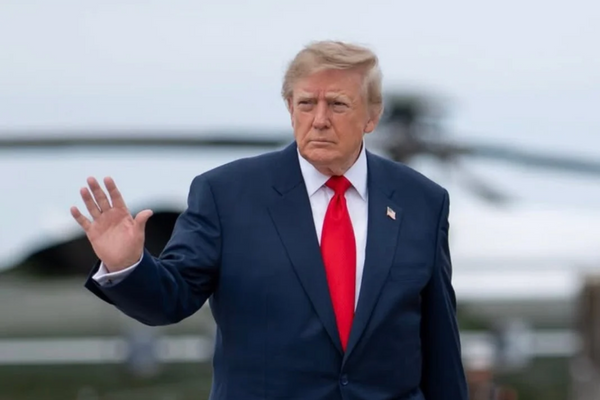
The IRGC has threatened to set fire to any ships attempting to pass through the strait. US president Donald Trump said that US Navy forces would be deployed to escort oil tankers “if necessary”.

Experts have warned that global supply chains will face major disruption, and that restrictions to shipping could send oil prices well into triple digits.

Below, we look at the strait and why it is so strategically important.

Where is the Strait of Hormuz?

The Strait of Hormuz runs to the south of Iran and is just 21 miles across at its narrowest point (Getty/iStock)

The Strait of Hormuz lies between the Persian Gulf to the north and the Gulf of Oman to the south, opening up to the Arabian Sea and beyond to the rest of the world.

It is roughly 100 miles long, but only 21 miles across at its narrowest point.

The land-flanked passage lies in Iran’s territorial waters, but is viewed as an international waterway and is normally open to all ships. It consists of two shipping lanes allowing traffic to pass in opposite directions, each two miles wide, with another two-mile-wide lane separating them.

International law permits countries to exercise control up to 13.8 miles (12 nautical miles) from their coastline. At its narrowest point, the passage comes under both Iranian and Omani control.

Iran lies on one side of the strait, and some of the world’s biggest oil suppliers including Kuwait, Bahrain, Qatar, the UAE, Saudi Arabia and Oman lie across the waters.

What passes through the strait?

Around a fifth of the world’s oil supply passes through the strait (Reuters)

It is one of the world’s most important maritime chokepoints, with 20 million barrels of oil passing through it each day – one-fifth of global oil consumption – and up to one-third of the world’s supply of liquefied natural gas.

This amounts to over 500 million barrels of oil and 6 million tonnes of gas every month, according to Lloyd’s List. Much of this is exported to Asian markets, including China (Iran’s only remaining oil customer), India and Japan.

It is the route used by supertankers carrying oil and gas from Saudi Arabia, Kuwait, Iraq, Qatar, Bahrain, the UAE and Iran.

Around 3,000 shipping vessels pass through the passage every month, including oil tankers, liquefied natural gas containers, and cargo vessels, according to Lloyd’s List. This amounts to more than 30,000 ships every year.

While there are pipelines in Saudi Arabia and the UAE that can transport oil, the US Energy Information Administration says that “most volumes that transit the strait have no alternative means of exiting the region”.

Last month, Iran closed the Middle Eastern waterway for the first time since the 1980s as Iranian troops took part in live-fire military exercises.

Iran had not threatened to close the passage even during its 12-day war with Israel last June, when US-Israeli strikes took out some of the country’s key nuclear and military sites.

A global trade bottleneck as missiles rain down

Traffic through the strait has dropped dramatically since the US strikes began (MarineTraffic)

Passage through the waterway has almost ground to a halt, creating a trade bottleneck, since the current war broke out.

Seaborne traffic is reported to have dropped by 80 per cent on Sunday, according to Lloyd’s List Intelligence, while Argus Media cited the Bahrain-based Joint Maritime Information Centre (JMIC) in reporting that movement had dropped by 94 per cent since Saturday. Only three ships passed through, according to JMIC, far below the average of 138.

Around 150 vessels have dropped anchor near the strait, according to reports. Hundreds of others have dropped anchor near to Gulf countries as shipping movements are halted.

At least four tankers are reported to have been hit in the mayhem as maritime insurers have pulled insurance cover. At least one Indian crew member was killed, according to Euro News. Several reports from trade publications suggest that others have been injured.

Mr Trump said in a post on Truth Social on Tuesday that the US Navy would begin escorting tankers through the Strait of Hormuz “as soon as possible”.

“No matter what, the United States will ensure the FREE FLOW of ENERGY to the WORLD,” he wrote, adding: “The United States’ ECONOMIC and MILITARY MIGHT is the GREATEST ON EARTH – More actions to come.”

In his message, the president added that he was ordering the US International Development Finance Corporation, a government agency focused on foreign infrastructure investment, to offer “political risk insurance and guarantees for the Financial Security of ALL Maritime Trade, especially Energy, traveling through the Gulf”.

US attacks have spilled over into international waters with the US military torpedoing an Iranian warship in the Indian Ocean, 40 nautical miles off the coast of Sri Lanka. At least 80 people were killed, and 100 more are missing. The strike is likely to deepen a crisis that has already paralysed maritime shipping.

An aerial view of the Iranian shore and the island of Qeshm in the Strait of Hormuz (Reuters)

Effects on oil prices and the global economy

Any disruption to traffic through the Strait of Hormuz is highly disruptive to the oil trade.

“The scale of what is at stake cannot be overstated,” said Hakan Kaya, senior portfolio manager at investment management firm Neuberger Berman.

A partial slowdown lasting a week or two could be absorbed by oil companies, he said. But a full, or near full, closure lasting a month or more would push crude oil prices, trading at around $80 (£59) on Tuesday, “well into triple digits” and European natural gas prices “toward or above the crisis levels seen in 2022”.

Threats to the route have spiked global energy prices in the past, including during the Israel-Iran war in June 2025.

China and Japan, who will be severely affected, have called for an immediate de-escalation of the conflict. A spokesperson for the Chinese foreign ministry said on Tuesday, when asked about the potential impact on China’s oil supply, that China would take necessary measures to safeguard its energy security.

Sign up to read this article
Read news from 100’s of titles, curated specifically for you.
Already a member? Sign in here
Related Stories
Top stories on inkl right now
One subscription that gives you access to news from hundreds of sites
Already a member? Sign in here
Our Picks
Fourteen days free
Download the app
One app. One membership.
100+ trusted global sources.