Get all your news in one place.
100’s of premium titles.
One app.
Start reading
The Times of India
The Times of India
National
R S Raveendhren and Alifiyah Shabbir | TNN

How hydrocarbon projects in Cauvery delta overshadow rights

CHENNAI: What happens when the government is allowed overriding powers to devise policies and apply legislation through executive action without proper sanctions?

Ecological experts have long been warning that absence of adequate deliberations and lack of transparency result in formulation of hagiographic policies that are designed to achieve a shortsighted political or a socio-economic agenda.

The case in point is the Union cabinet’s discreet nod for Hydrocarbon Exploration Licensing Policy (HELP), 2016, that quietly replaced the New Exploration and Licensing Policy (NELP). The new policy has opened the Pandora’s box in the Cauvery delta.

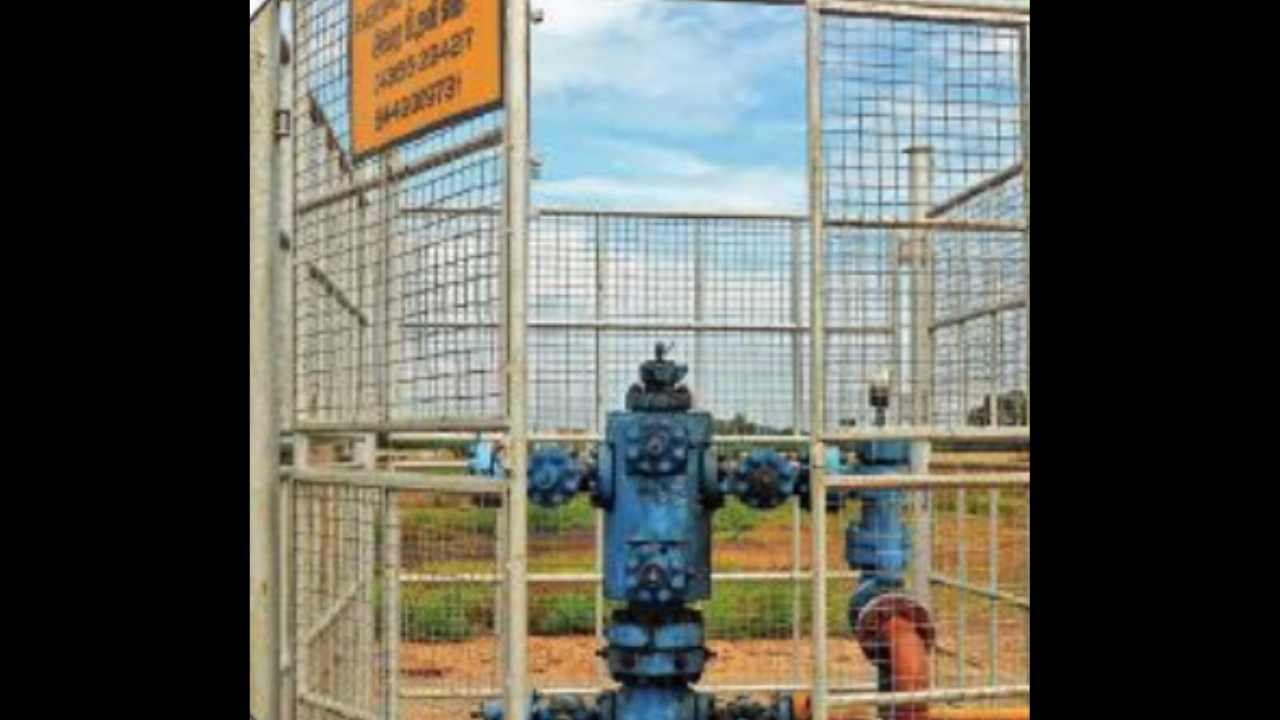
In the past month, Oil and Natural Gas Corporation (ONGC) attempted to drill new hydrocarbon wells in Kuttalam, Malliyam and Tiruvelvikkudi villages in Mayiladuthurai district under the guise of maintenance work since they couldn’t obtain permission under the Tamil Nadu Protected Agricultural Zone Development Act, 2020.

The said areas fall under a protected agricultural zone. Further, the Act does not permit new project or activity. Their bid was foiled after protests of the Anti-Methane Project Federation and the villagers.

Cauvery delta spans across 81,555sqkm. Oil refining companies including ONGC have been eyeing this region for its hydrocarbon reserves. These companies estimate the Cauvery delta to span an area of 1,50,000sqkm including land and the seabed. What is unfortunate, however, is that all the places where significant presence of hydrocarbons is detected are parcels of fertile agricultural land.

Those living in the Cauvery delta today are affected thanks to the Petroleum and Minerals Pipelines (Acquisition of Right of User in Land) Act of 1962. It is one of the 13 Union Acts that are exempted from compliance of a social impact assessment. The archaic law confers the executive

all-pervasive powers to extend the application of the law through a mere notification. With the aid of this excessive legislative delegation, the Union government has granted licenses to companies for exploration of hydrocarbons under the Open Acreages Licensing Programme.

This programme seeks to grant freedom to contractors to carve out land of their choice to exploit natural resources from the Cauvery delta. Though this law and the subsequent policy decision usurps the rights of the federal states and negates the rights of its people, it remains unchallenged.

The draft Environmental Impact Assessment notification, 2020 also exempts several projects from prior environmental clearance and excludes public consultation. Ironically, the draft notification makes inroad into centre-state relations by doing away with consultation with state committees in the garb of ‘decentralisation of power’.

The Union government is thus at- tempting to wrestle the natural resources from the collective control of the communities.

There are 71 hydrocarbon wells in operation in the delta today as per the Tamil Nadu Pollution Control Board (TNPCB). ONGC claims to be operating 183 wells, indicating that at least 112 wells are outside the TNPCB’s radar. Indicating that these 112 wells are operating without requisite clearance from state authorities set up under legislation on water and air.

The projects in the Cauvery delta are reported to have a limited life of 35 years. But such projects on fertile land threaten to destroy agriculture in this belt leaving water unfit for any activity. In addition, issues such as marginalisation of peo- ple, increased morbidity and mortality, loss of access to community services and violation of human rights have begun to raise their ugly head due to internal displacement.

Commercial activities must not be allowed to outweigh the rights of native people and their sovereignty over their own natural resources.

At present, India is seventh among the 25 countries where carbon dioxide emission due to fossil fuel extraction is at a record high. The Production Gap Report of 2021 published by the UN exhorts the countries to reduce extraction of fossil fuels.

Right now, the Cauvery delta is pushing toward a man-made ecological disaster. The Tamil Nadu Protected Agricultural Zone Development Act of 2020 is a corrective albeit small step in the right direction.

The Supreme Court has not shied away from its duty of recognising the rights of the people as owners of natural resources in cases such as Reliance Industries and 2G Spectrum. It has said in various terms that the government must only act as a trustee for the people.

It is time now for the courts to proactively probe if the government is living up to the trust that the people have reposed in it. It must also not let the doctrines of public policy and public trust come in the way of examining the government’s role as a trustee. The much-hyped ‘polluter pays’ principle has outlived its purpose and must be replaced with a ‘preempt the polluter’ policy.

A democratic welfare state cannot afford to remain oblivious to the rights of its people nor can it pit its own people against nature by undertaking projects that can cause irreversible ecological damage. The native people should be afforded the right to decide their own priorities if it would affect their lives and livelihood.

Practising good policy-making at its core can help governments offset the damage done and save the Cauvery delta and its people.

(The authors are advocates at the Madras high court) Email your feedback with name and address to southpole.

Sign up to read this article
Read news from 100’s of titles, curated specifically for you.
Already a member? Sign in here
Related Stories
Top stories on inkl right now
One subscription that gives you access to news from hundreds of sites
Already a member? Sign in here
Our Picks
Fourteen days free
Download the app
One app. One membership.
100+ trusted global sources.