
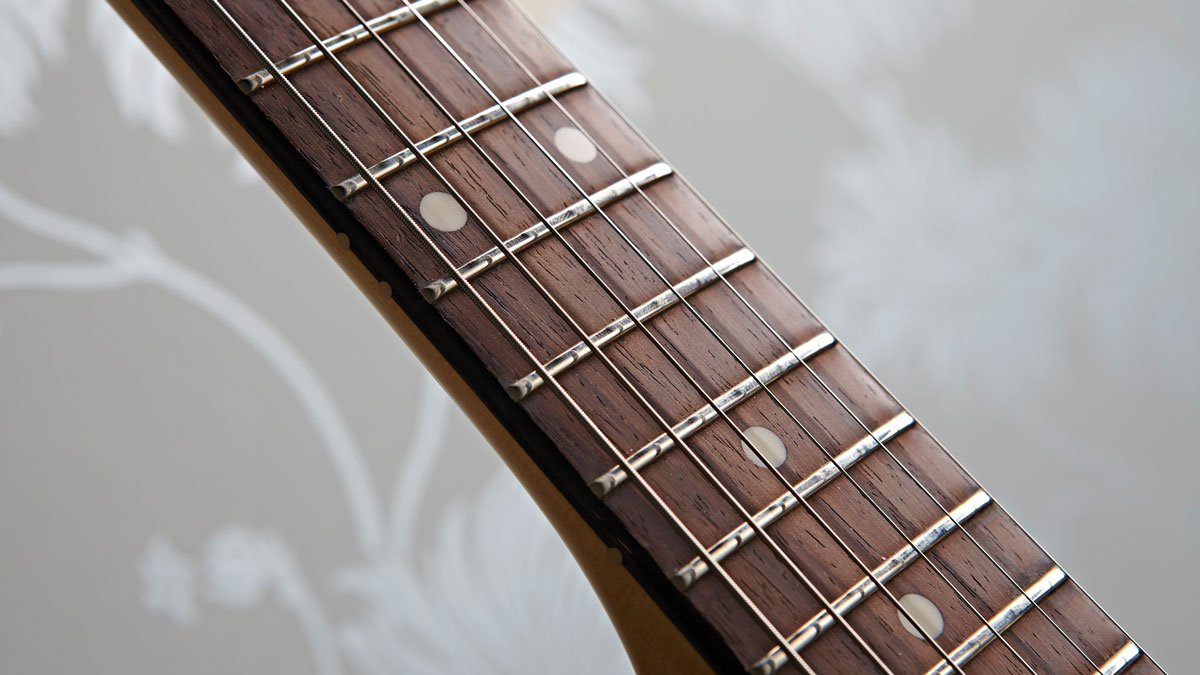
Looking back many hundreds of years, early lutes were fretless, but they began getting frets from the late 16th century. These frets subdivide a fretboard so a string can be pressed anywhere between two frets and the note will have the desired pitch. Without them, extreme accuracy is needed for intonation.
Lute builders, aka luthiers, tied lengths of gut or nylon around a neck with the knot placed at the top edge of the fretboard. In addition to making it easier for players to pitch notes correctly, these frets made it possible for multiple notes to be used simultaneously. This also allowed for chords as well as single notes – and frets soon became commonplace on guitar-like instruments.