
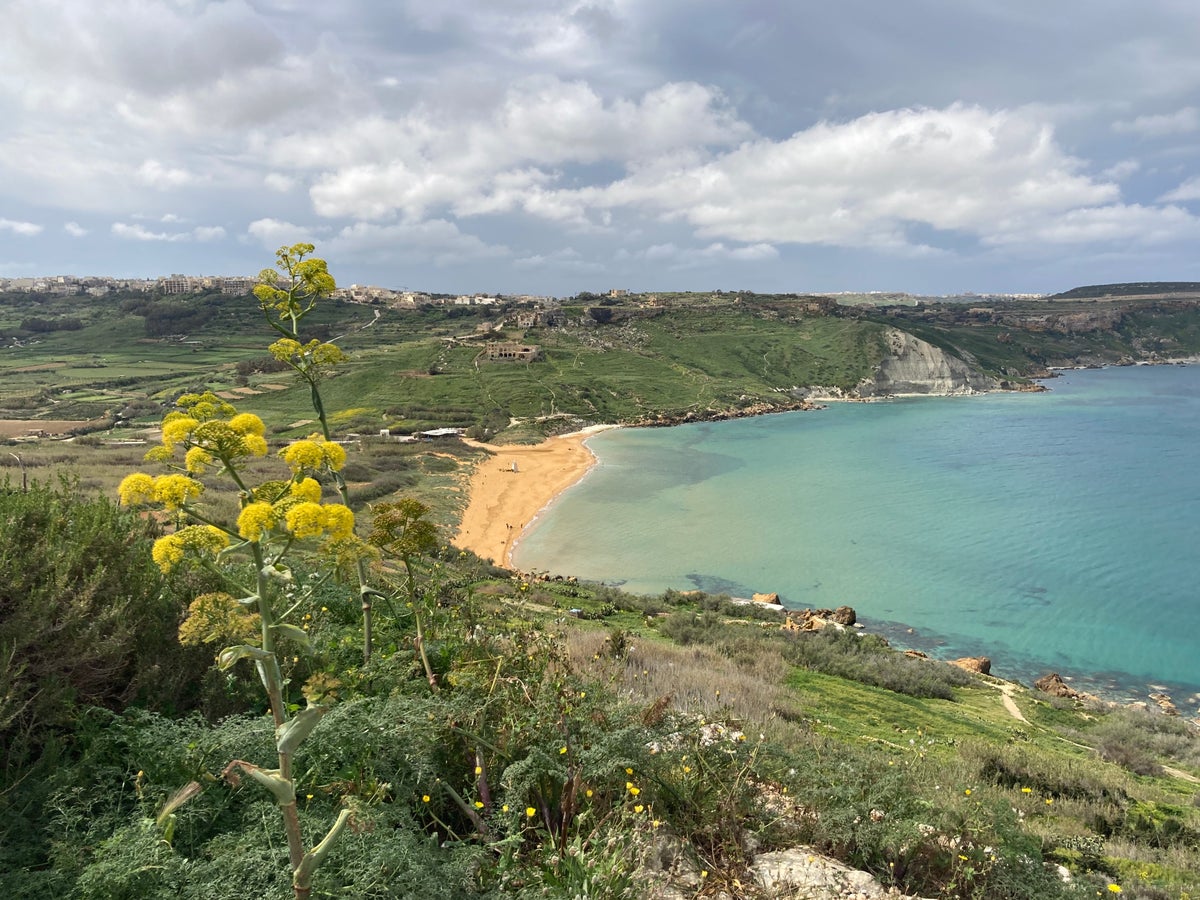
In a rock-cut cave on the shores of a metallic-blue sea, Alfred Attard waits out the winter surrounded by a clutter of boxes, bags and piles of salt, just as he has for the past 48 years. At Xwejni on the north coast of Gozo, Malta’s smaller sister isle, waves gnaw at ochre-limestone cliffs and a chequerboard of salt pans. On an island defined by the tides, there is nothing more important than salt, yet Alfred is just one of two remaining people who hand-harvest sea salt on the island – the final keepers of a millennia-old tradition. These salt pans have been here, in one form or another, since Phoenician times.
“This is the best salt in the world because it’s 100 per cent natural,” says Alfred, a sprightly, weather-beaten, moustached man, with mischievous blue eyes. His tiny dog, Kiku, curls in a blanket on his lap, and his baseball-capped wife, Mary, sits beside him on a plastic chair. “I learned the art from my stepfather. There’s no machinery – just hot, hard work!” laughs Alfred, holding up the old-fashioned yoke with which he carries two buckets, each laden with 20 kilos of salt.













