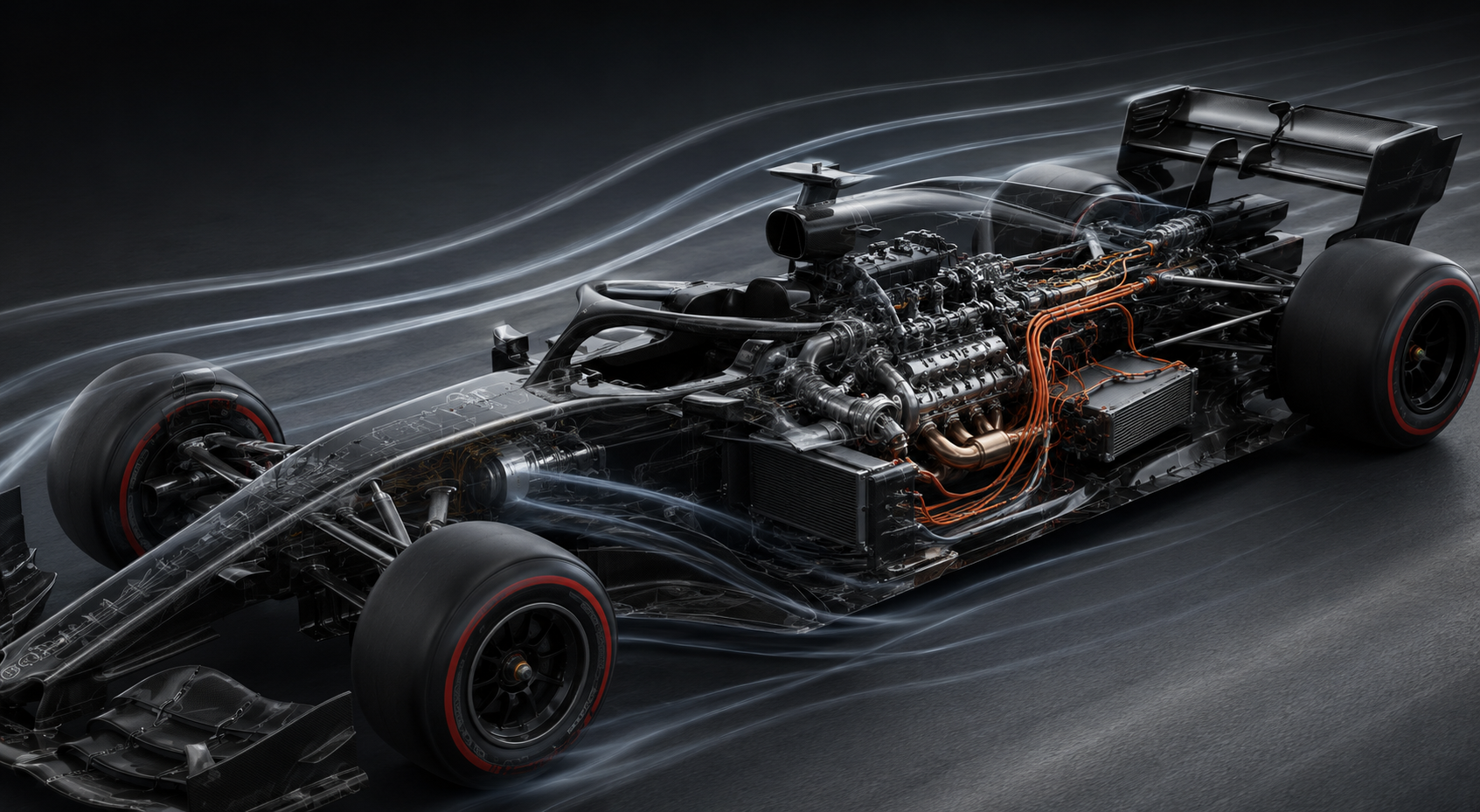
Formula 1 cars are the most advanced racing machines in the world, and that's no accident. They mix advanced engineering and new materials. They also use years of research. This makes a vehicle that can reach amazing speeds and still offers great control.
For many sports fans, the appeal of Formula 1 is like other competitive pursuits they follow, whether that's football, tennis, or even online rugby betting. Behind every result lies a combination of strategy, performance, and technology working together. In Formula 1, however, technology plays an especially important role.
Every part of an F1 car has one goal. It’s designed to go faster than the competition. This includes aerodynamics, hybrid power units, tire management, and data analysis.
Hybrid Power Units: More Than Just Engines
Modern Formula 1 vehicles don't only use conventional combustion engines.
Since 2014, teams have used hybrid power units. These units have a turbocharged V6 engine. They also include electric energy recovery systems.
The internal combustion engine is the main power source. Other systems help performance, too.
One of the most impressive features is energy recovery. Heat from the turbocharger can be captured. Energy from braking can also be collected. Both can be turned into electricity. This energy is then stored and later deployed to provide an extra performance boost.
The result is a power unit. It generates over 1,000 horsepower. Additionally, compared to prior Formula 1 engines, it is far more efficient.
Racing technology often drives innovations that end up in road cars. This is a perfect example.
Why Tires Matter So Much
Tires might appear like one of the less thrilling components of Formula 1 to casual watchers. In actuality, they frequently decide how races turn out.
The temperature ranges in which Formula 1 tires are intended to function are extremely specific. They have trouble providing grip and are very chilly. Too hot, and performance begins to decline.
Tire temperatures are continuously controlled by drivers during a race.
Pushing too hard early on can cause excessive wear, forcing an earlier pit stop. Conserving tires may provide a strategic advantage later in the race.
Different tire compounds add another layer of complexity. Softer compounds generally offer more grip but wear out faster. Harder compounds last longer but may not deliver the same level of performance.
This balance of speed and durability causes exciting battles. Fans love to see these during race weekends.
The Role of Data and Technology
Modern Formula 1 teams collect enormous amounts of information during every session.
Hundreds of sensors are spread across the car. They check tire temperatures, track fuel use. They also check suspension movement and aerodynamic performance.
Engineers use this data to understand exactly how the car is behaving on track.
Teams can analyze data in real time during a race. They can then make strategic decisions based on changing conditions. If tire wear increases suddenly, engineers can change their plans. If the weather shifts, they can adapt quickly.
This steady flow of information has changed Formula 1. Now, it is one of the most data-driven sports in the world.
Materials Built for Performance
Weight plays a critical role in motorsport.
An automobile's ability to accelerate, brake, and change direction increases with its weight.
That's why Formula 1 teams rely heavily on advanced materials such as carbon fiber. This material is very strong and also lightweight. This makes it perfect for racing.
The chassis, bodywork, and numerous other components contain carbon fiber. It has a significant impact on driver safety as well.
Modern Formula 1 cars are safer than ever, even with extreme speeds. This safety comes from ongoing advances in materials and design.
Innovation Never Stops
One of the most fascinating aspects of Formula 1 is that development never truly ends.
Even during the racing season, teams keep adding upgrades. They do this to find small performance gains. A new wing, a better floor, or an improved cooling system might save a tiny bit of time per lap. In Formula 1, those small fractions can change who wins the championship.
This relentless pursuit of improvement is part of what makes the sport so compelling.
Every race shows off the drivers' skills. It also highlights the creativity of many engineers working behind the scenes.
Formula 1 vehicles are much more than just quick vehicles. They are labs on wheels. They combine aerodynamics, hybrid tech, advanced materials, and data science. It’s an amazing package. As technology changes, Formula 1 will lead in innovation. It will push the limits of what’s possible on four wheels.