For most people, giving something back to a cause that has touched their family might mean hosting a morning tea, buying a raffle ticket or donning an apron for a charity sausage sizzle.
For Andrew Danson, it meant becoming chairman of MND Australia.
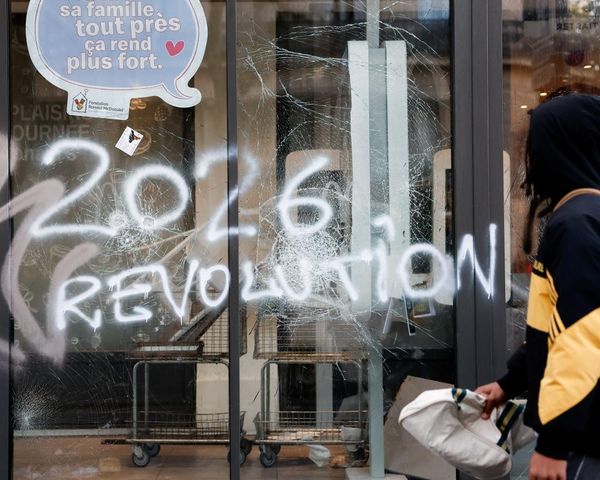
It was not, he admits, the plan.
After his father Peter died from motor neurone disease in 2020 aged 64, Mr Danson joined the board of MND South Australia hoping to help with fundraising and introduce corporate sponsors.
"I never at any stage thought that I would end up in this position and probably never really had any intention to probably end up in this position," he tells AAP.
But he had seen first-hand what MND could take from a family and he wanted to do something about it.
"If you're going to rock a boat, you've probably got to stand in it yourself," he says.
His father was a surveyor and former mayor of Mildura. Fiercely loyal and dependable, he worked hard and loved watching his children succeed.
"If I'm a very small percentage of what he was as a leader, I'd be very, very happy," Mr Danson says.
Peter Danson was diagnosed with MND in 2018 after developing slurred speech, extreme tiredness and weakness in one arm.
The family had little understanding of the disease and, at first, Peter believed he might be the person who would beat it.
As his speech disappeared and his mobility deteriorated, the family began drafting a bucket list: the MCG dining room on AFL Grand Final day, the Silo Art Trail and, above all, the Ashes at Lord's.
By then, Peter could no longer speak and was using eye-gaze technology to communicate, but the family managed to get him to London, where he watched an Australian training session and met Steve Smith and Tim Paine.
They also took a European river cruise, but he was so exhausted he could barely leave the boat.
Back in Australia, his family helped him maintain his independence for as long as possible.
Mr Danson and his sister Philippa took turns travelling to Mildura to help with caring responsibilities and give their mother, Gayle, a break.
Peter died in January 2020, aged 64 - on Andrew's birthday, days after collapsing in hospital, where he was receiving treatment.
"Nothing prepares you for it actually occurring," Mr Danson says, adding the grieving began from diagnosis, when the family felt they had been handed a ticking clock.
Mr Danson conceded stepping into the MND community had been part of how he had dealt with that loss.
"I've probably come to accept that it's OK to not be OK about it," he says.
His ambition now is to improve the experience for other families, particularly those living outside Australia's major cities.
In regional Australia, specialist MND care can be difficult to access, leaving husbands, wives, daughters and sons to become carers.
Mr Danson wants a system that allows families to remain families.
"If we're able to try and create a framework of care that wraps their arms around the community," he says.
His other challenge is money.
MND organisations, like thousands of charities across Australia, are competing for a shrinking pool of discretionary giving as households face cost-of-living pressures.
Awareness of the disease has increased thanks to the work of the late Australian rules great and former Australian of the Year Neale Daniher, who died from MND in May, and the recent diagnosis of South Sydney NRL player Jai Arrow.
Mr Daniher co-founded Fight MND following his 2013 diagnosis, with the organisation now headed by his daughter Bec raising more than $157 million for MND research and care.
Australia's first national MND Conference in Adelaide, which begins on Wednesday, will bring together people living with MND, families, clinicians, researchers and advocates.
Mr Danson says MND Australia has to fight "hand over fist" for every dollar and make sure it is spent wisely.
That makes sustainable funding, rather than relying solely on charity, one of his priorities.
Yet his ultimate measure of success is simple.
"I'm the only person in Australia who wants to be redundant from their job, because if I'm redundant, that means we've got a cure," he says.