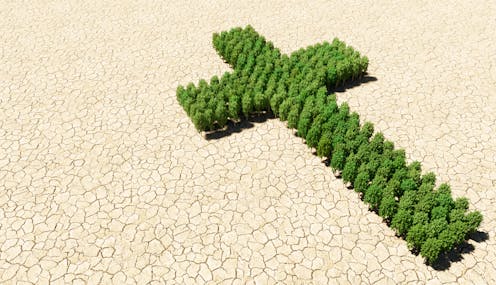
It has become clear that meaningful progress on climate change is not going to be achieved by one person or indeed, one government. Coordinated action between governments, industry, local leaders and society is needed urgently. The recent COP27 decision itself mentions the importance of local communities, cities, indigenous peoples and children. But strikingly absent is the role of faith or religion.
Roughly 84% of the global population identifies with some sort of religion, a figure expected to rise to 87% by 2050. Our research shows there is potential for faith to mobilise social environmental change, yet it is usually left out of conversations about sustainability.