When it comes to innovation, invention and industry, Scotland has always made a huge impact on the world – and the country’s future looks bright with life sciences currently contributing about £10.5bn in turnover (pdf) to the economy.
Within this sector, Scotland has become a fast-growing and attractive place to do business; it is increasingly recognised for playing a major role in the future of healthcare with world-leading research and development bolstered by collaborations between local academia, the NHS, manufacturing and technology.
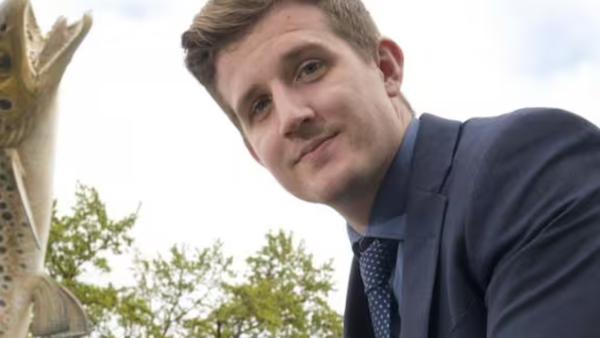
Peter Coleman, CEO of RoslinCT, believes the Scottish landscape is now a burgeoning hotspot for cutting-edge science, such as that at his company, which manufactures stem cells for treatments used in conditions like sickle cell disease.
Customers bring their cell-based therapies to the RoslinCT’s laboratories, which have the capacity to produce at scale. Once the therapies have progressed through clinical trials and are ready to be released on to the market, RoslinCT manufactures them for patients across the world.
“There’s already a supply of talent coming from the universities and colleges,” he says. “Then, all around us, are established businesses in life sciences creating a wider ecosystem.”
Coleman has led the Edinburgh-based company for four years and notes this infrastructure is not only in pharmaceuticals but also testing, quality control and assurance, and critical supply chain elements such as warehousing. Such continuity, he says, gives him faith that his life-saving product will be made and delivered.
“You need all of this network around such high technical capability,” Coleman says. “Scotland is a natural home for manufacturing.”
Educated talent that wants to stay
RoslinCT was originally spun out of the Scottish capital’s Roslin Institute, an organisation best-known for its groundbreaking first cloning of a mammal – Dolly the Sheep – in 1996. This iconic advance made Dolly famous worldwide and is one reason Coleman believes Scotland has become a destination for those wanting to learn about, or work in, life sciences, whether from elsewhere in the UK or overseas. And for employers and investors looking to navigate the UK immigration system, Brand Scotland’s supportive ecosystem is there to help in the form of Scotland’s Migration Service.
The Scottish government’s 10-year life sciences strategy launched in November 2025 aims to create a £25bn industry by 2035 and Coleman describes how the country “punches above its weight” in this sector, thanks to the entrepreneurial and independent spirit shown both by healthcare startups and more established businesses, such as RoslinCT, which launched in 2006.
Over the past 20 years, RoslinCT – officially a cell therapy contract development manufacturing organisation – has grown from a headcount of 30 to nearly 400 at its Edinburgh HQ. Setting up its own training academy to guarantee a pipeline of skilled workers in its specialism has helped. “I think about 75% of our colleagues here are under the age of 35,” Coleman says. “They’re not all Scottish, a lot come from overseas to learn about cell therapy.
“They heard about Dolly as kids and wanted to come to Edinburgh and to Scotland. We have around 30 nationalities; it’s a huge diversity of people around the table, but many have a little bit of a Scottish accent because they spent four years here at university.”
Support from Scottish leaders
Speaking of the launch of the decade-long strategy, Mark Cook, chair of the Life Sciences Scotland Industry Leadership Group, pointed to this cluster’s vibrancy, allowing it to push boundaries, think bigger, and take bolder steps forward.
“With the game-changing impact of new technologies, from genome editing to AI, the next 10 years are critical to the global expansion of the sector and we must ensure Scotland is at the forefront of that,” he said in November.
Coleman is quick to reference the public sector support available in Scotland as being influential in RoslinCT’s growth: “They were able to guide us in a number of different ways, from the best training programmes to the grants available, to initially supporting us to find lab space.”
He also believes Scotland is an attractive place to visit for his clients when they come from international locations to view the lab facilities. “They like to come to Edinburgh and the wider region,” he says. “If you can augment your business visit with a night out in the capital, or time on the golf course, that works really well. For some, it’s the first time they’ve been to the country.”
Looking ahead, the CEO says he is certain of Scotland’s commitment to help life sciences and its impact globally. He also heaps praise on his workforce, describing an “understated” side which he says is the Scots’ “willingness to go the extra mile”.
“Being from northern England myself, I’m very much aligned with that approach,” he says. “I think that stands out, especially with our customers.”
Praising the established infrastructure – from supply chain to trade bodies – Coleman highlights “a maturity about Scotland” that enables RoslinCT to save lives. Not to mention the country’s proud history of innovation. “There’s an industrial heritage in Scotland,” he says. “It is a natural home for manufacturing, whether making bridges or trains, or manufacturing cells.”
Find out more about opportunities to live and work, study, visit or do business in Scotland at Scotland.org