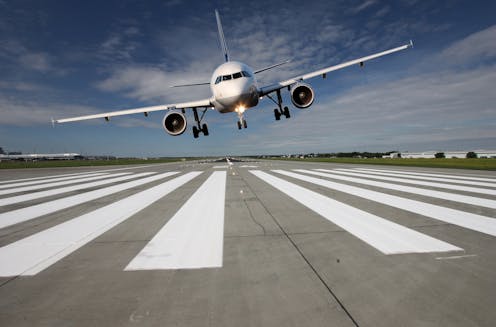
Deciding whether to land or to make a go-around is one of the most important and hazardous operations involved in flying. In fact, the vast majority of accidents in the past 20 years have occurred during the final approach or landing phases. While these are not the deadliest accidents (accounting for 9% of all deaths in commercial flights between 2015 and 2019), they nevertheless generate huge financial losses for airlines.
Airline pilots are expected to perform a go-around in the case of an unstabilised approach, which is characterised by a important deviation of at least one flight parameter (e.g., airspeed, flight path, altitude). However, a 2011 study showed pilots chose to continue the landing in 95% of unstabilised approaches for which a go-around should be performed (unstabilised approaches representing 3.5% of all approaches). The Flight Safety Foundation estimates that 83% of runway excursions and 54% of all accidents that occurred between 2000 and 2015 could have been avoided had the pilots chosen to go around.