
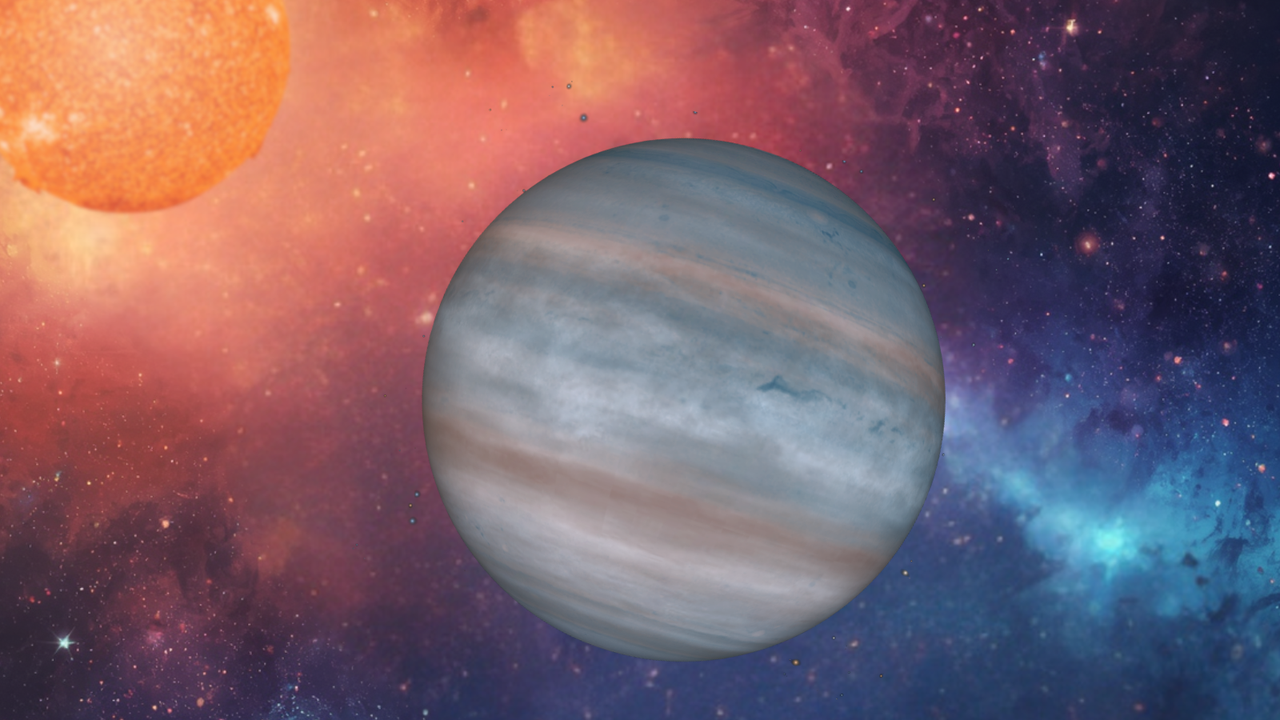
How do you weigh a planet you can't see from many light-years away? Astronomers may have the answer — and it involves "reading between the rings," aka the bright beautiful dusty structures that newborn exoplanets create around their young stars.
Planets in general are born from the dust, gas and tiny fragments called "planetesimals," that surround young stars. As a result, in their relative youth, these worlds are found still embedded in this natal-material swirling around in plate-like structures called protoplanetary disks. However, recent observations have revealed that as these infant exoplanets orbit their parent stars, they also carve lanes in this disk of gas and dust.