
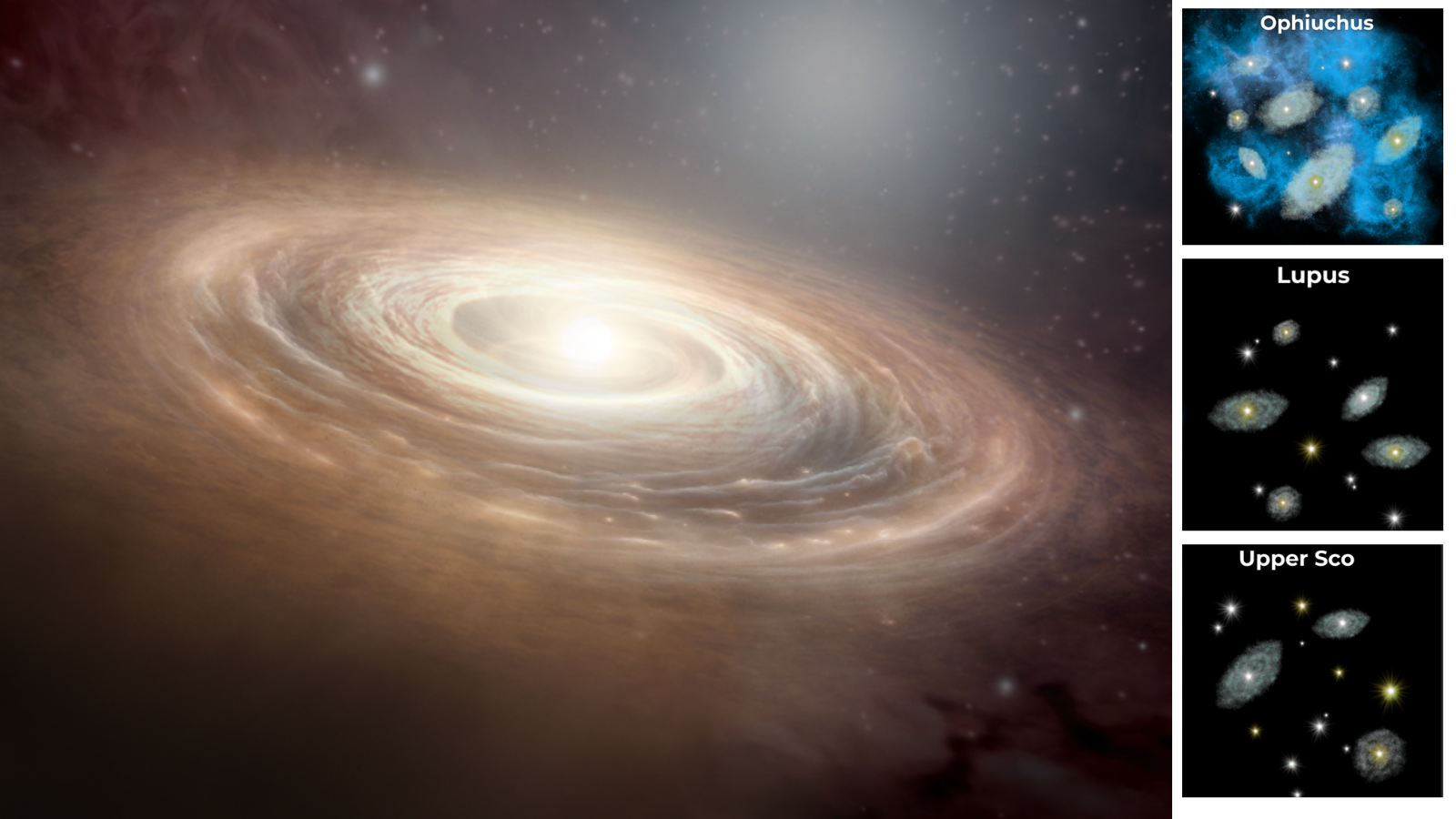
Infant planets are ravenous little blighters that quickly devour what remains of the star-circling gas and dust clouds in which they form. The gas in these protoplanetary disks disappears rapidly, within just a few million years. Astronomers now have a better picture of this process of planetary evolution than ever before, thanks to a new study.
The research was conducted by an international team of astronomers using the Atacama Large Millimeter/submillimeter Array (ALMA), as part of a program called the ALMA Survey of Gas Evolution of PROtoplanetary Disks (AGE-PRO). The AGE-PRO team studied 30 protoplanetary disks around sunlike stars, finding that gas and dust components in these disks evolve at different rates. The amount of gas remaining as these disks are whittled away determines the type of planets these systems produce, the researchers found.












