The historic southeastern city of Lyon is known as "the capital of the Gauls" but the killing last week of far-right nationalist student Quentin Deranque during a clash between anti-fascist and far-right activists has drawn attention to its less exalted history as a bastion for the far right, leading to escalating violence between two political extremes.
Quentin Deranque, a 23-year-old French nationalist, died from blows to the head during a clash between ultra-right and ultra-left activists in Lyon on 12 February.
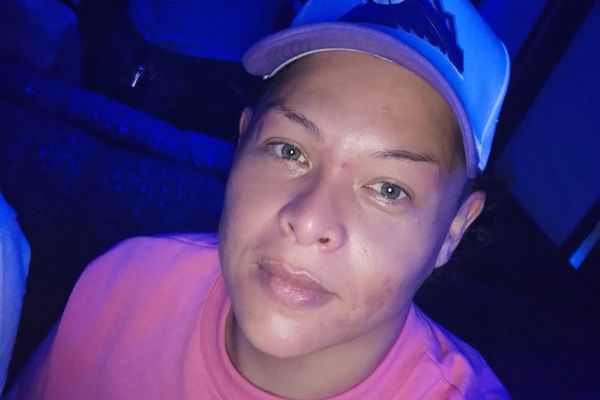
Deranque was involved with several nationalist and far-right groups, and was reportedly providing security for Nemesis, a femonationalist identitarian movement which was protesting against a conference hosted by MEP Rima Hassan of the far-left France Unbowed party at Sciences Po Lyon university.
Seven men have been charged over his death, most from the anti-fascist Jeune Garde movement, founded in Lyon in 2018.
A bourgeois city that sits at the confluence of the Rhône and Saône rivers, and France's third-largest by population, Lyon is famed for gastronomy and steeped in Roman history. It also has a reputation for far-right violence.
'Ultra-left' blamed for youth's killing that shocked France
Catholic conservatism
"Lyon has historically been an epicentre of the radical right for about a century," said Isabelle Sommier, a sociologist at the Sorbonne university and co-author of a book on political violence. "It's the city with the highest concentration of radical right activists."
As early as 1913, the monarchist, nationalist movement Action Française – now considered foundational to France's far right – organised a student demonstration in Lyon, giving it a foothold in the city, as well as leading to clashes.
Action Française strengthened its presence in Lyon during the Second World War, and since the 2010s has undergone a revival. According to local media outlet Rue89Lyon, it reopened premises in 2015 and now has around 30 active militants who hold weekly training sessions in the city.
Lyon's strong tradition of Catholic conservatism has favoured the development of religious identitarian groups. And, Sommier notes, its universities have provided fertile recruitment ground for such movements.
The Federation of Nationalist Students (FEN) and the neo-fascist Ordre Nouveau ("New Order") were active in Lyon from the late 1960s, contributing to the founding of the far-right National Front (now National Rally) in 1972.
Lyon III University (founded in 1973) in particular became a centre for far-right ideology and helped foster a generation of militants. From the 1970s to 1990s, there were a number of far-right academics – and one notable Holocaust denier – on its staff, including history professor and former National Front heavyweight Bruno Gollnisch.
A 2004 official report by the government-appointed Commission on Racism and Holocaust Denial noted that the university "tolerated extreme right-wing views and Holocaust denial". And that while it was "not a fascist campus", it contained "an extreme right-wing kernel”.
According to Marie Allenou, an investigative journalist with Rue89Lyon, the university "played a role in structuring far-right groups in Lyon in the 1980s and 1990s".
French ultra-right-wing activists on trial for terror conspiracy
'Cradle' of the far right
The ultranationalist student organisation, the Groupe Union Défense (GUD), dissolved in 2024, was founded in 1968 in Paris and took hold in Lyon in the 2000s. In 2017 it gave rise to Bastion Social – a national-revolutionary group inspired by Italy's extreme-right youth movement CasaPound.
"In Lyon, we had pretty much all the far-right movements gathering here," said Allenou, adding on Generation Identitaire, Lyon Populaire and the Parti de l'Oeuvre Française, along with its nationalist youth wing Fraction Jeunesse.
"We also had hooligans; the Blood and Honour group, which was a mixture of fighting and concerts; the anti-Communist rock movement and neo-Nazi metal concerts organised in the Lyon region."
Several groups set up their headquarters in the historic Vieux Lyon ("Old Lyon") district. The bar La Traboule and a boxing gym served as premises for Generation Identitaire until it was dissolved in 2019.
The same year, France's territorial intelligence services described the Lyon region as the "cradle" of the radical far right.
Court allows controversial ultra-nationalist rally in Paris
Far-left riposte
In June 2013, the death of leftist activist Clement Méric during clashes between far-right and anti-fascist militants in Paris galvanised the radical left movement in Lyon.
Gale (Groupe Antifasciste Lyon et Environs), a militant antifascist group, was created, uniting several local anti-fa groups.
Then in 2018, the anti-fascist Jeune Garde was founded by activists linked to the New Anti-Capitalist Party. They included Raphael Arnault – now an MP with the hard-left France Unbowed – whose parliamentary assistant is among those who have been charged over Deranque’s death.

For historian Sylvain Boulouque, the Jeune Garde’s approach differs from the nationalist groups it seeks to combat. “They set themselves the objective of protecting demonstrations and left-wing organisations from the actions of the far right… [acting] like a security service."
The anti-fascist groups set up shop in the hilltop district of the city known as Croix-Rousse, home to silk weavers in the 19th century and close to the Vieux Lyon area where the far right has based itself.
As a result. Boulouque says there is now "a kind of turf war with each camp trying to control the street".
The geographical proximity of the right and left factions means that "confrontations are extremely frequent,” he says.
"The signifiant presence of the ultra-right and ultra-left in Lyon has resulted in the two movements nourishing one another through violence," echoed a parliamentary report in 2023.
However, it's not an even battle, with fewer than 100 ultra-left militants compared to nearly 400 on the ultra-right.
France to ban far-right Catholic group for 'legitimising violence'
A report by Rue89Lyon, published in October 2025, listed 102 violent attacks carried out by far-right militants in Lyon between 2010 and 2025 "particularly on progressive activists and marginalised people (racial minorities or LGBTI)".
The report also found that 70 percent of these violent incidents received no response, whether police intervention or prosecution.
Sommier says both the far right and far left have their own "specialities" when it comes to violence.
"For the radical left, the main mode of action is vandalism and confrontations with the police during demonstrations. For the radical right, it's assaults."
Data she gathered from 1986 to 2016 found that seven out of 10 assaults across all groups were carried out by far-right activists. Of those, 70 percent targeted people of colour and three in 10 targeted political opponents.
While violence is mounting, it remains asymmetrical. “Ninety percent is due to the far right, about 10 per cent is on the far left,” says sociologist Erwan Lecoeur. "It's the far right that kills."
Ultra-right group disbanded after violent clashes in south of France
Sommier believes the situation in Lyon reflects that in the country as a whole. She notes a surge in assaults since the 2022 presidential campaign, amidst an extremely tense global political climate. "Far-right groups are becoming more and more virulent in a favourable international context."
Lecoeur argues that political polarisation and the way the media amplifies radical positions is intensifying confrontation across France. “The extremes are taking their place at the centre of political debate,” he said. "Opponents are seen increasingly as adversaries to be defeated rather than persuaded."