Get all your news in one place.
100's of premium titles.
One app.
Start reading
The Conversation
The Conversation
Julien Andrieu, Professor of Geography, Université Côte d’Azur

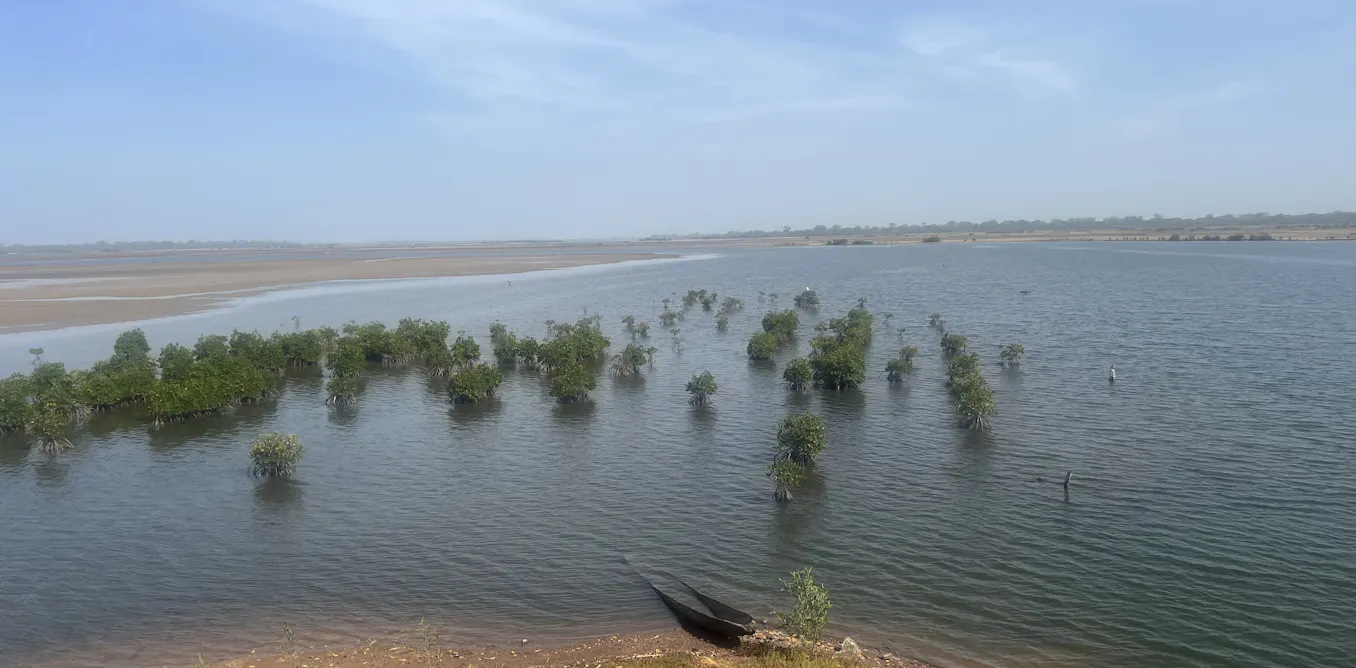
How did a major mangrove restoration project in Senegal end up selling ‘ghost carbon’?

Nature-based solutions have become central to global climate strategies. From tropical forests to wetlands, restoring nature means trees and plants can capture carbon dioxide, reduce global warming and regenerate biodiversity.

Among these solutions, mangroves (coastal forests) occupy a special place. They’re among the most efficient natural carbon sinks on Earth. A carbon sink is a place where carbon is stored, like within the trunk of a tree or in waterlogged soil. A mangrove forest can also make money by selling carbon credits and paying a fair share to local communities.
Sign up to read this article
Read news from 100's of titles, curated specifically for you.
Already a member? Sign in here
Related Stories
Top stories on inkl right now
One subscription that gives you access to news from hundreds of sites
Already a member? Sign in here
Our Picks
Fourteen days free
Download the app
One app. One membership.
100+ trusted global sources.