
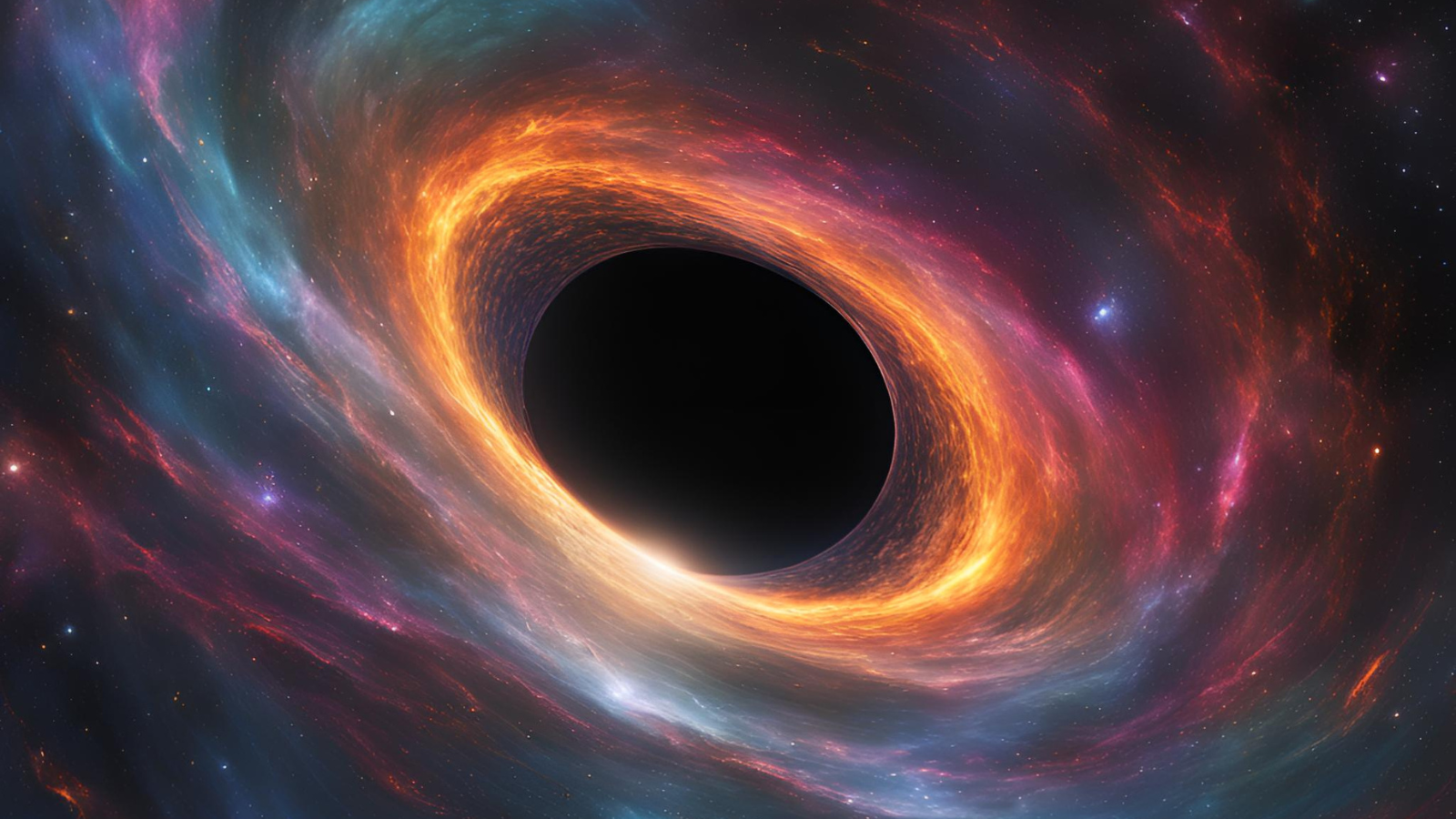
Scientists believe that at the heart of all large galaxies lurk supermassive black holes, cosmic titans with masses equivalent to that of millions or even billions of suns. Yet some black holes exceed even these monstrous masses to become "ultramassive black holes."
The most massive black hole that we are currently aware of is Phoenix A, which sits at the heart of the Phoenix cluster, one of the heftiest clusters ever discovered. Located 5.8 billion light-years away, Phoenix A has an estimated mass of 100 billion suns. Another titanic black hole is Tonantzintla 618 (Ton 618), located around a billion light-years away with a mass of around 66 billion suns.