
Get all your news in one place.
100's of premium titles.
One app.
Start reading
Space
Space
Science
Samantha Mathewson

How are gas giant exoplanets born? James Webb Space Telescope provides new clues

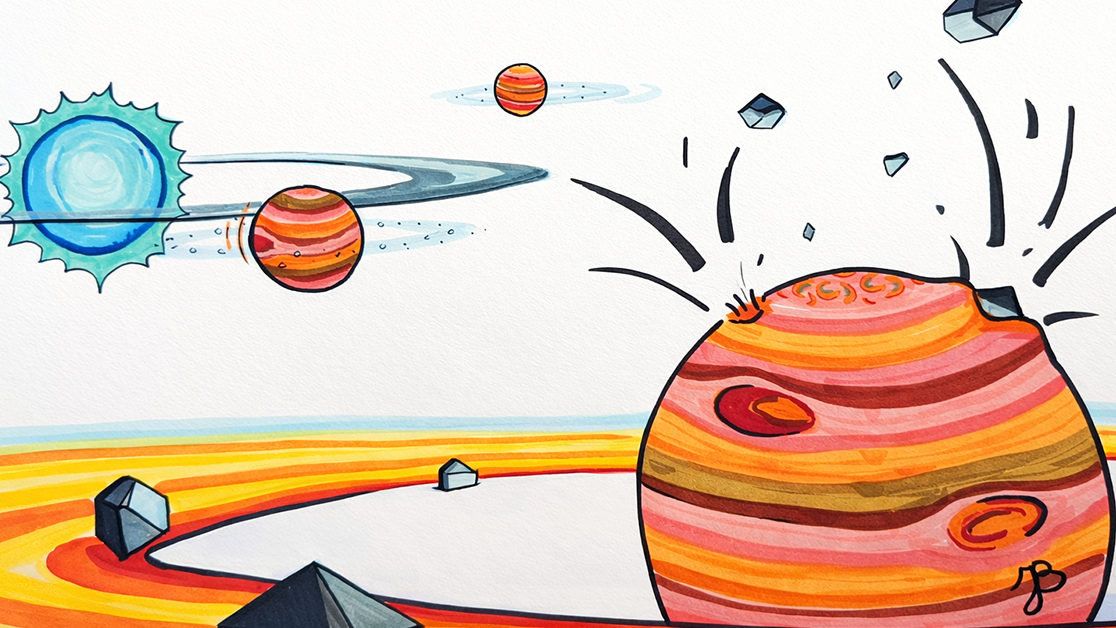
A drawing of a planet that looks like Jupiter surrounded by rocky objects. It looks like rocks are impacting the planet from above. In the distance, there is a drawing of a blue sun-like figure with another Jupiter-looking planet around it.

Astronomers may have just pushed the upper size limit of what counts as a planet, thanks to new insights into how giant worlds form.

New observations from NASA's James Webb Space Telescope (JWST) suggest that even extremely massive gas giants — once thought too large to form like ordinary planets — may grow through the same basic process, shifting how scientists differentiate massive planets from brown dwarfs.

Sign up to read this article
Read news from 100's of titles, curated specifically for you.
Already a member? Sign in here
Related Stories
Top stories on inkl right now
One subscription that gives you access to news from hundreds of sites
Already a member? Sign in here
Our Picks
Fourteen days free
Download the app
One app. One membership.
100+ trusted global sources.