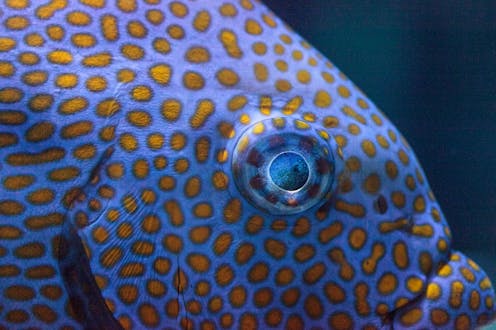
Patterns on animal skin, such as zebra stripes and poison frog color patches, serve various biological functions, including temperature regulation, camouflage and warning signals. The colors making up these patterns must be distinct and well separated to be effective. For instance, as a warning signal, distinct colors make them clearly visible to other animals. And as camouflage, well-separated colors allow animals to better blend into their surroundings.
In our newly published research in Science Advances, my student Ben Alessio and I propose a potential mechanism explaining how these distinctive patterns form – that could potentially be applied to medical diagnostics and synthetic materials.