Valeriia Buchkovska — elementary school teacher, founder of Smartik Kids Learning Center, licensed specialist.
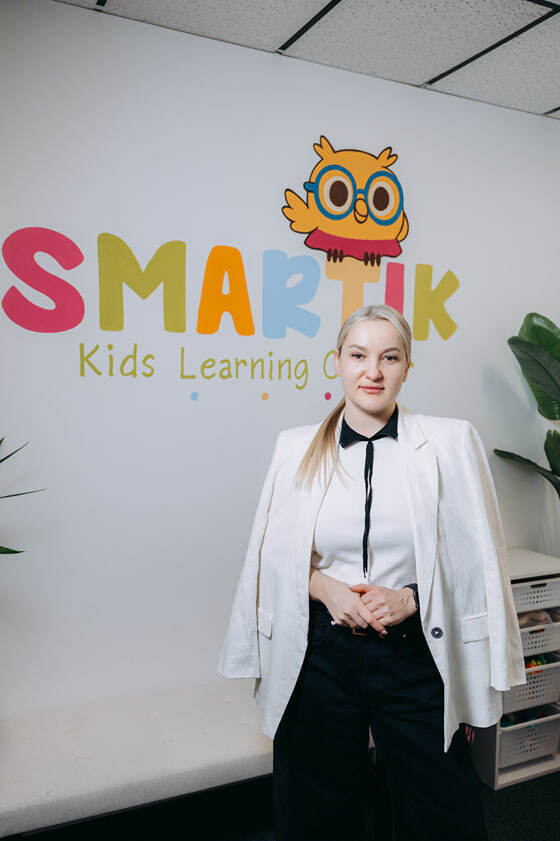
Even back in Ukraine, I was thinking about opening my own educational center for children. I had developed ideas and approaches for improving the learning process that don't always sit well with the way languages are typically taught in our schools. And when I moved to America, I decided to obtain all the necessary licenses for providing educational services right away. I successfully passed my exams and received my teaching credentials. I began my educational journey in America working as an assistant at Buffalo Grove High School and every lesson I was with different children, and I could see all the difficulties they faced in adapting and learning. After that, I began working as a third-grade teacher at a local elementary school, where I continue to work to this day. Just imagine: even after several years, some of those children were still afraid to speak English, had been unable to make friends, and showed no desire to learn.
A common classroom scene: a student understands almost nothing the teacher is saying, and as a result can't speak to anyone. During breaks they stand apart, unable to join in a game because they don't know what to call this or that thing. The reason is that schools place their primary emphasis on grammar and vocabulary building — but in my view, the focus should first be on developing emotional intelligence, on teaching children ordinary everyday interactions, and on delivering knowledge through play. That way, children find it easier to absorb new information, and the integration process moves along much more quickly.
There is another dimension to the problem as well: those who were born in the US or who adapted more successfully than their peers end up forgetting Ukrainian. And I realized that my vision for the learning process could bring about real change.
When I first walked into the space I had rented for the future center, I was genuinely frightened by the sheer volume of work that lay ahead. Alone, without help, without grants or any safety net, I had to set up a classroom that would be safe for children while simultaneously stimulating their development, transform my ideas into actual teaching materials, and — most importantly — earn the trust of parents and prove that with me their children would learn the language faster than with other teachers.
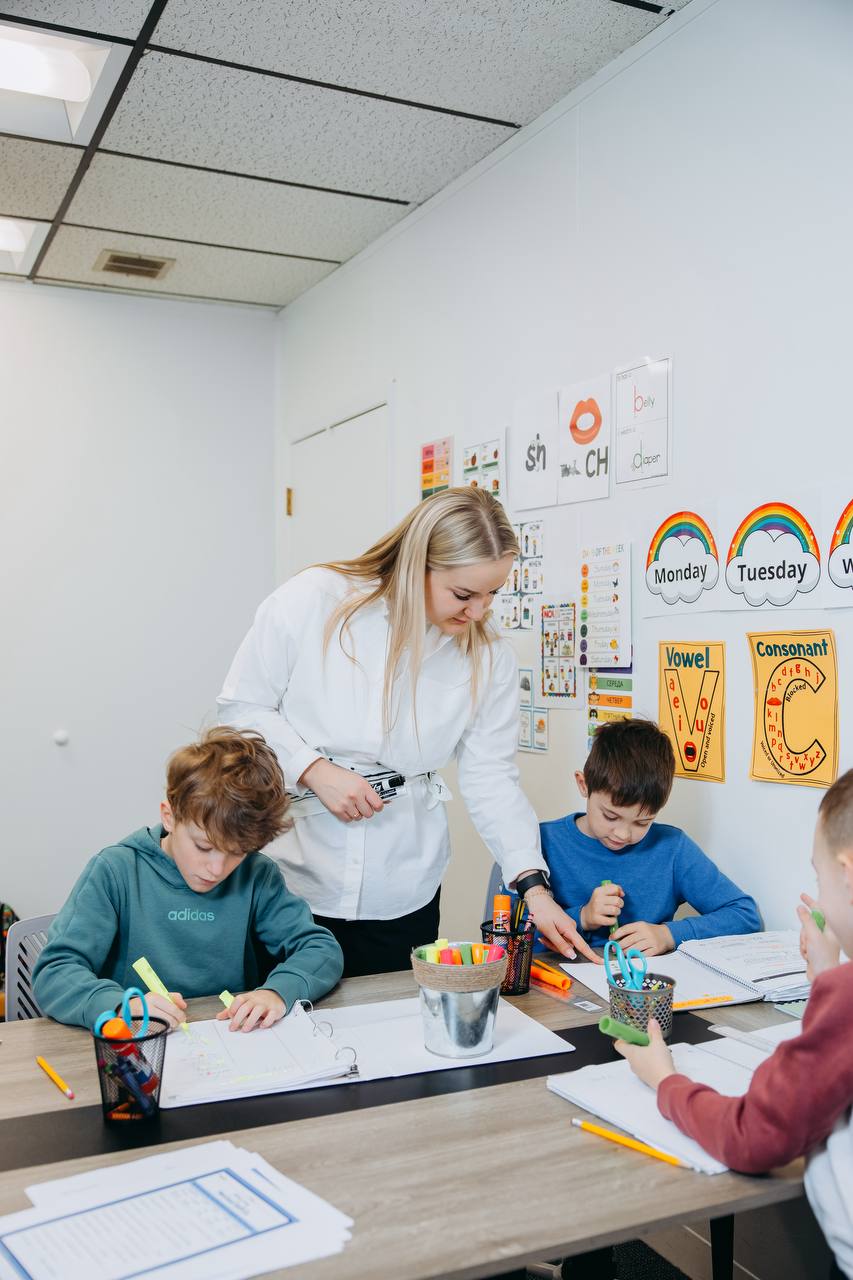
The organizational side consumed a great deal of time. The hardest part — and any teacher will confirm this — was building the framework of the learning process itself. The methodology had to account for a child's emotional state, attend to the development of their mental capacities, and at the same time encourage a desire to learn. I made a deliberate decision not to use ready-made materials: every card, diagram, and game I developed myself, so that they would align one hundred percent with my approach. Step by step, Bilingual SEL Development took shape — my bilingual teaching methodology. Its key distinction from the methods used in American schools or Ukrainian Saturday/Sunday schools lies in the integration of emotions into the learning process. We learn to describe what we feel in two languages at the same time.
Smartik Learning Center opened in April 2025. At the start of a lesson, the most important thing is to clearly understand and internalize the subject we are exploring. There are many ways to do this. I chose games, movement, team exercises, role play, and staging. When our lesson topic is "friendship," we don't memorize translations and word associations from a dictionary. We play group games in which children experience what it means to support someone else, to share, to help. They see it on each other's faces, they feel the emotions — and only then do they name that feeling in Ukrainian and English at the same time. We treat language purely as a means of expression — which is exactly what it is — rather than as the foundation of thought.
Reflection is also an integral part of every session. In whichever language they feel comfortable, children share what they felt during the game, what was difficult, what they enjoyed, what they learned, what challenged them. Through discussion, play, and self-assessment, linguistic, cognitive, and emotional skills all develop in parallel.
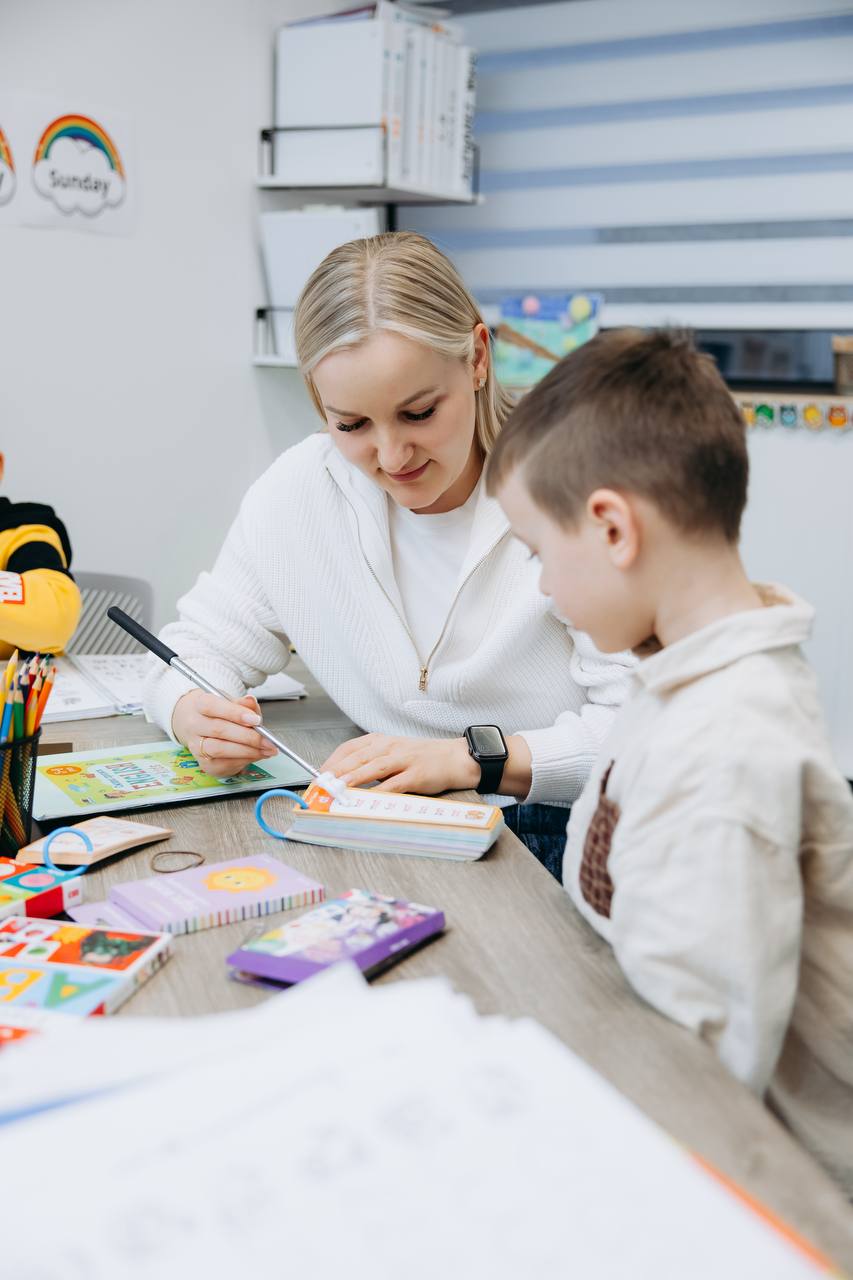
My students are showing excellent results. Checklists help me track each child's progress — I monitor their level of emotional self-regulation, participation in group tasks, cognitive flexibility, and ability to switch between languages. I also actively involve parents in assessing outcomes. The overwhelming majority of them — ninety percent — have noted improvements in their children's confidence in bilingual communication and observed a reduction in general anxiety. Eighty percent of parents say their child has become more "cooperative" and "considerate" — which means the child is developing the ability to resolve conflicts and express their needs through words rather than through tears, raised voices, or complete withdrawal.
A few more telling numbers. After one semester of study, 85% of children confidently use both languages in everyday communication. At the start of the year, 75% actively participate in group tasks; by the end of the program, that figure rises to 95% — a sign that even shy and introverted children are stepping outside their comfort zones and beginning to engage with others. Smartik has been open for less than a year, yet the results are already tangible. Students arrive tense and withdrawn, and within a few months become open, confident, and engaged.
I want this approach to reach further. The Bilingual SEL Development methodology can be applied not only to the Ukrainian-English language pair, but to any other combination. It is universal. What matters most is that children gain the tools to enter a new environment with confidence — while preserving their connection to their native language and culture.