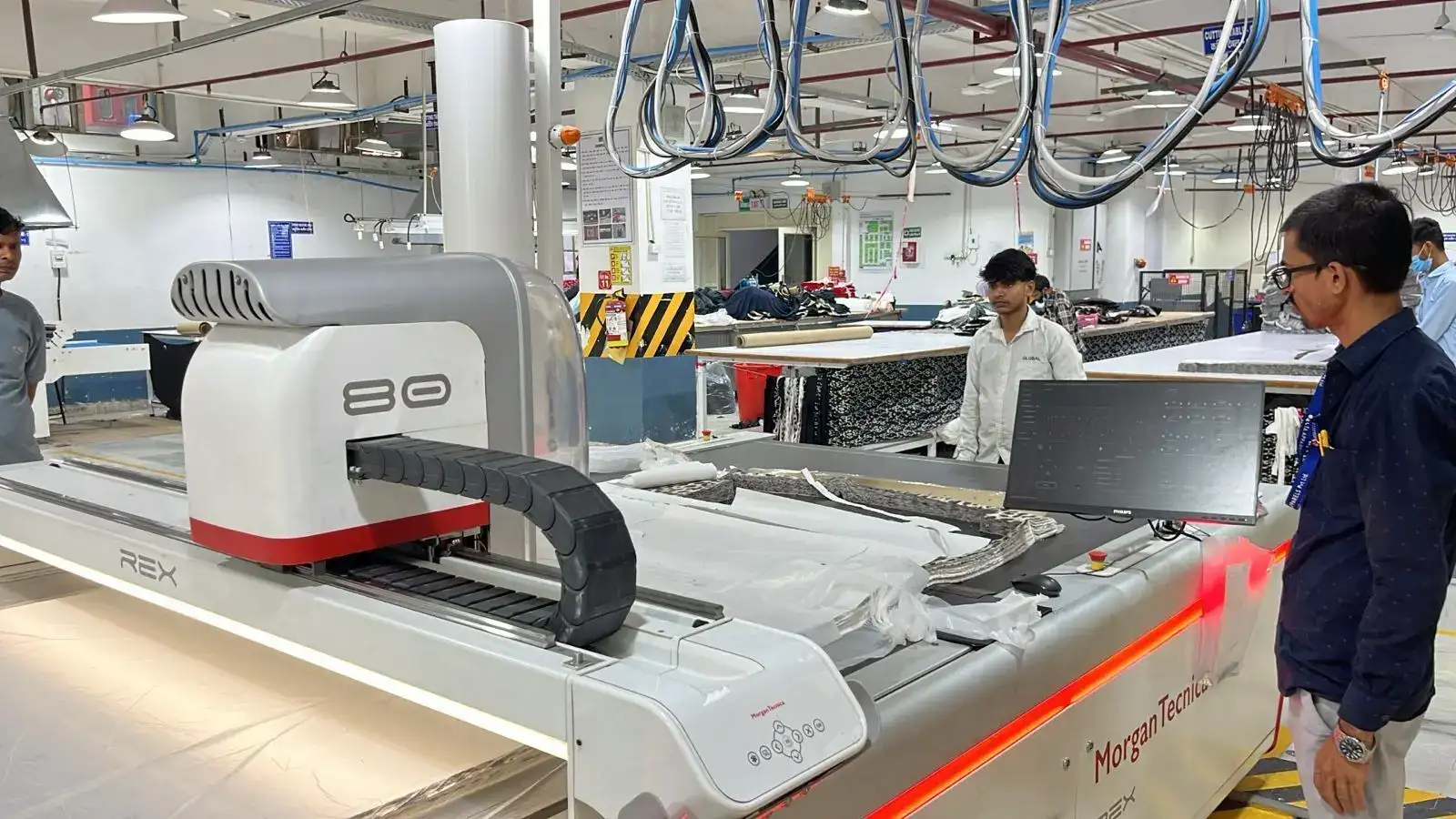
Inside CTA Apparels’ manufacturing unit in Sector 63, Noida, the factory floor goes beyond scale; it reflects a shift in how India’s garment exporters are rethinking production.
On a recent visit, what stood was not just the movement of fabric and finished garments but the way the entire operation is managed through automated systems, rather than manual supervision. Rolls of fabric are moved seamlessly from inspection to cutting, ensuring minimal handling. Large sections of the floor are organised around centralised processes instead of fragmented lines. Operators work alongside screens tracking performance in real time, while supervisors monitor output through digital dashboards.

There is a visible attempt to reduce friction at every stage, whether in material routing, early defect detection, or workflow design aimed at minimising idle time. The facility does not resemble a traditional labour-intensive export unit; instead, it operates as a controlled production environment built for predictability.
“The idea is to move from being a manufacturing vendor to becoming a systems-driven partner for global brands,” says Shivansh Kansal, Vice President (Strategy) at CTA Apparels. “Today, speed, transparency, and traceability matter as much as cost.”
That shift is not limited to this unit alone. It reflects a broader transformation underway at CTA Apparels, as the Noida-based exporter builds a vertically integrated, technology-enabled manufacturing ecosystem aligned with evolving global fashion supply chains.