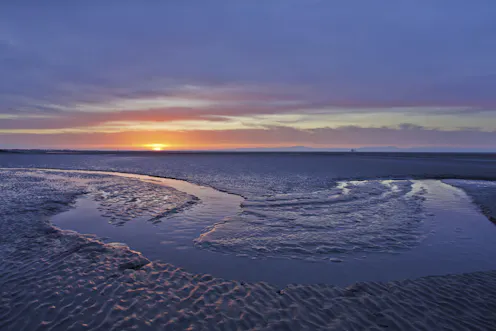
The world’s oceans are home to different habitats that capture and store carbon – known as “blue carbon”. These include habitats that are typically found along coastlines, such as salt marshes and seagrasses, as well as vast seabed sediments further offshore made of mud, silt and sand. The extent to which these habitats are protected and, where possible, restored, could have huge implications for the world’s future climate.
Until now, there was limited coordination of information about how much carbon is stored in UK marine habitats, especially in seabed sediments. But a new report from the Blue Carbon Mapping Project, published today, provides a new baseline for the UK’s blue carbon. In fact, the UK is the first nation to map and estimate the amount of carbon stored in all of its seabed habitats and this milestone could influence marine policy both here and around the world.